 عادل فيرق
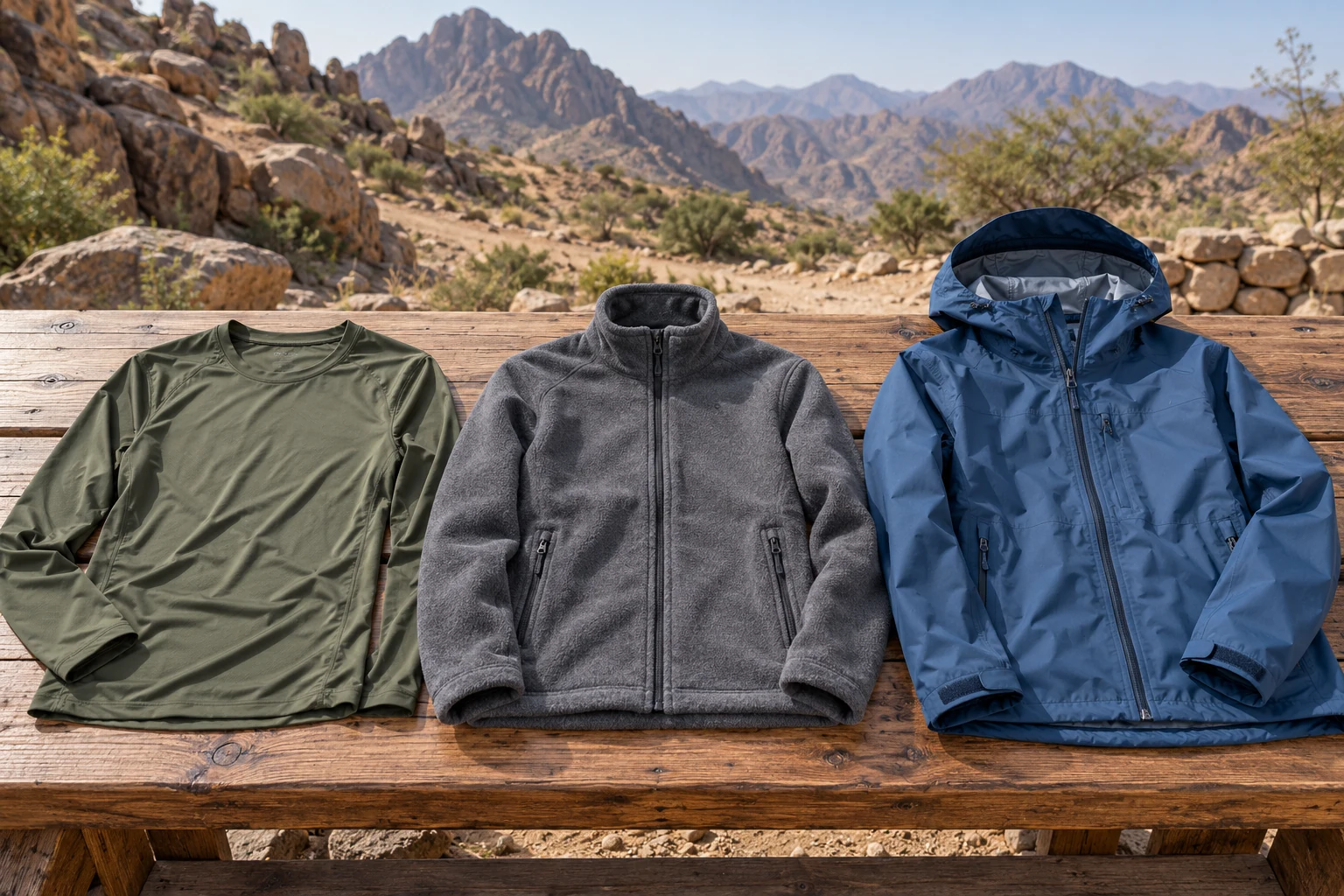
Choose hiking clothing around the programme’s requirements, your freedom of movement and the way the garments work together. Establish what each piece contributes before buying a complete outfit. A layer next to the skin, additional insulation and an outer protective garment serve different purposes; carrying them does not mean wearing every piece throughout the entire outing.
Good hiking clothing preparation can start with items you already own. A useful shirt may need no replacement, while a favourite jacket may prove awkward over the additional layer required for a particular trip. Coordinating colours is a personal preference, but it cannot establish fit, access to pockets or the performance described in a product’s actual specifications.
Before choosing hiking clothing, browse Hike & Seek’s current hiking trips and ask about the precise programme you intend to join. Confirm its equipment requirements and timing instead of copying an outfit from another group’s photograph. This guide supports preparation and comparison; it does not advertise clothing sales, clothing rental or garments included in a booking.
Give each hiking clothing layer a job
Think about hiking clothing through functions rather than an assumed number of products. A garment beside the skin, a layer for additional warmth when required and an outer protective piece contribute differently. REI explains this general layering principle. Your practical question is which function the planned programme requires and which of your existing items already provides it.
Two items of hiking clothing may look similar in a shop photograph while serving different roles. One might be a light layer and another more insulating or intended for a different use. Read the fabric composition, cut, description and care instructions. A higher price, a lighter weight or an unfamiliar technical name does not by itself establish the better choice for your outing.
An adaptable hiking clothing arrangement needs a packing routine as well as suitable garments. Know where a layer will go when you remove it and how you will retrieve it during a break. Practise the transition without leaving clothing hanging awkwardly from your luggage. A useful item buried beneath everything else may remain inconvenient precisely when you would like to reach it.
Write down each hiking clothing requirement
Put the proposed hiking clothing together and note the job of each garment. Where two pieces duplicate a role, decide whether there is a clear reason to carry both. Where a required role remains unfilled, clarify the requirement before shopping. This turns a list of appealing products into a preparation plan that you can explain and adapt.
Separate what you wear during transport, what you expect to use during the activity and anything required afterwards. You may not need a duplicate of every item. Writing down these situations makes the packing decision easier to review and helps prevent a useful piece being placed in luggage that is less accessible at the point when you want it.
| Function | Question to answer | A useful trial |
|---|---|---|
| Next to the skin | Does it suit the activity and your preferences? | Wear it with the intended pack and move calmly |
| Additional insulation | Does it have a role in this programme? | Try it over the actual underlying layer |
| Outer protection | What does the product description establish? | Check closures, hood and combined fit |
| Sleeves and lower edges | Do they work with adjacent equipment? | Try cuffs and trouser ends with the other pieces |
| Spare garment | Why is it needed and where will it go? | Include it in the real packing arrangement |
Compare hiking clothing fabrics through documented information
When comparing hiking clothing, distinguish the fibre name from the whole garment. Fabric thickness, construction, blends, finishing and cut all matter to its use. A composition label alone cannot predict exactly how a particular item feels on you. Start with the manufacturer’s description and then try the hiking clothing with the rest of your intended setup.
Materials used in hiking clothing for moisture management include polyester, nylon and merino wool, as the reference explains. Treat that as a starting point for questions rather than a promise that every garment made from those fibres dries identically or feels equally comfortable. Read the actual blend and care information, and preserve your own trial as part of the decision.
Cotton and denim generally retain moisture and dry more slowly than purpose-made alternatives for activity. Do not choose hiking clothing solely because it feels pleasant while sitting indoors. Consider the programme and expected conditions, along with its specified equipment requirements. This is a contextual comparison; the fibre name should not become a substitute for examining the actual piece and its intended use.
Read beyond short hiking clothing descriptions
A hiking clothing listing may use words such as technical, light or quick-drying without answering your questions about size and operation. Open the full hiking clothing details and ask about the feature that affects your choice. An unclear description remains an information gap. A professional photograph or popularity among friends cannot turn that gap into a verified product capability.
If a certain texture regularly bothers you, do not ignore that experience to buy hiking clothing someone else prefers. Check seams, collars and edges in an appropriate trial. Persistent discomfort deserves attention rather than insistence on using an expensive garment. This equipment comparison does not diagnose skin conditions; individual health concerns need appropriate advice rather than repeated changes based on guesswork.
Check hiking clothing through ordinary movements
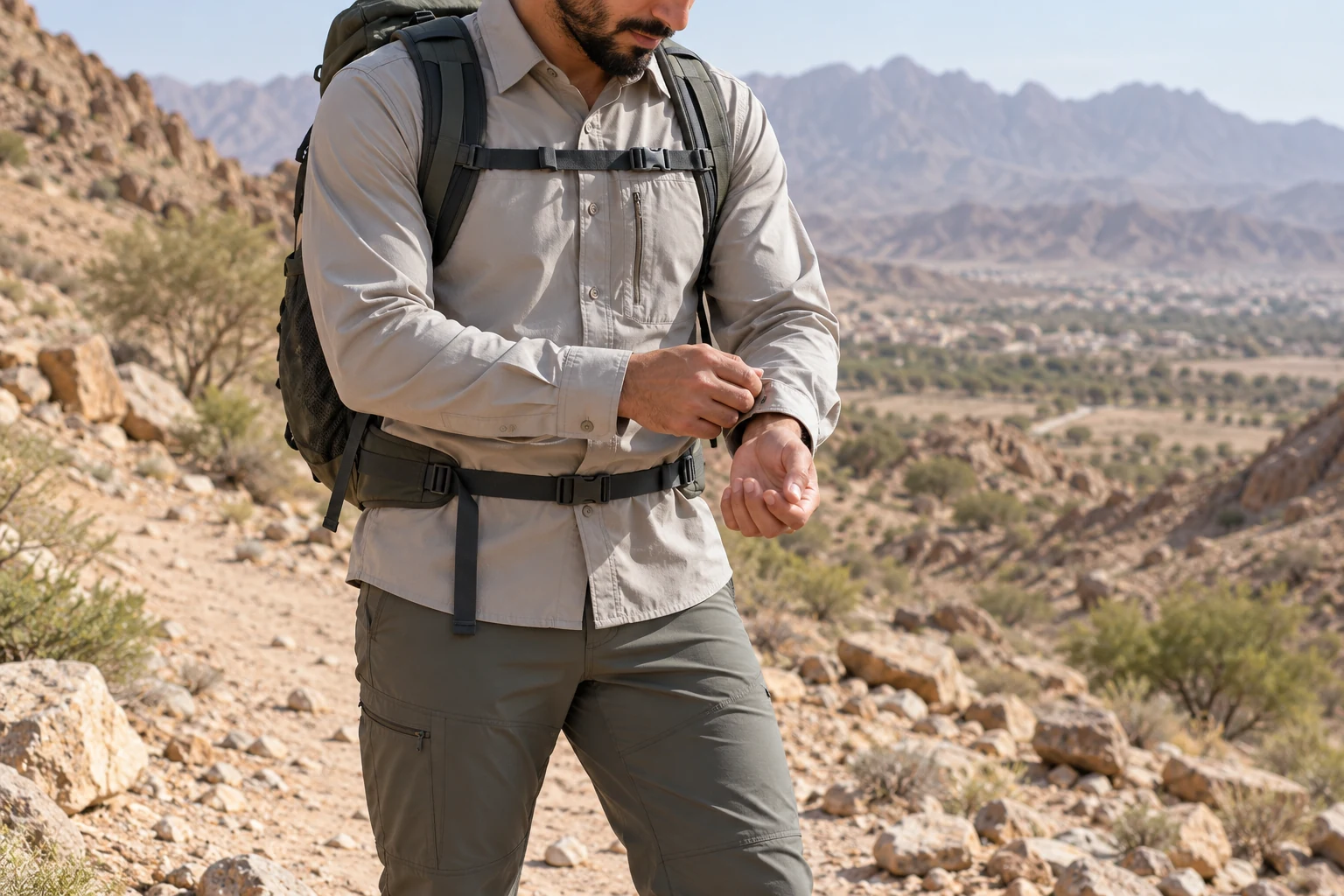
Try hiking clothing while standing, sitting, raising your arms and taking calm broad steps in a suitable space. Notice tension at the knees or shoulders and whether the waistband stays comfortable. A successful mirror view does not establish a useful fit through movement. See whether the garment returns to position or needs distracting adjustments after each ordinary action.
Wear hiking clothing with your intended underlying garments and a representative loaded pack. A button, seam or pocket can become noticeable beneath a carrying strap even when the piece felt comfortable alone. A combined trial reveals this early and helps prevent buying another accessory to compensate for a compatibility problem that the full setup could have shown before payment.
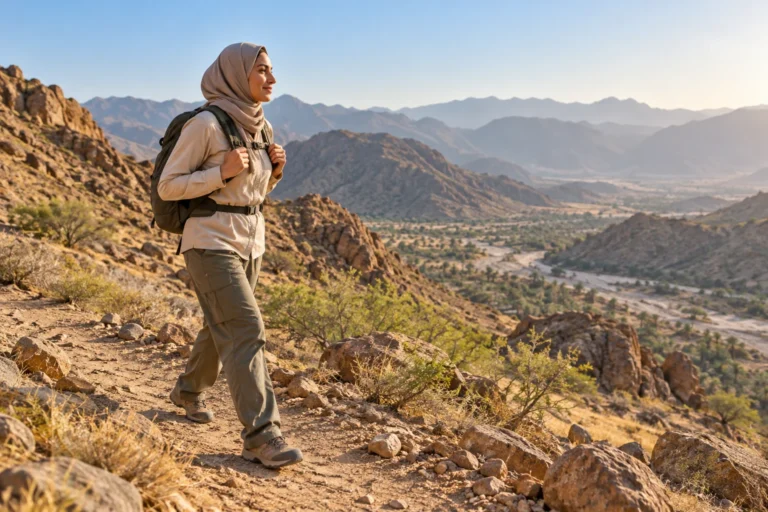
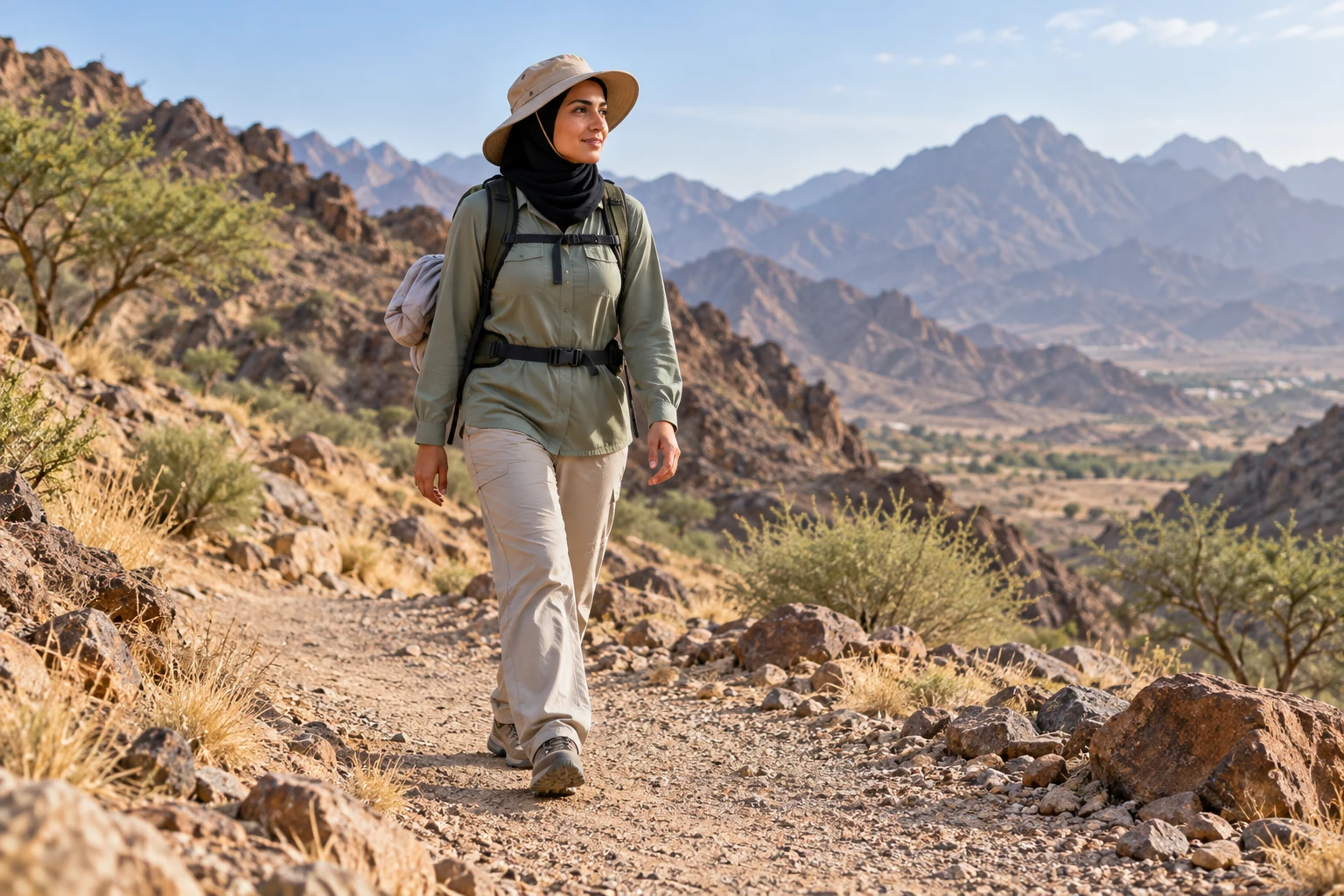
Modest hiking clothing can provide the coverage you prefer while allowing movement. Compare garment length, room when sitting and the management of loose edges. The choice is not limited to an extremely tight cut or uncontrolled extra fabric. Try different hiking clothing designs according to your requirements, and examine how the result works with footwear and a pack.
Inspect hiking clothing sleeves and trouser ends
Check hiking clothing cuffs against a watch or gloves when you expect to use them. Look for uncomfortable bunching or tension. Try trouser ends with the actual footwear rather than judging their length barefoot. A sleeve that looks sufficient while your arms are lowered may feel different when you reach, and a jacket roomy on its own may tighten over another layer.
Do not assume that a familiar hiking clothing size transfers across every brand or range. Read the chart for the precise product, including whether measurements describe the body or garment. If buying online, understand the written trial and return conditions. Automatically ordering a larger size is not a complete fit strategy; the combined use remains the comparison that matters.
| Area to inspect | Movement to try | A reason to compare another fit |
|---|---|---|
| Shoulders | Raise your arms calmly | Tension limits movement or pulls the collar |
| Waist | Sit and stand | Persistent pressure or repeated readjustment |
| Knees | Take a comfortable broad step | Fabric limits the intended movement |
| Cuffs | Adjust around adjacent equipment | Uncomfortable pressure or excess bunching |
| Combined layers | Close the outer jacket over the intended layer | Obvious restriction or difficulty closing |
Read the limits of hiking clothing protection
Do not automatically equate water-resistant hiking clothing with a garment described as waterproof within particular conditions. Fabrics, seams, closures and openings can differ. Read the complete description and relevant instructions. An improvised splash test or the feel of a fabric does not establish a performance claim that its manufacturer has not made for that item.
Owning protective hiking clothing is not a reason to disregard weather warnings or the organiser’s instructions. A jacket purchase does not establish that an outing is appropriate in every condition. Follow current official information and the activity guidance. Keep the equipment comparison separate from deciding whether a particular route or day remains suitable for the programme.
If hiking clothing carries a stated protection rating or another standard, read what applies to the exact garment and its care. Do not transfer a rating from one product to another or infer it from colour and apparent thickness. The useful evidence is the product information. Questions concerning individual medical needs require an appropriate source beyond a general shopping guide.
Inspect hiking clothing pockets closures and hoods
Try hiking clothing pockets beneath your pack straps. Can you reach them, and does a phone or another hard object press uncomfortably when placed inside? A large pocket is not necessarily useful in its particular position. Check the closure with the item you intend to store, rather than assuming that every visible pocket has an appropriate role during movement.
If the hiking clothing includes a hood, try it with any headwear you intend to use. Check turning and visibility through an appropriate calm trial, and learn the adjustments specified by the design. Organise loose cords and edges. A mechanism you have actually operated is more useful than assuming every buckle and zip will become obvious once the group has started moving.
At this stage of choosing hiking clothing, Contact Hike & Seek about unclear requirements for the specific programme. Mention the outing and date and explain the point needing confirmation. Do not assume personal garments are included, or that a trip organiser guarantees the performance or personal fit of hiking clothing they have not assessed.
Rehearse hiking clothing with the complete setup
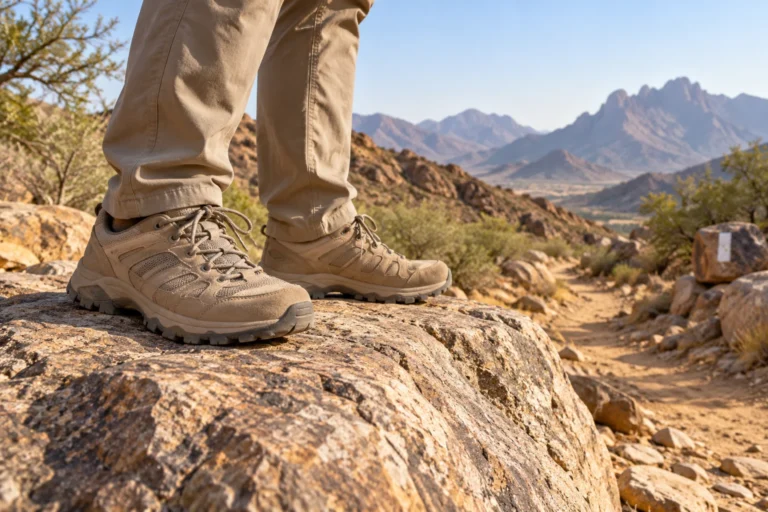
Put hiking clothing together with the intended socks, footwear and packed bag. Walk calmly, sit, reach a pocket, take off a layer and repack it. Look for ordinary conflicts: a zip beneath a belt, trouser fabric bunching at a boot or no sensible place for the jacket once removed. Recording the specific issue suggests a clearer next step than describing the whole outfit as wrong.
Repeat the hiking clothing trial after a substantial change such as another pack or an additional underlying layer. You do not need a demanding route to discover an incompatible size. Choose a familiar appropriate place and allow time to compare alternatives while the purchase terms permit it. Departure morning is an inconvenient moment to discover a basic problem that an earlier rehearsal could reveal.
Know where spare hiking clothing will be stored and how it will be protected from spills or dampness as appropriate. Give each spare a reason and a position. A backup is useful when you can find it and understand why it is there. Do not let one unused item after an outing automatically become proof that every future programme can omit it.
Two hypothetical hiking clothing decisions
Imagine someone comparing hiking clothing who already owns a suitable shirt but wants a new coordinated set after seeing a photograph. Their combined trial shows that the missing function is an outer layer specified for the programme. They focus the comparison there. This is an illustrative decision example, not a customer story or a recommendation for one jacket on every outing.
Another person chooses hiking clothing that feels comfortable item by item but finds the jacket restrictive over the required additional layer. They repeat the fit comparison using the complete setup. The issue concerns compatibility, so another shirt fabric or a larger bag would not necessarily address it. Keep the trial focused on the actual problem before expanding the shopping list.
Care for hiking clothing according to its own instructions
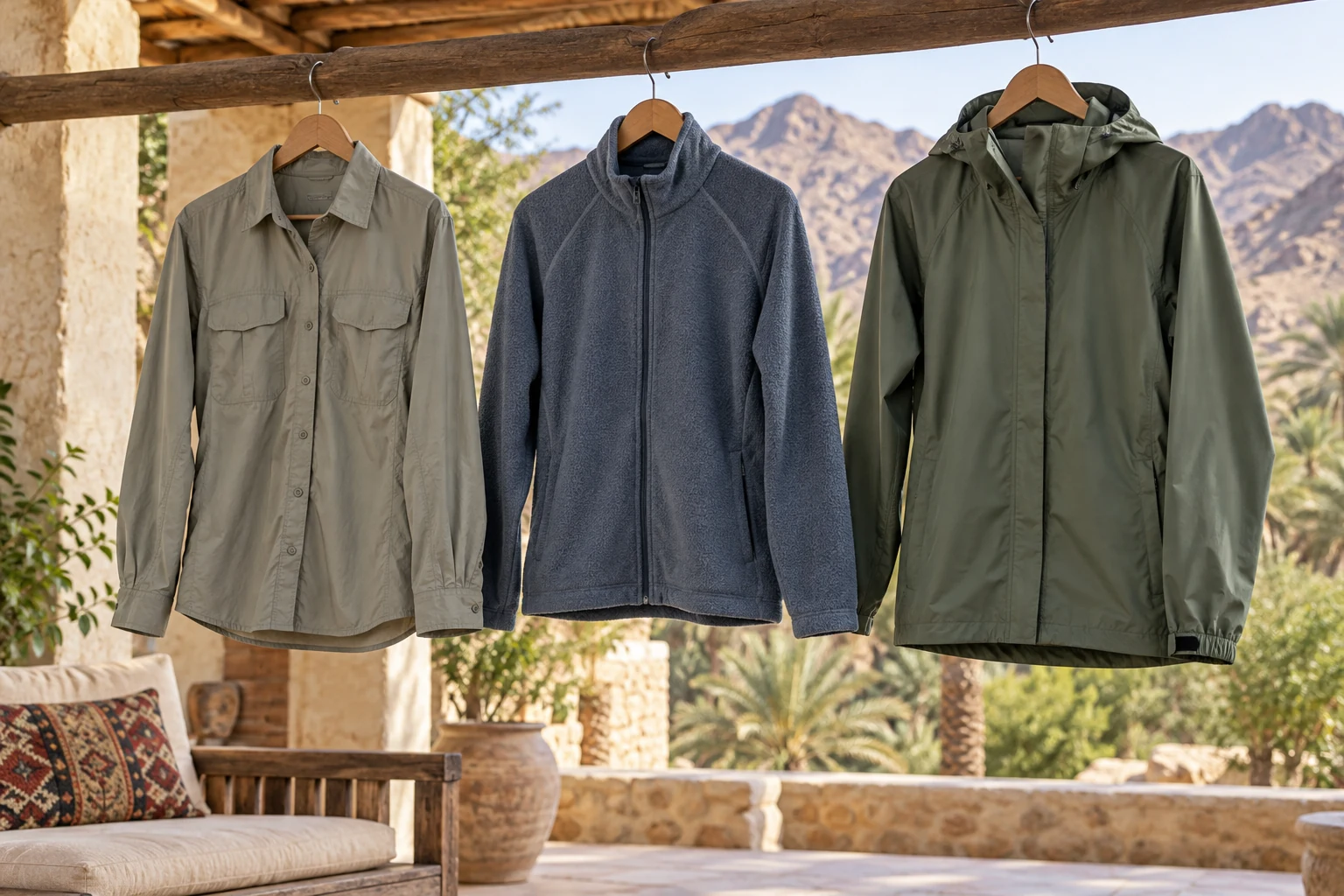
Read hiking clothing care labels before cleaning. Fabrics and finishes vary, so a routine used for a familiar sports shirt may not suit every insulating or protective garment. Keep the hiking clothing instructions or a clear photograph of them. Follow the temperature, drying method and permitted care products specified for the item rather than transferring a remembered procedure from an older purchase.
After an outing, separate damp hiking clothing from prolonged closed storage and clean and dry it according to its instructions. Inspect edges, seams and closures. Do not force a sticking zip or apply a cleaning or treatment product by guesswork. Ask the relevant manufacturer or retailer about compatibility when the information for your exact garment is unclear.
Budget for hiking clothing according to the gap your trial establishes, likely use and written purchase terms. This guide does not invent fixed prices, guaranteed discounts or a universal lifespan. Compare what hiking clothing is included, the care routine and the opportunity to try the fit. A suitable item already owned can be a sensible result, while an unsuitable one does not become practical simply because it costs less.
| What the trial reveals | Decision to review | Information to request |
|---|---|---|
| Existing items meet the requirements | Use them after the combined trial | The current programme list |
| A required function is missing | Compare a piece providing that role | Its actual capability and limits |
| Size restricts movement | Try another size or cut | The product chart and return terms |
| Layers conflict | Try the combination again | Fit over the intended underlying garment |
| Care instructions remain unclear | Avoid an improvised treatment | Guidance for the exact hiking clothing product |
Keep a short comparison record
For each shortlisted piece, record the exact model and size, what you wore beneath it, and the result of the movement trial. A quick photograph of the product label can help you compare options later without confusing similar versions. Note the reason for hesitation while it is fresh. If one jacket only feels restrictive with a particular fleece, preserve that detail instead of writing that every size is uncomfortable. The point of the record is a clearer decision, not a complicated scoring exercise.
Before ordering online, check whether the listed measurements describe the body or the garment and follow the seller’s measurement method. Ask for clarification when that distinction remains unclear. Keep the purchase receipt and care instructions with the model details. Keep labels attached during any permitted indoor trial and read the actual return conditions before washing, altering or using the piece outdoors. These conditions differ by purchase. If borrowing instead, agree on care and return arrangements and inspect known faults together. Trying the borrowed item before departure remains worthwhile even when the owner is confident that the size will suit you.
Frequently asked questions about hiking clothing
Do I need an entirely new outfit?
You may not need new hiking clothing if existing pieces meet the requirements and work together in a practical trial. Establish the missing function or troublesome fit first. A colour-coordinated photograph is not a compulsory shopping list. Equally, owning an older piece is not proof of suitability until you have checked its condition and present use.
Should I wear every layer from the start?
Arrange hiking clothing around the requirements, conditions and the difference between movement and stops. Carrying a piece does not mean wearing it continuously. Practise retrieving, removing and storing layers. A system you understand is more useful than tolerating persistent discomfort because opening the bag feels inconvenient or because you believe an outfit must remain unchanged throughout the outing.
Is a popular fibre enough to make the choice?
A fibre name does not establish the complete performance or fit of hiking clothing. Read the blend, construction, cut and care guidance and try it with the other equipment. Products using the same material can feel different. Useful comparison combines documented information with a practical trial instead of treating one familiar fabric label as the whole decision.
How do I choose modest garments for movement?
Compare hiking clothing that provides your preferred coverage with comfortable movement and manageable edges. Try sitting, walking and raising your arms, and check interaction with the bag and footwear. There is no single cut for every person. Copying another outfit or automatically increasing the size cannot replace testing your own requirements through an appropriate combined trial.
Is every light jacket suitable for rain?
Check the description of outer hiking clothing rather than judging it by weight or appearance. Water resistance, construction and the limits of protection vary. Match the documented role to the equipment list. Owning a jacket does not establish that every weather situation is suitable for the activity, and it does not override official warnings or programme instructions.
How should I check the size before the trip?
Try hiking clothing with the layers and representative load you expect to use, then include ordinary calm movements. Check sitting, stepping and pocket access. Record where a problem occurs and compare the alternative under similar conditions. That gives more useful evidence than trying one garment alone and expecting it to work with any later addition.
Does Hike & Seek provide the garments?
Do not assume hiking clothing is supplied or available to rent without confirmation in the programme details or from the team. Ask what participants must bring for the exact outing. This article is preparation guidance associated with actual trip services; it does not promise a clothing service, sizes or products the company has not confirmed.
What if an item remains uncomfortable?
Review hiking clothing fit, seams and interaction with your pack instead of persisting because of its price or reputation. If the issue remains, compare a suitable alternative and seek appropriate help. Persistent pain or skin irritation deserves relevant individual advice. A shopping guide cannot diagnose a cause or prescribe treatment for a personal condition.
Prepare around a specific programme
Choosing hiking clothing becomes clearer when you know the programme, test the pieces together and identify exactly what is missing. Explore the current outings and contact the team to clarify requirements before completing your purchases. Leave time for movement, packing and care checks so you arrive with an arrangement you understand and have already tried.