 عادل فيرق
Choose nature binoculars from your intended use rather than the largest magnification number on the box. Begin with what you hope to observe, how long you will carry the equipment and how comfortable the image feels. Then try the focusing controls, strap, caps and carrying case. A suitable purchase is equipment you can use and understand in the actual programme, rather than the largest model or the specification list containing the most terms you have never tested yourself.
Nature binoculars can help you notice details from a permitted viewing location. They do not replace site instructions or justify approaching an edge or a wild animal. This guide provides a practical beginner’s comparison without recommending a brand or promising particular sightings. Conditions and wildlife vary. Keep the objective realistic: observing the place can be enjoyable even when the scene in an advertisement or another participant’s photograph does not appear during your own visit or scheduled stopping time.
Before carrying nature binoculars on Hike & Seek, review the published hiking trips and Contact Hike & Seek about the selected programme. Ask about the activity and permitted stops. Do not assume it includes specialist birdwatching or equipment for everyone. Explain your intended use and confirm whether carrying the device fits the timetable and luggage arrangement. This helps you choose a practical size without delaying the group or expecting a service that the actual booking has never described or confirmed.
Define the nature binoculars task before comparing numbers
Write down the likely use: a brief view from a rest stop, observing birds from one position or occasional viewing between other activities. Equipment carried throughout a walk can have different priorities from a device used longer at a fixed location. Avoid reducing nature binoculars choices to professional or beginner labels. Describe the task, duration and carrying method, then compare models you can try and the manufacturer’s information for the version that is actually offered for sale.
If use will be occasional, a properly agreed loan can help you understand your preferences before buying. Learn that device’s instructions and protect it as agreed with its owner. One borrowed model does not represent all nature binoculars, and borrowing unfamiliar equipment does not remove the need for inspection. Use the experience to identify a real requirement: easier controls, less carrying weight or better comfort with glasses. That is more useful than purchasing a feature whose effect on your viewing remains unclear.
Name the difficulty you want to resolve
Does your hand tire, do you lose the target or is the focus wheel awkward to reach? The answer tells you what to examine in the next nature binoculars comparison. Higher magnification cannot create a suitable stopping place. An uncomfortable strap may require adjustment according to the nature binoculars instructions before equipment replacement. Review the cause rather than interpreting every difficulty as proof that you need larger lenses or a higher price. Keep the observation specific enough to test again on another model.
Understand nature binoculars numbers without ranking quality by them
In a specification such as 8×42, the first number describes magnification and the second the objective lenses’ diameter in millimetres, as explained in REI‘s binocular buying guide. A larger number does not automatically make nature binoculars more suitable for every user. Compare the actual image, comfort, weight and declared field of view. Read the particular model’s specification; similar names do not establish identical dimensions, accessories or contents in the box, especially when several versions appear in the same listing.
Do not try to infer every property from those two numbers alone. Two devices with similar specifications can feel different to hold, adjust and carry. Use the information to create a shortlist, then conduct a reasonably consistent trial. Ask to see the actual nature binoculars model you intend to buy rather than another display version. Keep the full name and version so that a later price comparison does not accidentally concern different equipment or an offer with fewer included accessories.
| Nature binoculars question | Evidence to compare | Insufficient evidence |
|---|---|---|
| Is viewing comfortable | Actual adjustment and eye-position trial | Magnification alone |
| Can I carry the equipment | Weight with strap and case | A photograph of the device by itself |
| Can I find the target | Field of view and practical use | A general powerful description |
| Does it suit my glasses | Trial with the glasses normally worn | Assumptions from lens shape |
| Can I maintain it | Cleaning protection and service instructions | An unexplained rugged label |
Try image stability from a comfortable position
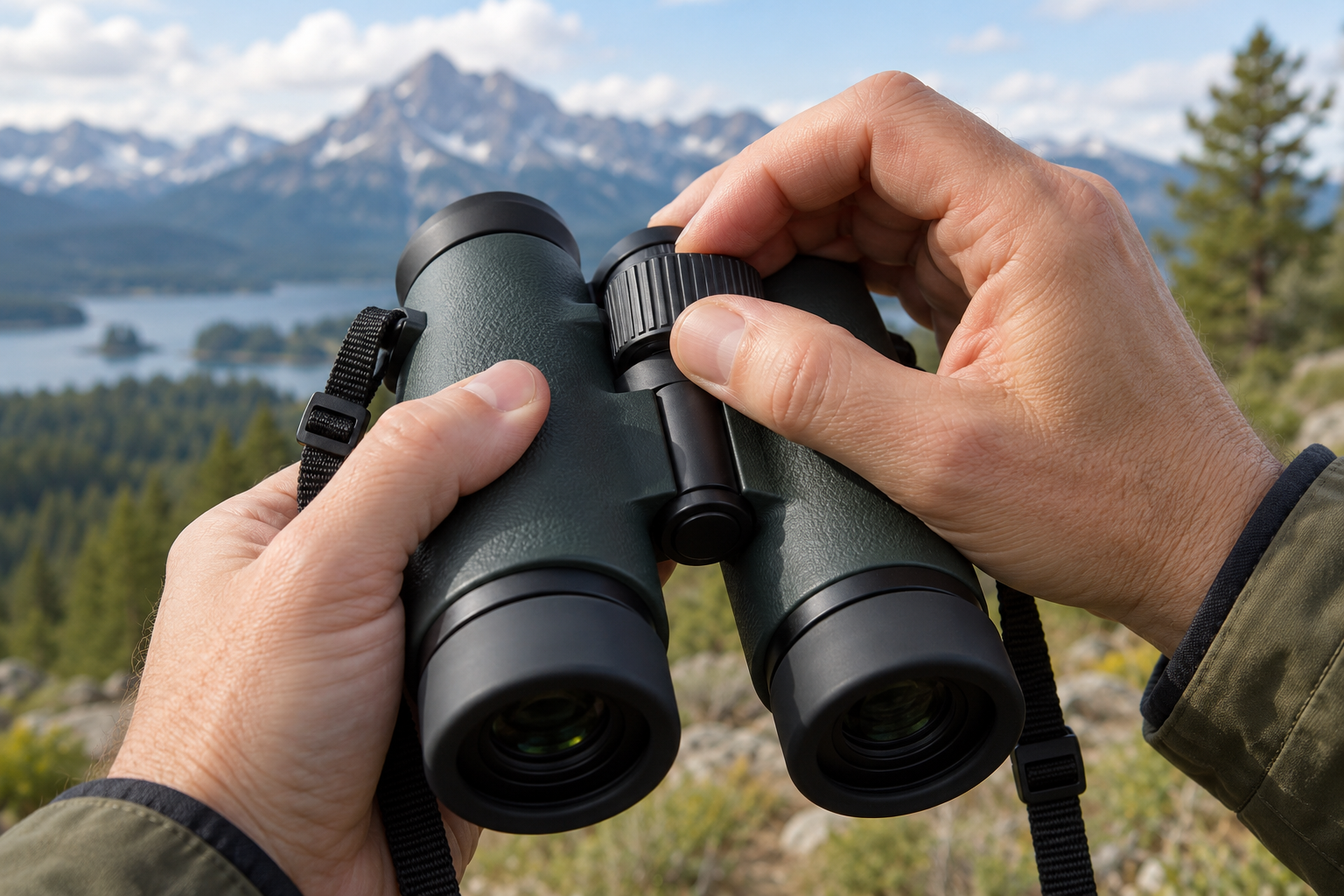
Hold nature binoculars as instructed and begin with a safe stationary target from a stable permitted position. Notice whether you can keep details in view without uncomfortable effort. Do not stand beside an edge or obstruct a route to obtain a supposedly better angle. The nature binoculars trial should compare equipment, not your ability to balance. Keep the conditions manageable so that an awkward location does not become confused with a difficulty caused by the device’s weight, setup or controls.
Try another suitable target and give yourself time to use the focusing controls. If the image is unsatisfactory, ask for an explanation of the settings before judging the nature binoculars. Eye position or setup may not follow the model’s instructions. Equally, do not accept an unsupported promise that every obvious difficulty will disappear with time. Record what you did and noticed. Specific observations are more useful than describing an image as excellent or poor without identifying the setting or circumstances involved.
Review field of view and finding the subject
Locate a suitable target with your eyes from a stationary position, then raise the device and try to find it. Practise before a trip with many competing details. Compare the declared field of view where relevant, checking the units and presentation. Do not combine figures expressed in different ways or assume higher magnification makes every small subject easier to locate. Nature binoculars should be assessed through the complete viewing task, including finding the scene and adjusting focus, rather than a single brief impression after someone else has positioned them.
If you expect moving subjects, practise comfortable movement from your position without following them off the route. Nature binoculars are not a reason to approach wildlife, feed it or play sounds to attract it. Follow the location’s instructions and leave animals space to behave normally. Assess the observation opportunity the actual trip permits. Do not build the nature binoculars purchase around a promise of a particular species or an expectation that the environment should be changed to provide a longer view or photograph.
Stop walking before using nature binoculars
Choose a clear permitted stopping point, look, then lower the equipment before moving with the group. Viewing through nature binoculars changes the surrounding area you notice. Do not combine it with crossing a route or negotiating uneven ground. Attach the strap according to the nature binoculars instructions and ensure accessories are not swinging in your way. A short, planned observation can be useful without occupying every moment of the walk. Coordinate with the organiser rather than falling behind while assuming the group will eventually notice.
Try nature binoculars with your usual glasses
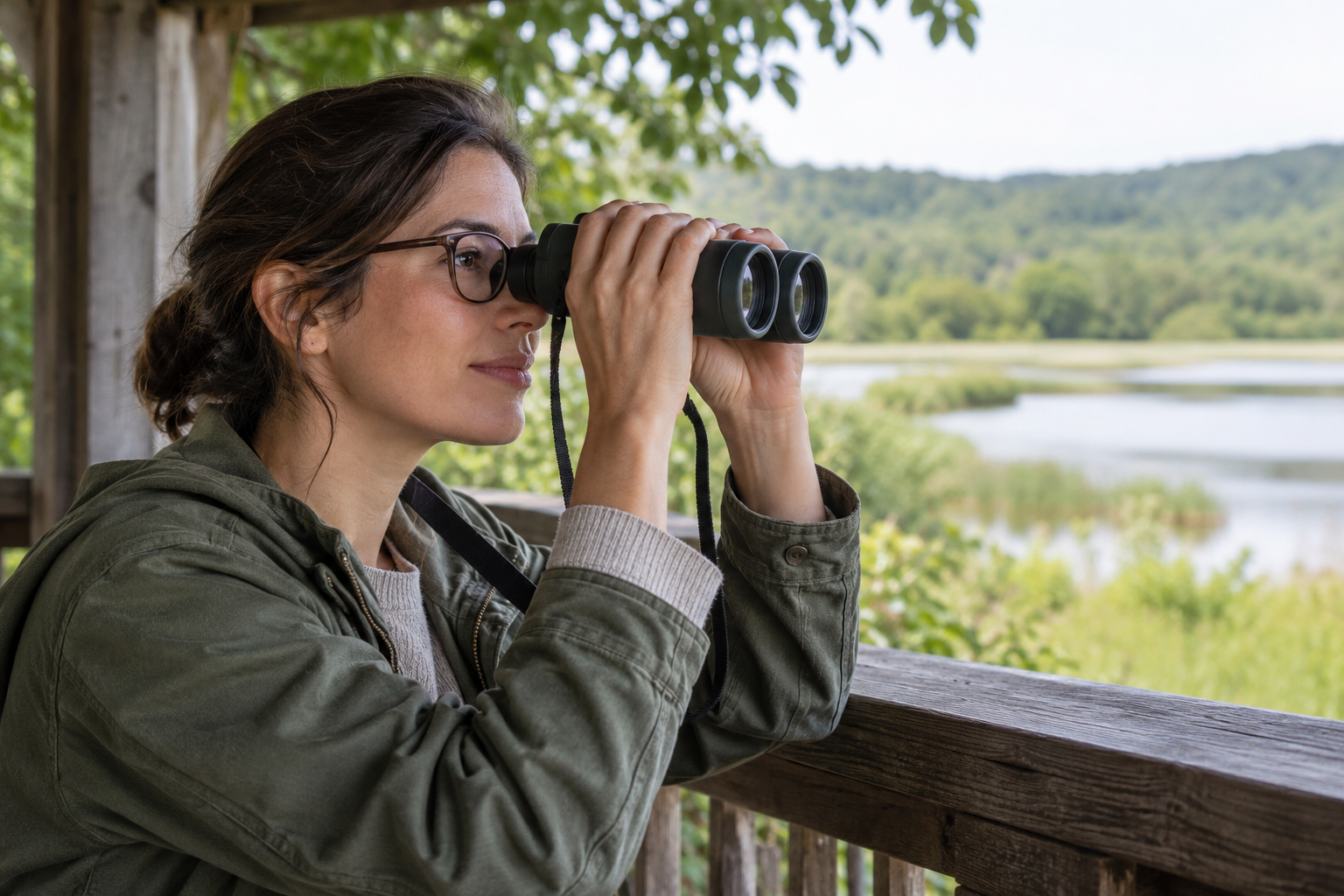
If you wear glasses, try the nature binoculars model with them and ask about its eyecup and adjustment instructions. A photograph of another wearer does not establish your comfort. Compare what you can see and how easily you use the controls. This guide does not diagnose vision or alter an optical prescription. If an individual visual question or unexplained discomfort remains, seek suitable guidance rather than treating a different magnification as an automatic solution to an issue that has not been understood.
Allow enough time to notice whether you constantly reposition the device to find a comfortable view. Record the nature binoculars model and version, then repeat the trial consistently with another option. People need not agree on the best nature binoculars because hand position, comfort and carrying preferences vary. If the device will be shared, make sure users understand how to change the settings and restore their own. One convenient arrangement for the purchaser should not become an assumed setting everybody else must tolerate.
Learn nature binoculars adjustment from the actual manual
Read how to set spacing, focus and any additional adjustment on the particular model. Do not automatically copy a process from previous equipment. Ask the nature binoculars supplier to demonstrate, then perform the steps yourself and try returning to a useful setting. Knowing a control’s location does not establish that you understand its purpose or permitted movement. Avoid forcing an unfamiliar part or removing a cover that the nature binoculars instructions do not identify as something intended for the user to open.
Keep the manual somewhere accessible, particularly if the device is used only occasionally. Useful nature binoculars notes can describe settings and handling without recording unnecessary personal information. If someone borrows the equipment, explain adjustment and care before handing it over. Saying that it is delicate does not explain the caps, case or prohibited handling. Agree how the borrower should report a difficulty rather than hiding it until the trip ends or attempting an unapproved repair to avoid mentioning that something changed.
| Trial stage | Practical action | Observation to record |
|---|---|---|
| Initial setup | Follow the model’s instructions | Clarity of steps and control access |
| Stationary subject | View from a comfortable position | Stability and eye comfort |
| Finding a target | Raise the device at a safe stop | Ease of locating the scene |
| Glasses where applicable | Use the appropriate model setting | Comfort and usable view |
| Carrying | Try strap case and lens caps | Weight and ease of access |
To discuss nature binoculars on a particular departure, contact the team with the programme name and intended use. Ask about advertised stopping opportunities and luggage conditions, not a guarantee of a bird or animal appearing. Specifications, adjustment and repairs belong with the manufacturer or supplier. These are different sources of information. The organiser understands the programme and the nature binoculars supplier understands the product; neither answer automatically replaces the other simply because both contribute to preparing the same outdoor trip.
Compare the strap and case as part of the nature binoculars purchase
Consider the complete weight, rather than nature binoculars alone. Check strap attachment, case closure and where caps stay during use. Practise taking the device out and returning it without placing it on dirty ground or leaving small components on a table. If accessories are sold separately, include them in the comparison. Appearing in a promotional scene does not prove that a case is included in the box or compatible with the version you have chosen to purchase.
Plan the device’s position during travel and inside the vehicle. Do not put nature binoculars beneath heavy luggage or beside exposed sharp tools. Follow its protection and storage instructions. An obvious rubber covering does not guarantee protection from every fall or pressure. An outdoor description does not explain all operating limits. Compare the actual carrying case and the conditions the equipment will encounter, including loading, unloading and storage while participants are engaged in activities where the device is not being used.
Read weather protection for the particular nature binoculars model
Do not assume every optical device tolerates rain, immersion or dust under identical conditions. Read the particular description, warranty limits and care instructions after the stated exposure. Do not test a waterproof claim by immersing the device yourself. A photograph of water droplets is not a specification. If a particular use matters, request its documentation and confirm that it applies to the actual nature binoculars version and accessories, rather than another model using similar advertising or a related product name.
Plan appropriate protection even where the manufacturer declares resistance features. A case or cover may help within its own instructions, but do not assign it an unsupported protection level. Inspect nature binoculars after returning and ask about unexplained changes before continuing use. Reduced clarity does not automatically mean magnification is inadequate. The equipment may need correct adjustment, approved cleaning or professional inspection. An unclear remote description cannot establish which explanation applies, so retain the nature binoculars model details and observations that will help the supplier respond.
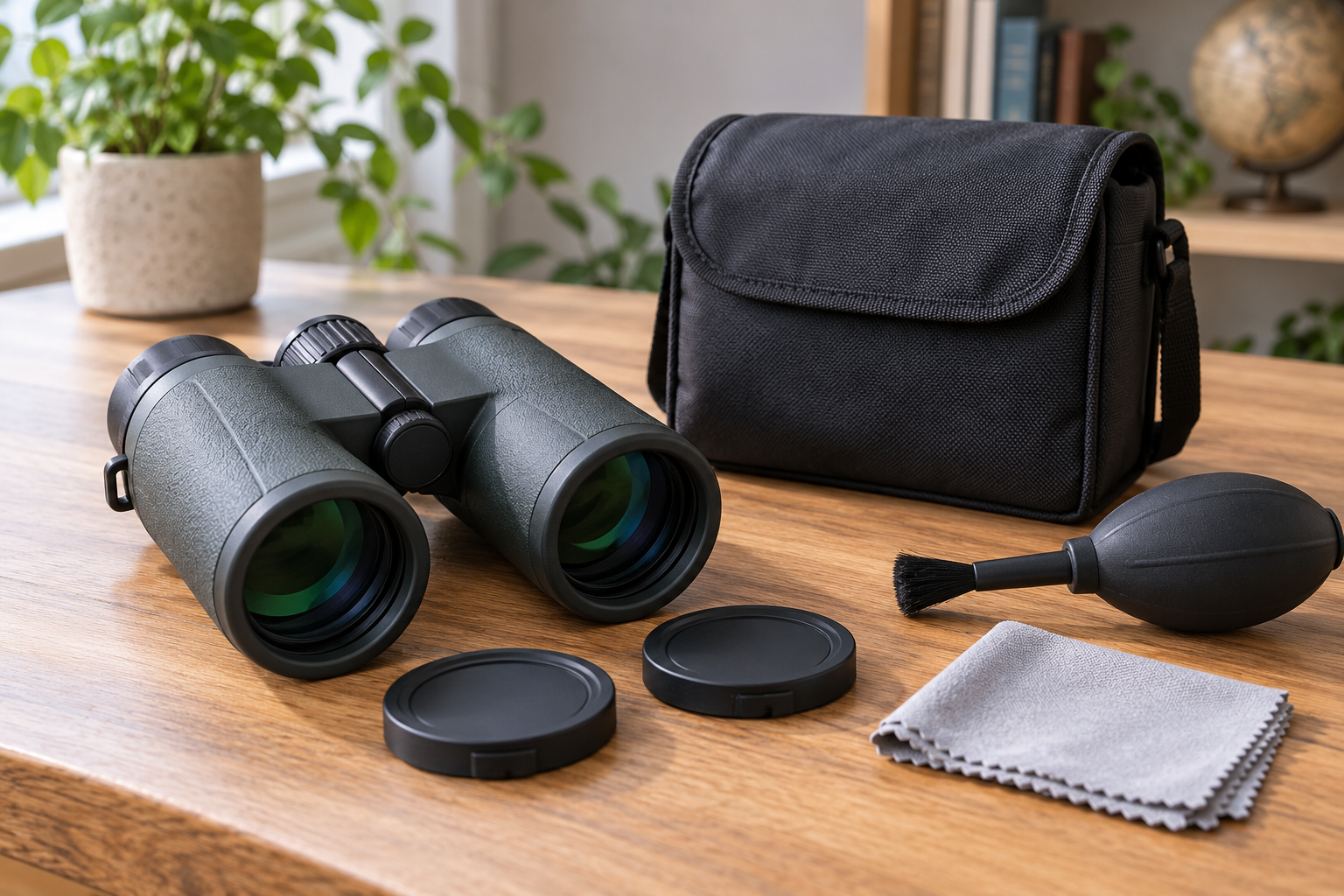
Protect lenses and follow the approved cleaning method
Read the permitted brush, cloth and cleaning-product instructions for your nature binoculars. Do not rub a dusty surface with a random fabric or use household cleaner because it is available. Keep caps and approved tools in an understood place and check that those tools are clean too. Dirty cleaning equipment can introduce another problem. Simple case organisation protects small components from mixing with food supplies, sandy equipment or damp clothing carried elsewhere in the same bag.
If an internal issue appears or the device suffers an impact, do not dismantle it to attempt an unapproved repair. Record the timing, circumstances and model, then contact the appropriate service provider. Read the actual inspection and warranty terms before purchase without assuming one policy applies to every seller. The objective is to understand the help available for those nature binoculars, not to promise that every problem is covered or to rely on equipment whose current condition has not been established.
Keep ordinary nature binoculars away from solar viewing
This article concerns terrestrial observation with ordinary nature binoculars. Never point them at the Sun or use sunglasses or eclipse glasses as justification for looking through them towards it. NASA‘s solar-viewing safety guidance explains that optical devices require specialised solar arrangements and that eclipse glasses must not be used with them in this manner. Do not improvise a filter or experiment. Choose a safe direction for terrestrial observation and provide suitable supervision for any child using the device according to its instructions.
The warning is not an invitation to demonstrate that a brief attempt might work. Make the nature binoculars rule clear to anyone borrowing the equipment. Store it so that an uninformed user does not begin an unsupervised experiment. Specialist solar observation is a different activity requiring its own guidance and equipment. This article does not provide that preparation, and ordinary nature-viewing accessories are not a sufficient basis for starting. Keep the nature binoculars purchase decision focused on the actual outdoor viewing task for which the device is intended.
A hypothetical nature binoculars comparison
Imagine a participant wanting brief landscape observations during rest stops. Initially, they select the highest magnification on a shortlist. During a trial, they find another model easier to carry and adjust, so they compare comfort, weight and viewing rather than ranking by one number. This is a hypothetical example, not a test conducted by Hike & Seek. It does not establish that lower magnification suits everyone. It shows why nature binoculars should serve the actual user and activity, supported by the correct model information.
| Observation during comparison | Follow-up question | Evidence for the decision |
|---|---|---|
| Uncomfortable carrying weight | Were the intended strap and case tried | Complete carrying trial |
| Difficulty finding the subject | Was setup explained and field of view reviewed | A consistent repeated trial |
| Discomfort with glasses | Was the model’s appropriate setting used | Actual use before purchase |
| An accessory is absent | Is it included or sold separately | Written box contents |
| A general durability promise | What are the actual limits and service terms | Model-specific documentation |
Frequently asked questions about nature binoculars
Is the highest magnification always best for nature binoculars?
Do not choose nature binoculars by one number. Compare stability, comfort, field of view, weight and the intended use, then try the particular model. Higher magnification may not resolve a difficulty caused by setup, carrying or finding a subject. Use specifications to make a shortlist and retain practical observations. An advertising description such as powerful or professional does not explain whether you can hold, adjust and transport the equipment comfortably during the programme you actually intend to join.
What do nature binoculars numbers such as 8×42 mean?
The first figure is magnification and the second the objective lenses’ diameter in millimetres. These describe basic nature binoculars specifications, rather than every aspect of quality, weight or comfort. Read the remaining model information and try the equipment. Two devices displaying the same figures need not feel identical. Check the version, dimensions and accessories so that the comparison concerns the products actually offered, rather than similar photographs or names that do not represent the same purchase and included equipment.
Can I use nature binoculars while wearing glasses?
Try nature binoculars with your usual glasses according to the model’s instructions and request an explanation of eyecup and focusing adjustments. Advertising or another person’s experience cannot establish your comfort. If an individual visual question remains, seek suitable advice rather than assuming another magnification will solve it. The actual user’s trial is valuable where possible, particularly when compatibility with glasses is important. Do not force a position simply because a seller says that every wearer will eventually become used to it.
Do I need nature binoculars for every hike?
No. Connect carrying nature binoculars to the programme, intended use and complete weight. Ask about stopping arrangements on a group activity rather than assuming specialist observation time is included. Unaided observation may be enough on one trip, while equipment is useful on another. Owning a device is not a condition for enjoying nature. It also does not justify leaving the group, remaining behind without coordination or moving towards a location where stopping and observation are not permitted.
Should I buy nature binoculars before trying them?
Understand adjustment, carrying and comfort before committing where possible, and review the seller’s actual trial and return terms. If you cannot try nature binoculars, clarify the requirements and the process for unsuitable equipment without assuming a universal policy. Retain the full model name and contents list. Before comparing prices, confirm the same version and accessories. A small difference in the name can change what you receive, while an attractive headline price may exclude a case or strap you considered essential.
How should I clean nature binoculars lenses afterwards?
Follow the nature binoculars manufacturer’s method and use only permitted tools and products. Do not rub dust with random fabric or apply household cleaner because other glass surfaces tolerate it. Care for the case and cleaning tools too, then store the device as instructed. Refer internal issues or unexplained changes to the appropriate service provider rather than dismantling it. A description of the nature binoculars model, circumstances and visible problem is more useful than asking for a strong liquid intended to clean everything indiscriminately.
Does a Hike & Seek trip provide nature binoculars?
This guide does not assume nature binoculars are included in every booking. Read the programme description and ask the team about the selected activity’s advertised equipment. If shared equipment is provided, clarify access arrangements rather than treating that as a device for each participant at every moment. If bringing your own, review luggage and stopping opportunities. The supplier’s product guidance and the organiser’s trip information answer different questions, and both may be relevant to a realistic equipment and participation plan.
Can children use nature binoculars?
Check the nature binoculars manufacturer’s age and intended-use guidance, provide appropriate supervision and explain carrying and adjustment. Never point the equipment towards the Sun or let a child experiment without understanding that rule. Choose a stable permitted stopping place rather than viewing while walking or beside an edge. This guide does not prescribe one age for every product and child. Suitability depends on the actual device, child, supervision and environment, together with the rules applying to that activity and location.
Retain the exact version on the purchase record when requesting a replacement cap or accessory.
Confirm how the device fits the programme
Identify what you want to observe and what you can carry, then Contact Hike & Seek about the selected programme and permitted stops. Review nature binoculars setup, protection and care with the nature binoculars supplier, keeping the instructions and model details. A comparison grounded in actual use makes equipment a considered addition to your bag. It avoids purchasing from a large number or a promised sighting that the trip cannot guarantee. Start with a defined need and review the decision after your first practical experience.