 عادل فيرق
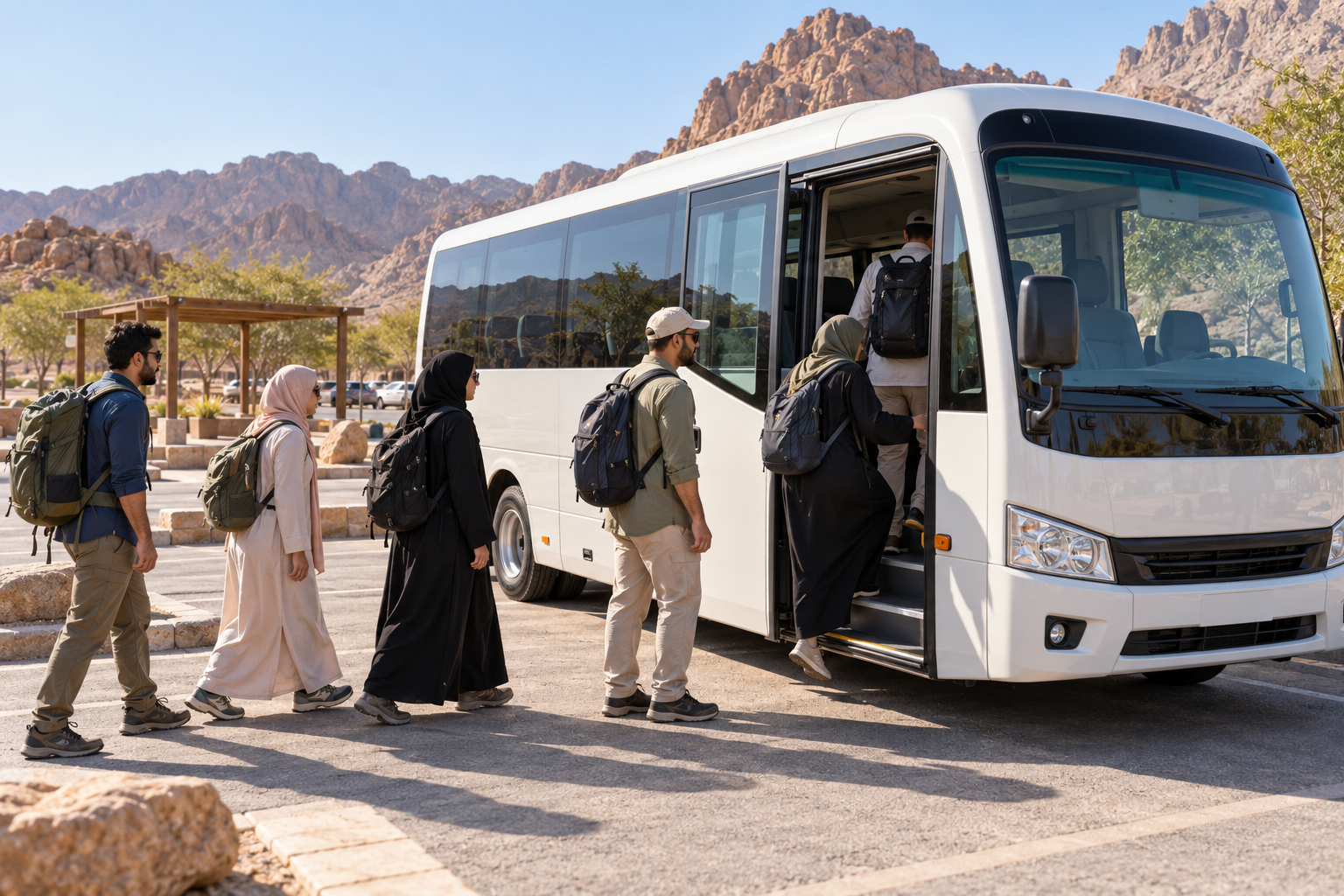
Review hiking trip transport as a complete sequence: reaching the meeting point, travelling within the hiking trip transport programme and continuing home after the final drop-off. A booking does not automatically include collection from home, and the walking start may differ from the vehicle boarding location. Save the exact points, attendance and departure times, verification process and luggage instructions. These details let you organise the day without discovering essential assumptions only when the group arrives or begins loading equipment into a vehicle.
This hiking trip transport guide is a planning method, not an advertisement for a bus, fare or route included with every programme. Arrangements can vary by activity, date and booking. Confirm actual services with the hiking trip transport organiser and review carrier instructions where relevant. This article does not create a universal cancellation, refund or luggage policy and is not legal advice. It turns practical questions into a list to resolve before payment, packing and departure, while keeping the provider’s actual confirmed terms as the basis of your decision.
Before relying on Hike & Seek hiking trip transport, browse the published hiking trips and Contact Hike & Seek with the hiking trip transport programme and date. Ask whether transport is included, optional or unavailable, where boarding and drop-off occur and whether a separate seat selection is required. Do not transfer an old activity’s details or a vehicle photograph to a new booking. Keep the relevant answer with your confirmation and arrange personal arrival and luggage around that information rather than an expectation nobody has agreed to provide.
Begin hiking trip transport at your own departure point
Divide travel into your journey to the meeting location, any programme transport and your onward journey after drop-off. The middle stage may be included while the others remain your responsibility. Write all three stages into the hiking trip transport plan, identifying time, place and suitable means of travel. Do not rely on another participant offering a lift simply because their name appears in a chat. A personal arrangement needs clear agreement and practical details before it can form part of your day.
Check the exact location and any arrival or waiting instructions. A broad district name does not explain the actual boarding entrance. If the meeting place is unfamiliar, review the supplied map and resolve differences between its pin and the written description. Clarifying hiking trip transport before departure is easier than searching between several entrances as boarding begins. Do not assume a photograph from an earlier activity represents the current location or that all programmes using the same destination depart from the same city point.
Separate the hiking trip transport meeting point from the walking start
The gathering place may differ from the trail start, and direct arrival may require approval or be unavailable. Do not infer hiking trip transport from a route image or destination name alone. Ask which option applies to your booking and how attendance is confirmed if personal arrival is permitted. Do not go to another point and expect the hiking trip transport programme to change around you. Agreed locations help the organiser understand participation and movement; they are practical instructions rather than approximate suggestions that each person can reinterpret independently.
Distinguish attendance time from departure time
Record when you are required to arrive, when the hiking trip transport vehicle is expected to move and any earlier verification or loading process. Departure is not necessarily the time to begin arriving. Ask for the actual hiking trip transport instruction and delay procedure. This article does not promise a waiting period. Obtain the real arrangement instead of making a personal estimate that puts the group under pressure to accept a change they did not agree to when booking their own day.
Allow realistic travel time for your means of arrival and conditions, without relying on one buffer that supposedly suits everybody. A hiking trip transport plan should not succeed only when every connection takes the shortest possible time. Review approved updates before leaving and retain accessible information. If a confirmed point or time changes, make sure you understand the current instruction. An old screenshot or early message may no longer reflect the hiking trip transport programme, even if it remains convenient to find near the top of a conversation.
| Hiking trip transport question | Confirm before booking | Unsupported assumption |
|---|---|---|
| Is transport available | Status for the selected programme and date | Every departure provides transport |
| Where do I board | Exact point and access instructions | The destination is the boarding location |
| When must I arrive | Attendance and departure times | Arriving as the vehicle moves is sufficient |
| What can I bring | Actual luggage and storage instructions | Every bag will fit somewhere |
| Where does the return end | Drop-off point and expected timing | Collection and return are door to door |
Confirm the seat and any separate booking step
Ask whether transport requires an additional selection or confirmation. Booking an activity does not automatically allocate a seat on every vehicle. Review hiking trip transport for the actual participant count and discuss any access or seating requirement in advance. This guide does not promise a particular vehicle feature or reserved arrangement. Obtain a clear description of what exists, then decide whether it suits you. Do not pay while relying on an unconfirmed modification being possible during boarding when available options may already be constrained.
Keep the confirmation and details required for verification accessible without publishing documents in an open group. Read relevant provider instructions before relying on the hiking trip transport arrangement. Do not fill missing hiking trip transport information with a rule remembered from another departure. Good preparation connects the seat, passenger, programme and actual booking date. It resolves essential questions while there is still time to choose an appropriate option, rather than turning an unclear reservation into a delay affecting participants who have arrived according to the confirmed instructions.
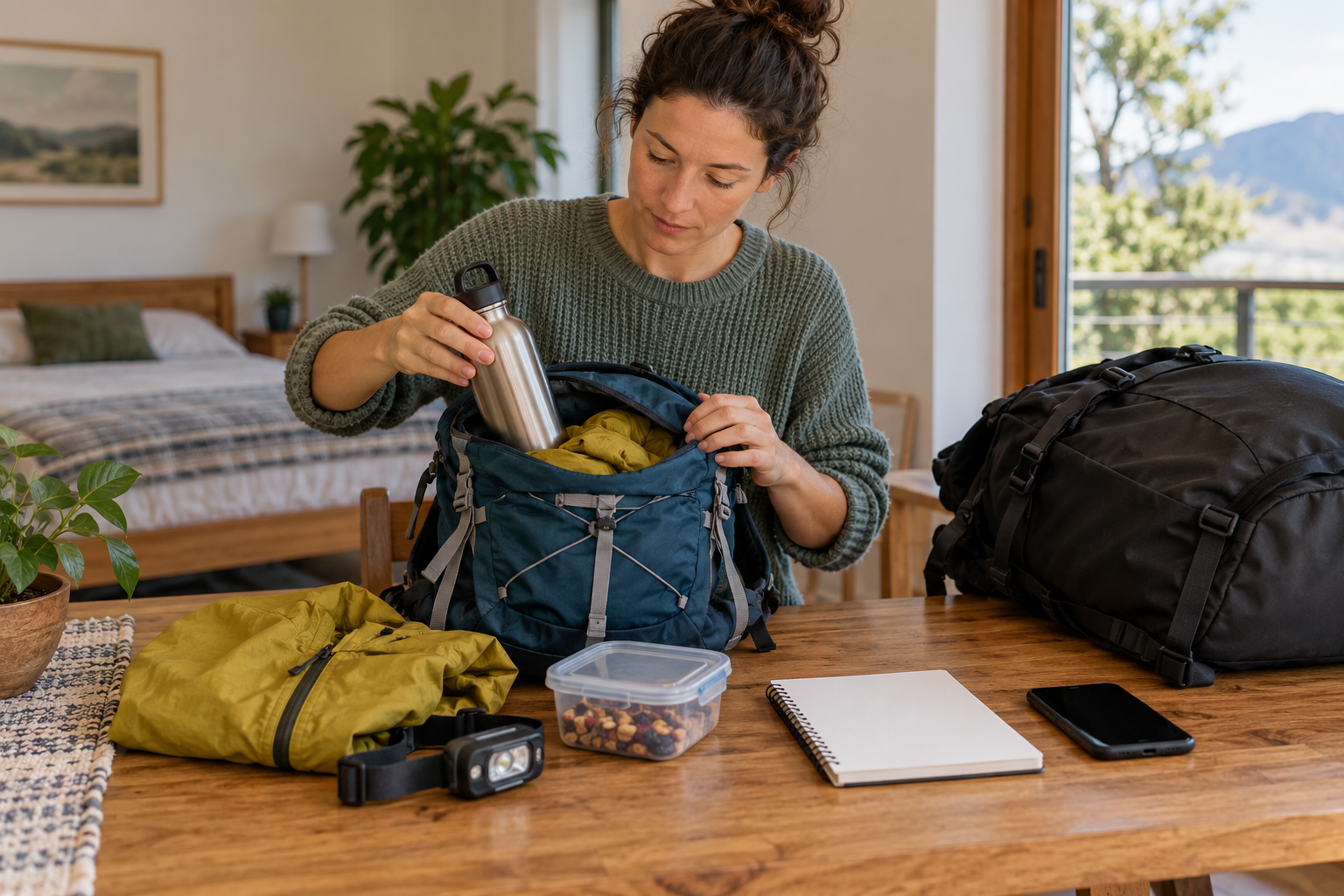
Prepare a small bag for the journey
Separate what you need during travel and the first stop from larger luggage that may be stored elsewhere. Depending on the hiking trip transport programme and your situation, personal examples include water, suitable clothing and booking information. Do not make the hiking trip transport day bag an extra load that obstructs sitting or movement. Ask what is permitted in the passenger area and follow the organiser and carrier’s placement instructions. Do not assume you can open large stored luggage at any moment or while the vehicle is moving.
Try packing essentials at home and check whether you can find them without scattering the contents. Plan appropriate access for an important personal requirement and discuss it in advance if it needs a special arrangement. This article does not diagnose travel-related conditions or recommend medication. Its hiking trip transport purpose is organisation and understood access. Obtain suitable professional advice for individual health questions rather than trying a drug or procedure because another participant recommended it informally without knowing your situation or being qualified to advise.
Review luggage for the actual programme
Ask about any declared count, dimensions, weight and storage conditions, including unusual equipment. Do not invent a universal allowance. A photograph of a spacious vehicle does not establish that its capacity is available for your booking. If carrying sleeping equipment or a large item, provide a description and dimensions where useful. Approval of a daypack does not automatically approve a box or device requiring different handling. Confirm hiking trip transport before purchasing equipment whose size could make the selected arrangement unsuitable for the hiking trip transport programme.
Where an activity involves sharp tools, fuel or specialist equipment, ask the hiking trip transport organiser and carrier about permitted transport, then follow the product’s own requirements. This article does not supply a legal materials list or one carrier’s policy. Current specific instructions must guide hiking trip transport rather than a participant’s old experience or a guess based on bag size. Resolve uncertainty before purchase and packing. The vehicle door is a poor place to discover that an unusual item was never discussed and cannot be handled in the way you assumed.
Identify luggage without exposing unnecessary details
Use an appropriate identifying mark and follow any requested labelling process. Hiking trip transport does not require displaying your home address or complete booking documents on a bag visible to everybody. Keep necessary information with the relevant provider and make collection straightforward. Check a similar-looking bag before taking it. Do not ask another participant to collect your belongings without a clear agreement about the items and how they will identify them. A useful label supports recognition without becoming an unnecessary public record of private information.
| Belongings group | Planned position | Point to review |
|---|---|---|
| Journey essentials | Permitted small personal bag | Access without obstructing movement |
| Larger belongings | Approved storage location | Size count and collection procedure |
| Specialist equipment | According to specific approval | Compatibility and transport instructions |
| Booking documents | Accessible personal location | Privacy and verification when required |
| Journey rubbish | Suitable container | Collect it rather than leaving it in the vehicle |
If hiking trip transport determines whether you can book, contact the team before payment to confirm seats, locations, luggage and return arrangements. Describe the relevant need, such as large equipment or an access question, without assuming the service can automatically change. A useful answer concerns the selected programme and what it can actually provide. Retain that information with your list. Do not make an essential stage depend on a vague verbal assurance or a message from someone whose organisational role you have not established.
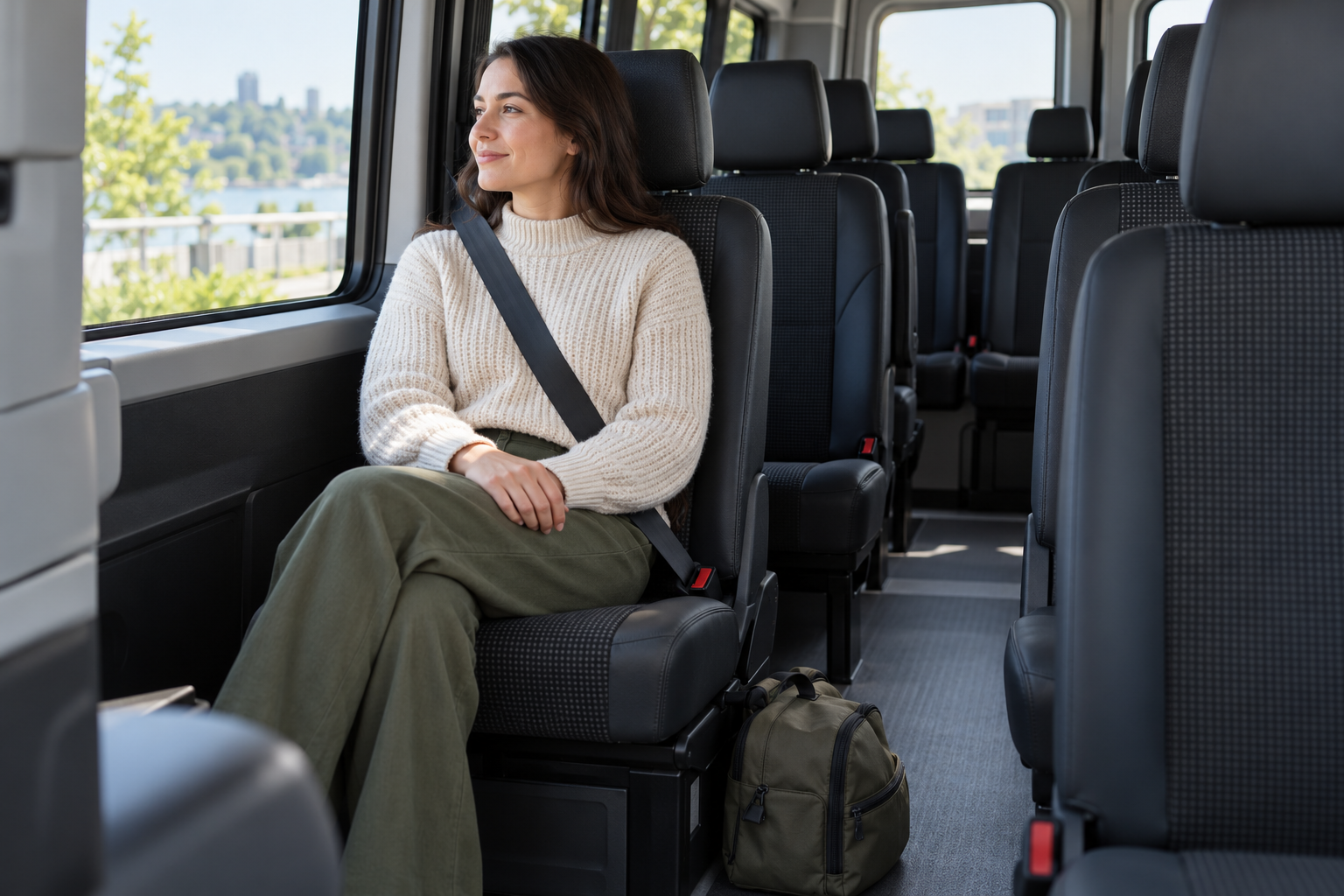
Follow boarding and seating instructions
Identify the hiking trip transport vehicle and responsible person according to the booking arrangement, then follow boarding and loading instructions. Use the available seat belt as instructed and keep passages and exits clear of your belongings. Hiking trip transport does not require racing for a position or placing large equipment in an unapproved area yourself. Ask about unusual items and follow the allocated arrangement. Avoid standing where vehicles are moving or opening storage without coordination with the responsible people managing the vehicle and luggage.
Respect other passengers’ space, noise preferences and cleanliness. Review food and drink instructions instead of assuming everything is permitted. Keep suitable containers closed and collect waste. Do not use hiking trip transport to photograph unwilling passengers or publish private meeting information. Conversation and rest can both fit the journey when participants respect each other and the carrier’s instructions. This article does not promise charging, internet access or additional facilities. Confirm any feature essential to your participation rather than relying on what another vehicle provided previously.
Understand stops and attendance checks
Follow instructions about stopping, where to return and the time allocated. Do not make hiking trip transport depend on someone automatically noticing you have not returned. Explain a change or need directly through the appropriate channel. An unacknowledged message does not replace understanding what is required at that stop. Retain your necessary belongings and do not move another person’s bag without their knowledge or the storage coordinator’s agreement. The aim is a clear shared movement process rather than individual assumptions that others cannot reliably track.
Do not leave the stopping area or switch transport without explicit coordination. If your booking permits different arrival or departure arrangements, agree them before the hiking trip transport programme and confirm their implementation with the responsible person. Hiking trip transport concerns group movement. Telling one friend is insufficient when the organiser still believes you are among the passengers. Direct clarification prevents unnecessary waiting or searching and respects everybody’s time. The exact procedure comes from the programme; this article does not invent one universal check-in system for every departure and provider.
Prepare for delays without assuming the hiking trip transport vehicle will wait
Save the designated contact and actual delay procedure. If your personal arrival is disrupted, provide useful information and request instructions. Do not assume the hiking trip transport vehicle returns, waits indefinitely or accepts an alternative collection point. This guide does not promise refunds or compensation. Review the activity and hiking trip transport booking terms before payment. Understanding the real policy supports a practical decision. It is better than relying on an exception whose availability has never been confirmed and discovering the consequences after the scheduled group departure.
If an approved update changes the hiking trip transport programme or vehicle arrangement, review its effect on arrival, return and luggage, then ask about any conflict. Do not circulate old instructions as current. A useful hiking trip transport plan needs an understood current version rather than the largest collection of screenshots. Keep what is necessary to verify and communicate without publishing passenger documents or private data. Ask a specific question where a change is unclear, instead of repeating an earlier plan you already know may no longer apply to the booking.
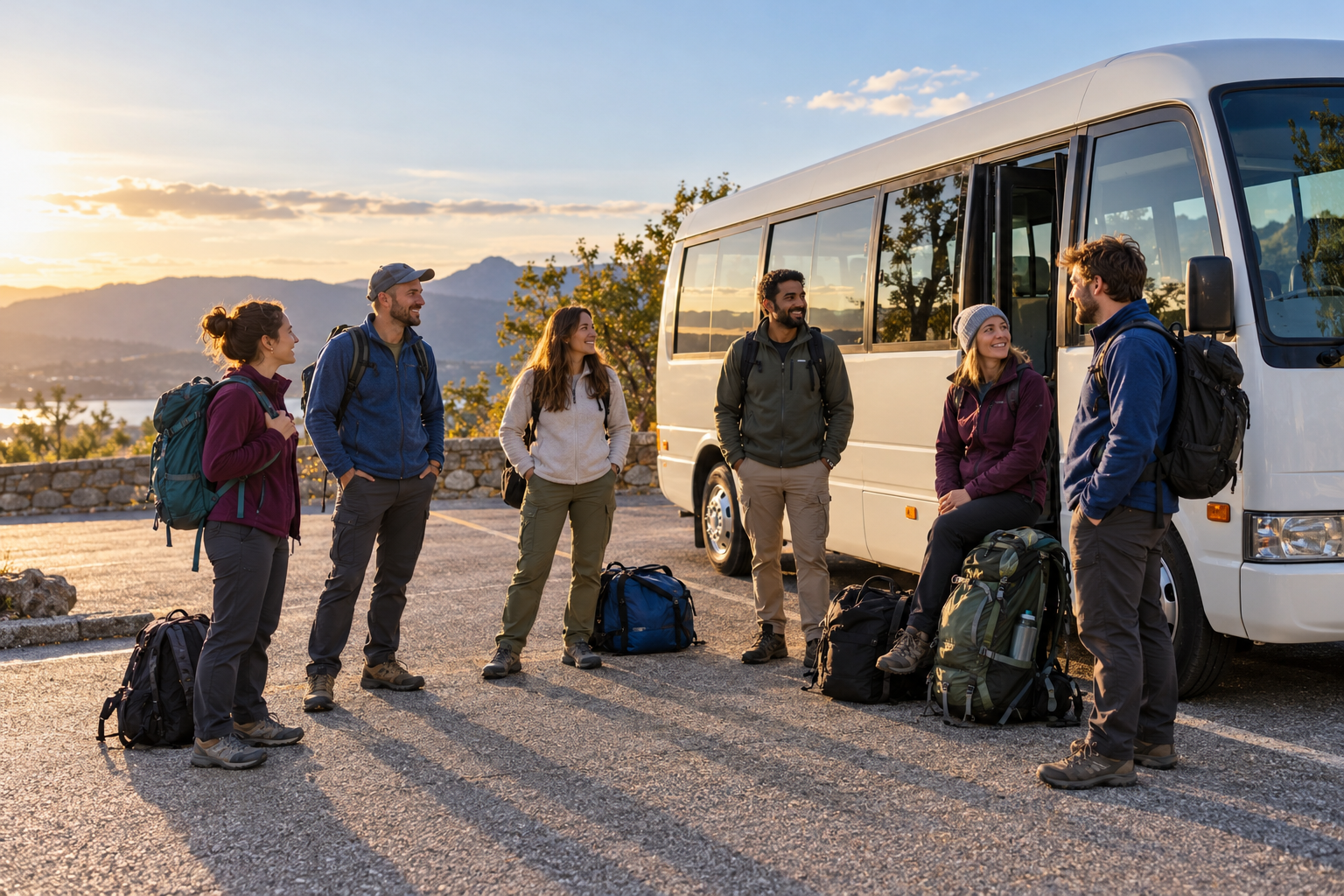
Review return timing before making onward commitments
Ask whether the advertised time is estimated and confirm the drop-off point, then organise personal onward travel. Do not base a tight commitment on precision the organiser has not promised. Hiking trip transport timing can depend on the hiking trip transport programme and conditions. Confirm what the displayed time means for your actual booking. This does not require inventing a delay estimate. It requires using verified information and an arrangement appropriate to your circumstances instead of interpreting a return label as guaranteed arrival at any address you choose afterwards.
Give anyone who needs your plan an expected return and an agreed update arrangement, considering possible timing or communication changes. The general preparation principle in NPS trip-planning guidance can help frame the questions, but local hiking trip transport details come from your organiser and carrier. Do not transfer a foreign park’s rules to a Saudi booking as binding terms. Use the general principle to prepare, then base the practical route, timing and collection decisions on the specific provider information applicable to your actual day.
Check collection before leaving the hiking trip transport vehicle
Review your small bag, stored luggage and any equipment received during the day. Do not rely on a remembered item count if you have added another bag or separated used clothing. Check identification and necessary contents without obstructing the passage. Report anything missing promptly through the actual procedure. Do not take a similar bag assuming it can be exchanged later. Hiking trip transport ends more smoothly when collection is checked before travelling away and losing the immediate opportunity to clarify what happened with the responsible person.
After returning, clean and dry equipment as instructed and review the day’s organisation. Which necessary item remained inaccessible? Was the hiking trip transport meeting point clear? Improve the next hiking trip transport plan from specific observations rather than automatically increasing bag size. The useful change may be moving one item closer, saving the correct location or asking earlier about drop-off. Verify the new programme again. One experience does not establish that the next vehicle, luggage conditions, boarding location or timetable will be identical even where an activity has a similar name.
A hypothetical complete travel plan
Imagine a participant reading the destination name and assuming collection from home. A review shows boarding at a specified point, so they arrange personal arrival, a journey bag and onward travel from drop-off before finalising the hiking trip transport booking. This is a hypothetical example, not a description of a particular Hike & Seek service. It illustrates hiking trip transport as connected stages. Understanding one does not establish the others, and a practical early decision may resolve more uncertainty than another equipment purchase that never answers the arrival question.
| Stage of the example | Confirmed information | Resulting personal decision |
|---|---|---|
| Before boarding | Meeting point and attendance time | Arrange suitable arrival |
| Organised transfer | Seat and luggage conditions | Choose the actual load |
| Activity start | Approved route to the trail | Avoid an unagreed location |
| Return | Drop-off and estimated timing | Plan the onward journey |
| Collection | Item count and identification | Check belongings before leaving |
Frequently asked questions about hiking trip transport
Is hiking trip transport included in every booking?
Do not assume so. Check the hiking trip transport programme and date and ask whether it is included, optional or unavailable, and whether a separate selection is required. Hiking trip transport can differ between bookings. An old vehicle photograph or previous experience does not establish current service. Keep the team’s answer with the confirmation and arrange arrival and return accordingly. If transport is essential, resolve it before payment rather than relying on a spare seat or a service being added automatically during boarding.
When should I arrive for hiking trip transport?
Distinguish the two according to the organiser’s instructions. Verification and loading may take place before movement. Do not plan hiking trip transport around arrival at the instant of departure. Ask for the required time and actual delay procedure, then allow suitable personal travel time. This article supplies no universal buffer or promised waiting period. One late passenger cannot assume that the group’s timetable will change or that the hiking trip transport vehicle will return to collect them at another location without an agreed arrangement.
Can I go directly to the trail start?
Ask whether that is permitted and what arrangements apply. Do not infer hiking trip transport from the destination or route map alone. The hiking trip transport meeting point may differ from the walking start and there may be attendance requirements. Do not change your position without agreement. Where personal arrival is available, save the exact location, time and instructions. An option from an earlier activity does not establish permission or suitability for every programme sharing a region, destination or similar title in the listing.
What luggage can I bring?
Review actual count, dimensions, weight and storage instructions where specified, asking about unusual equipment before packing. This guide does not create a hiking trip transport allowance or materials policy for every carrier. Identify what you need in the passenger area and what may remain stored, then follow the product and provider requirements. Approval for a daypack does not automatically authorise a box, device or fuel item whose conditions have not been discussed, even if you routinely use it on private camping trips.
Can I reach a large bag during the journey?
Ask about storage and access instead of assuming availability at every moment. Prepare a permitted small bag for necessary items while keeping passages and seating clear. Hiking trip transport works better when essentials are known and accessible and larger equipment remains in its approved location. Do not attempt to open storage or move luggage during travel. Follow the responsible person’s instructions at stops rather than improvising access to an item you forgot to separate before boarding the hiking trip transport vehicle.
Is the return time guaranteed to the minute?
Clarify what the displayed time means, the drop-off point and programme-related conditions. This article does not turn hiking trip transport into a precision guarantee the hiking trip transport organiser never offered. Arrange onward travel and commitments using verified information and appropriate flexibility for your circumstances, without inventing a fixed delay. Give a relevant contact the expected timing and update arrangement. Vehicle arrival at drop-off is different from your later arrival home or at another appointment requiring an additional personal journey after leaving the group.
What if I am late to the hiking trip transport meeting point?
Use the organiser’s procedure and designated contact, explaining your situation. Do not assume waiting, a return collection or an alternative joining point. Read relevant hiking trip transport terms before payment instead of relying on a universal policy from this guide. Another participant may not have authority to approve changes. Do not travel towards an improvised pickup location hoping to catch the group without confirmation. The actual provider’s instruction, rather than an unacknowledged message or a personal guess, is the basis for the next decision.
What should I check at the final drop-off?
Review every item and its identification, including passenger-area and stored belongings and anything added during the day. Do not end hiking trip transport by taking a similar bag or postponing checks until you are far away. Report missing belongings through the actual procedure before continuing your personal journey. Afterwards, note what to keep accessible next time and verify the new programme. The hiking trip transport vehicle, locations and luggage conditions can differ, so previous success does not replace reading the current instructions for the next booking.
Save the meeting location with the programme name and date, preventing a destination pin being mistaken for today’s boarding point.
Confirm the complete journey before payment
Write down personal arrival, boarding, activity transfer, return and onward travel, then Contact Hike & Seek with the selected programme, date and decision-relevant questions. Confirm locations, timing, seats, luggage and individual requirements before packing. Hiking trip transport becomes clearer when you know what the hiking trip transport programme provides and what remains your responsibility. Retain current information, follow the organiser and carrier instructions, and check belongings during collection. Use the experience to ask a more precise question next time rather than repeating an assumption you never verified.