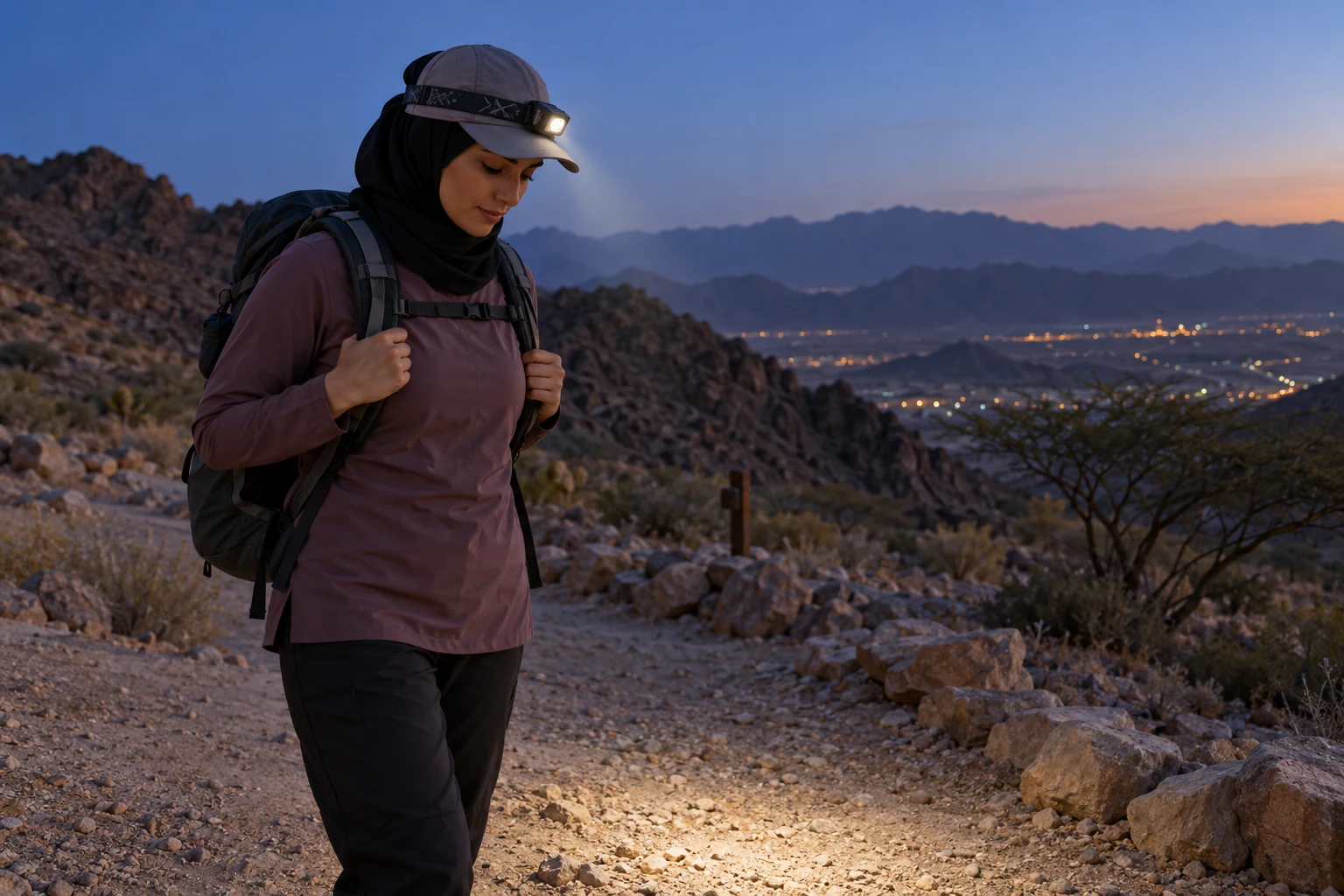
 عادل فيرق
Choose a hiking headlamp by comparing the beam you need, operating time in the mode you expect to use, and controls you can operate confidently. A large lumen figure alone does not settle the decision. Learn how the device fits, how its approved power source works and what the actual programme requires before buying additional equipment.
A hiking headlamp keeps your hands available for ordinary tasks such as opening a bag or organising belongings. That benefit still depends on a stable strap, a usable angle and understandable operation. A device that slips or needs repeated attempts to change mode deserves another comparison. Start with the task rather than the longest list of advertised functions.
Before purchasing a hiking headlamp, browse Hike & Seek’s current hiking trips and confirm the equipment list for the exact programme. A daytime description does not replace reading its requirements. Equally, an equipment article does not mean personal lighting is included in a booking. Clear programme information helps you prepare for a real need rather than copy someone else’s previous outing.
Establish the hiking headlamp task first
You might use a hiking headlamp to organise belongings during a stop, read a short instruction or meet the requirements of the activity. Write down the expected use before opening product listings. A close task and a preference for a narrow beam illuminating a more distant point are different questions. Neither becomes the universal best choice because of one number on a box.
Read the hiking headlamp beam description. REI distinguishes a wide beam for nearby tasks from a focused beam for viewing farther away, with designs combining them. Use that distinction to define a practical trial: can you see the relevant working area clearly? A dramatic beam photograph is less useful when it shows neither a surface nor a task resembling your intended use.
A hiking headlamp cannot establish that every route or departure time is appropriate. This is an equipment decision within an understood programme, rather than a field assessment or an alternative to the leader’s instructions. Learn the tool in familiar surroundings and clarify the requirements before joining an activity with equipment you have not yet tried.
Identify a hiking headlamp issue before replacement
If you already own a hiking headlamp, establish why you want to replace it. The issue may be a strap adjustment, an uncharged power source or a mode you have not learned to select. Investigate that specific question according to its instructions before shopping. Conversely, do not ignore a persistent fault merely because pressing the button still produces some light.
| Intended task | Comparison question | Appropriate trial |
|---|---|---|
| Organising a bag | Is the nearby working area illuminated usefully? | Handle familiar belongings in a suitable place |
| Reading an instruction | Can you select a comfortable task setting? | Read a page without disturbing others |
| Changing settings | Do you understand the mode sequence? | Repeat access to the intended setting |
| Packing the device | Do you understand any transport lock? | Test the specified lock if provided |
| Joining a programme | What personal lighting is actually required? | Confirm the organiser’s equipment list |
Read hiking headlamp brightness with the other specifications
Lumens describe the light output of a hiking headlamp, but do not by themselves explain its distribution on the ground. Petzl’s technical explanation identifies beam shape as important to lighting distance. Designs with similar output can therefore feel different in use. Read beam type, distance and mode together, then compare the task you actually expect to perform.
Look for a hiking headlamp table connecting each mode with its relevant figures. Do not combine maximum output from one row with the longest operating time from another and treat them as simultaneous performance. If a shop description presents two large numbers without the relationship, consult the model’s official page or manual before relying on that interpretation.
A hiking headlamp may offer a temporary boost function or several operating modes, but their names and limits vary. Check whether a stated maximum describes a sustained setting or a short function. Learn the transition between settings. A sequence familiar from a friend’s device should not be assumed to apply to another model that happens to look similar.
Understand a hiking headlamp operating-time measurement
The stated operating time of a hiking headlamp is not automatically a promise of unchanged initial brightness throughout that period. Petzl explains a measurement protocol ending at 10 percent of the initial light output. Read the stated test method and available mode data or output curve. A duration without its context can create a misleading expectation about the illumination present near the end.
Compare a hiking headlamp using equivalent modes and power sources where possible. A different source or higher setting changes the comparison, and actual use differs from laboratory conditions. Avoid making a personal guaranteed duration by combining packaging figures. Match the requirements, understand the manufacturer’s instructions and prepare a realistic power arrangement for the programme.
Try hiking headlamp fit with your clothing
Try the hiking headlamp with the hat or head covering you intend to wear. Check strap pressure, stability and angle adjustment. A fit should not depend on uncomfortable tightening to prevent movement. If appropriate adjustment does not help, compare another design. Another person’s successful fit does not establish how the same device will sit with your proportions and clothing.
Move calmly during the hiking headlamp trial and look toward different nearby surfaces without directing the beam into anyone’s eyes. The purpose is to check stability and operation, not to stage an extreme test. Wear the intended pack too, particularly where a design uses separate components or a cable that needs organising with the rest of the equipment.
Learn the hiking headlamp strap’s cleaning, drying and replacement instructions. Designs differ in which pieces can be detached. Do not pull a component apart because another product allows it, or assume that a replacement strap fixes damage to the housing or an attachment point. Seek appropriate product support when the cause of a fault remains unclear.
Compare hiking headlamp weight and its distribution
Read the hiking headlamp weight with its stated inclusions. Establish whether it includes the required power source, then try the actual distribution on your head. A front unit with another component behind it feels different from a small single-position design. Comparing a bare lamp body with a complete loaded setup does not answer the practical carrying question.
| Feature | Information to establish | Misreading to avoid |
|---|---|---|
| Output | Figures for each specific mode | Pairing maximum output with longest time |
| Beam | Wide, focused or adjustable design | Ranking solely by lumens |
| Operating time | Mode, source and stated measurement method | Assuming unchanged brightness without evidence |
| Weight | Included source and required components | Comparing unequal setups |
| Protection | Exact rating, limits and product instructions | Treating splash resistance as all-condition protection |
Learn hiking headlamp controls you can repeat
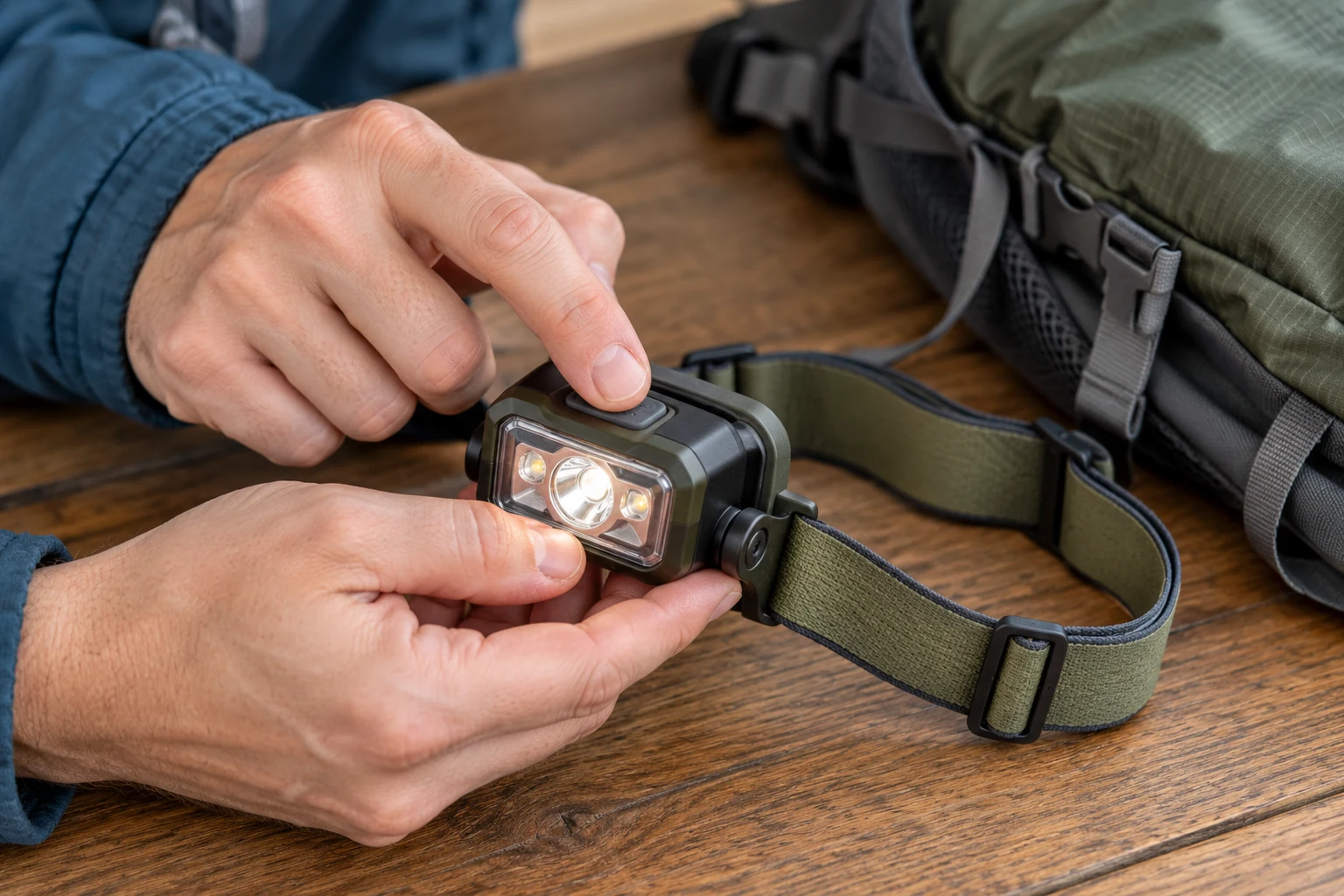
Learn the hiking headlamp in comfortable lighting before rehearsing in an appropriate dimmer setting. Identify on, off, mode selection and a transport lock if provided. You need not memorise every extra feature immediately. You do need to reach the intended setting and leave it without guessing each time or depending on someone else to operate your personal equipment.
If you expect to wear gloves, test hiking headlamp operation with the actual pair where an appropriate trial permits it. A visible button may be less straightforward by touch, or sit close to the tilt mechanism. Distinguish adjusting the angle from pressing the control. Do not force a mechanism that feels stuck or unfamiliar instead of consulting its relevant instructions.
Check what happens when you switch the hiking headlamp on again. Depending on the design, it may return to a previous setting or start in a particular mode. Establish the actual behaviour through instructions and practice. Do not assume a universal memory function, then surprise nearby participants with an unintended bright setting because the starting sequence was unfamiliar.
Confirm the programme hiking headlamp requirements
During hiking headlamp preparation, Contact Hike & Seek about the personal lighting required for the selected outing. Mention the programme and date and identify any unclear point. Do not assume the team supplies chargers, replacement cells or backup devices unless the current service details or responsible booking contact explicitly confirm that arrangement.
Prepare hiking headlamp power charging and storage
Begin with the power sources approved for the exact hiking headlamp model. It may be rechargeable, use replaceable cells or allow particular documented alternatives. Do not infer compatibility solely from similar physical size or try a source absent from the instructions. Keep model details available so a later replacement question identifies the actual product rather than relying on appearance.
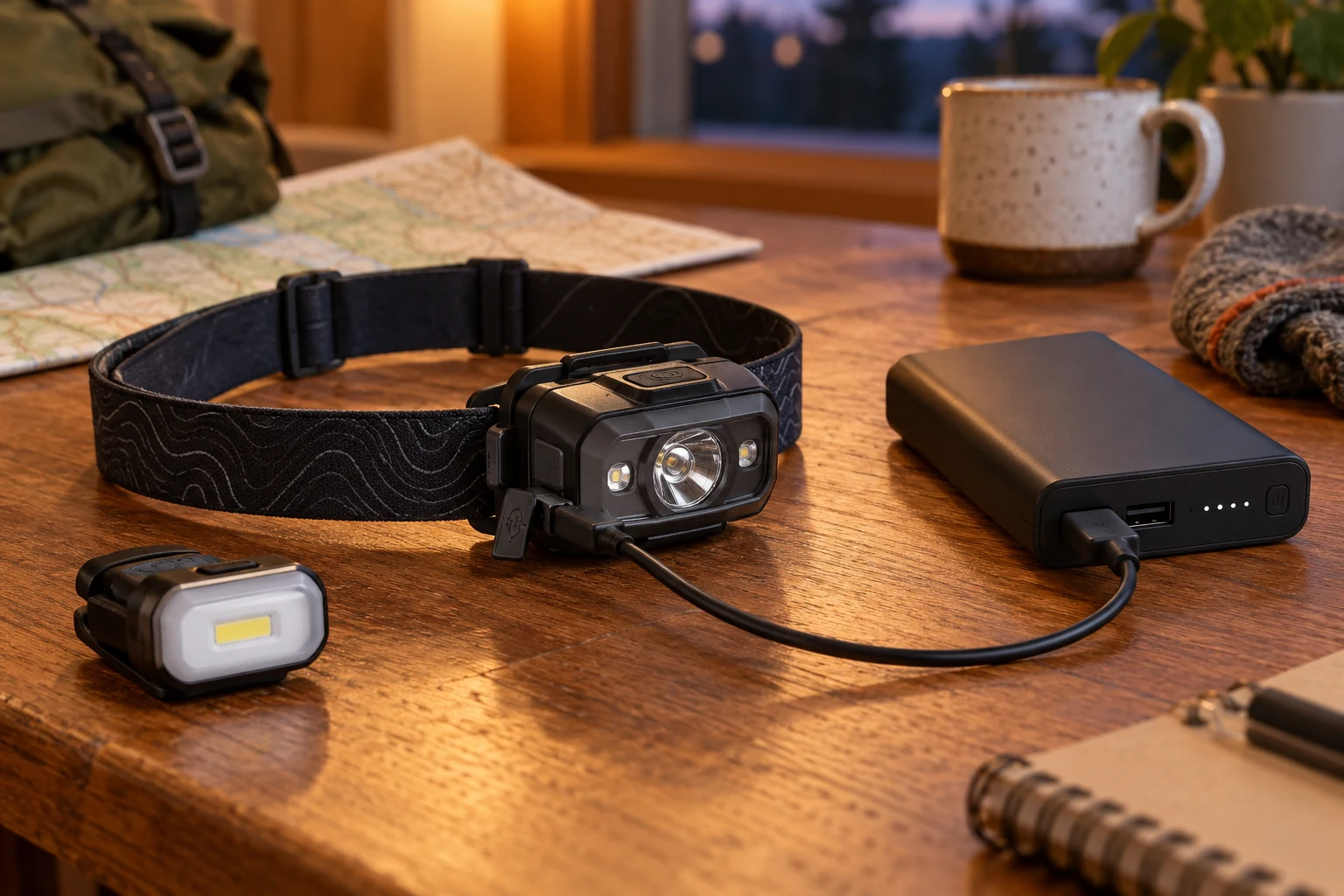
For a rechargeable hiking headlamp, test an approved cable and charging source before packing. Learn the port location, how its cover closes and what the charging indication means. Carrying a power bank does not establish compatibility or a completed charge. A cable that fits another item in your bag is not useful if it cannot connect appropriately to this device.
Where a hiking headlamp uses replaceable cells, follow its instructions for type, installation, replacement and storage. Use appropriate storage instead of leaving cells loose beside keys or metal objects. This guide does not provide battery modification or electrical repair instructions. Leakage, damage or unusual operation calls for the response recommended by the manufacturer and relevant product service support.
Check hiking headlamp transport locks and access
Test the hiking headlamp transport lock if the design provides one, and practise unlocking it. Do not assume every device has that feature or that the same long press controls it across products. After packing, check that you can locate the device and that its position does not expose it to persistent pressure from hard belongings or an internal spill.
Plan suitable backup lighting according to the programme’s requirements and arrangements. A phone light should not automatically be treated as a guaranteed replacement for a hiking headlamp. Using the same phone for photography, communication and illumination links several tasks to one power source. Clarify the required setup rather than expecting another participant’s equipment to make up an unagreed personal shortfall.
Use a hiking headlamp considerately around others
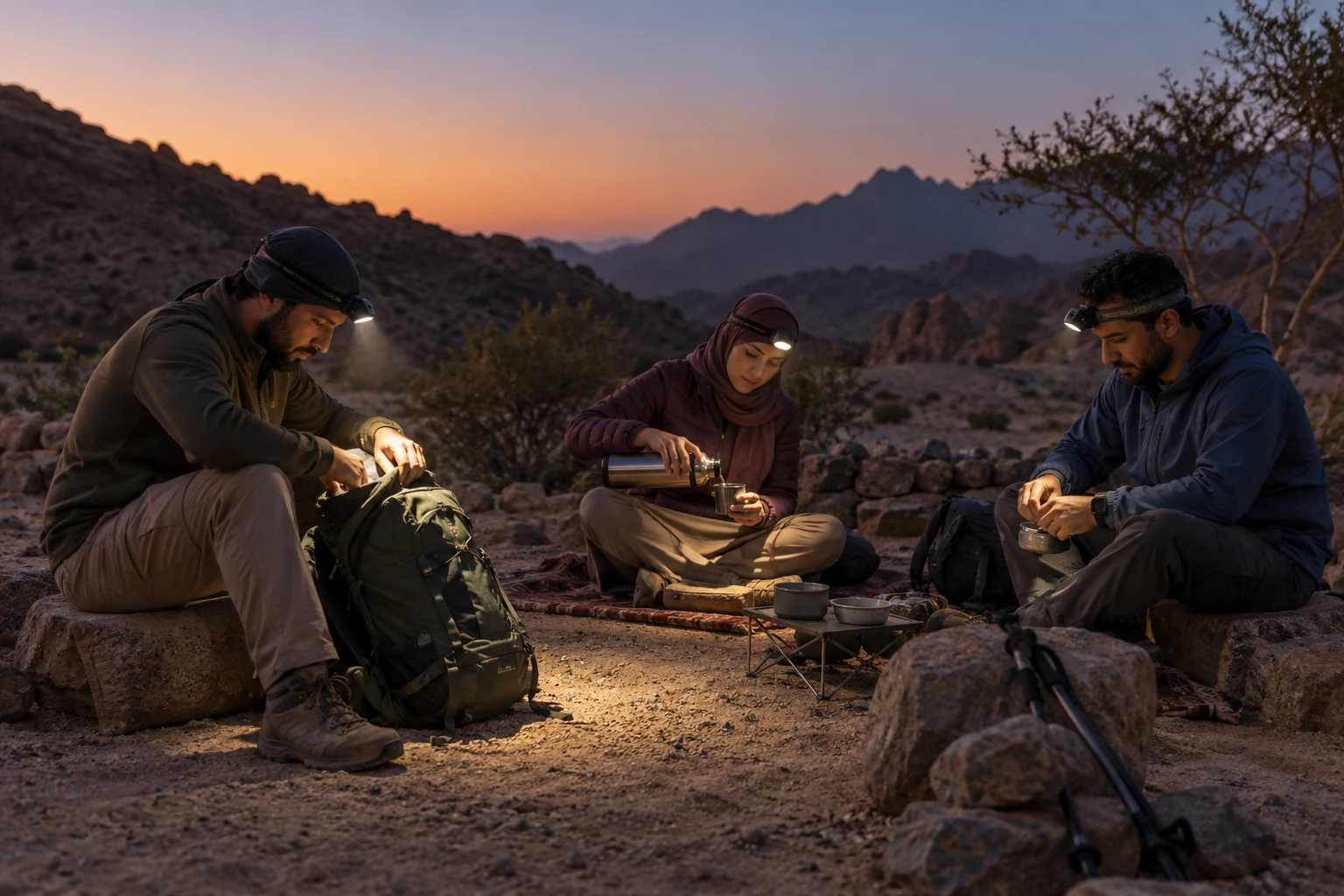
During conversation, notice the hiking headlamp direction and reduce output or adjust the angle where appropriate to the activity instructions. Do not leave the beam aimed into the eyes of the person facing you simply because you turn to look at them. Practise managing the direction during shared tasks and close group stops as well as during your private equipment trial.
Do not use a hiking headlamp flash mode as a game or demonstration in the middle of the group. Some products include red light, flashing patterns or additional functions, but the presence of a control does not make it appropriate in every situation. Follow the relevant arrangements and avoid aiming light toward vehicles or strangers while repeatedly demonstrating the brightest setting.
If the hiking headlamp slips or changes angle, stop appropriately and adjust it calmly. Avoid searching a phone manual or rearranging straps while moving somewhere requiring attention. Earlier practice reduces time spent puzzling over controls. Respect for shared space helps the device support your own tasks without making it a nuisance for nearby participants.
| Checkpoint | Action before relying on the setup | What to establish |
|---|---|---|
| At home | Operate required modes and read instructions | Controls and approved power are understood |
| With clothing | Try strap, angle and intended bag | Stable fit without uncomfortable pressure |
| Before packing | Charge or prepare the permitted source | No known shortage is left unresolved |
| After packing | Rehearse access and any specified lock | You can retrieve and operate it readily |
| After returning | Clean, dry and inspect as instructed | Issues can be addressed before another outing |
Make a hiking headlamp purchase through a clear example
Imagine someone comparing their hiking headlamp with a new product because it repeatedly switches on inside the bag. They learn the provided transport-lock and storage instructions, then repeat the trial. If that resolves the issue and the required functions remain suitable, an immediate purchase may be unnecessary. This hypothetical example does not imply that every model includes a lock or describe a company customer’s experience.
In another example, someone chooses a hiking headlamp by maximum output alone, then finds the strap uncomfortable and mode selection confusing. They compare alternatives through fit, control and the task. A discount or another carrying pouch does not automatically resolve those questions. Repeat the same practical comparison instead of changing the decision criteria whenever another appealing feature appears.
Review hiking headlamp purchase and service terms and the accessories included in writing. This guide does not invent a universal price range, warranty or battery lifespan. Retain the receipt and model information and ask about approved replacement components when relevant. A useful purchase includes understanding care and operation rather than ending when a box with a large lumen figure arrives.
Keep the model instructions somewhere you can consult after a period without use. If you save a photograph of one instruction section, check that it belongs to the exact model rather than a similar series name. When borrowing, agree which accessories are supplied and how the item should be returned. Keep the fitting notes too. Repeat the controls yourself before departure, and describe any known fault openly instead of relying entirely on the owner’s confidence that operation will be obvious.
Frequently asked questions about a hiking headlamp
Is the largest lumen number always best?
Compare a hiking headlamp by beam, mode, operating time, fit and control as well as output. The lumen figure describes one part of performance and does not establish comfort or distribution. Test the task you intend and read the exact model information. Do not combine the highest output and longest duration from different settings into one undocumented expectation.
Does operating time mean constant brightness?
Do not assume a hiking headlamp retains its initial output until the end of the printed duration. Read the measurement method, mode and source involved. Output may change over time depending on the design, making an available curve or official explanation useful. The packaging number needs its context rather than becoming an individual guarantee independent of how the device is used.
Should I choose rechargeable or replaceable power?
Choose a hiking headlamp setup around the programme, approved sources and a power plan you can implement. There is no single answer for every person and duration. Read the exact instructions, rehearse charging or replacement and compare carrying and care needs. Do not use an unapproved charger or cell simply because the physical appearance seems compatible.
How should I test hiking headlamp fit?
Wear the hiking headlamp with intended headwear, adjust according to its instructions and move calmly. Check pressure, stability and angle while keeping the beam away from eyes. If discomfort or slipping persists after suitable adjustment, compare the fit or design. Tightening repeatedly is not the only available response to an unresolved problem with the arrangement.
Does water resistance cover every condition?
Read the hiking headlamp rating, limitations and port and storage instructions. Do not generalise splash resistance into immersion approval or universal use. Designs and tests vary, and a feature applying to one model may not apply to another. A device rating does not justify ignoring weather warnings or activity instructions about the actual conditions.
Is my phone light an adequate substitute?
Do not assume it meets the hiking headlamp requirement for a particular programme. Read the list and ask the organiser. Your phone may also support communication and photography, so compare the task, carrying arrangement and power demands rather than the existence of a light button alone. Prepare the required setup instead of relying on other participants without agreement.
Does Hike & Seek supply the device?
Do not assume a hiking headlamp, its power source or rental is included without confirmation from the current programme details or team. Ask what to bring for the exact outing before purchasing equipment to fill an unclear requirement. This is a preparation guide and does not advertise products, accessories or an equipment service that the company has not confirmed.
What should I check before leaving?
Operate the hiking headlamp and confirm the selected mode and prepared power source. Pack it where you can retrieve it, using the specified lock if available. Review required compatible accessories and address any known operating issue before departure. Understand the group arrangements for seeking assistance instead of expecting an unfamiliar device to become straightforward during the outing.
Prepare a hiking headlamp around a clear programme
Establish the requirements, then compare beam, power, fit and control using your actual equipment. Explore the current outings and contact the team to clarify the programme list before completing a purchase. Allow time to practise operation and storage so your hiking headlamp becomes part of preparation you understand, with appropriate limits and consideration for other participants.