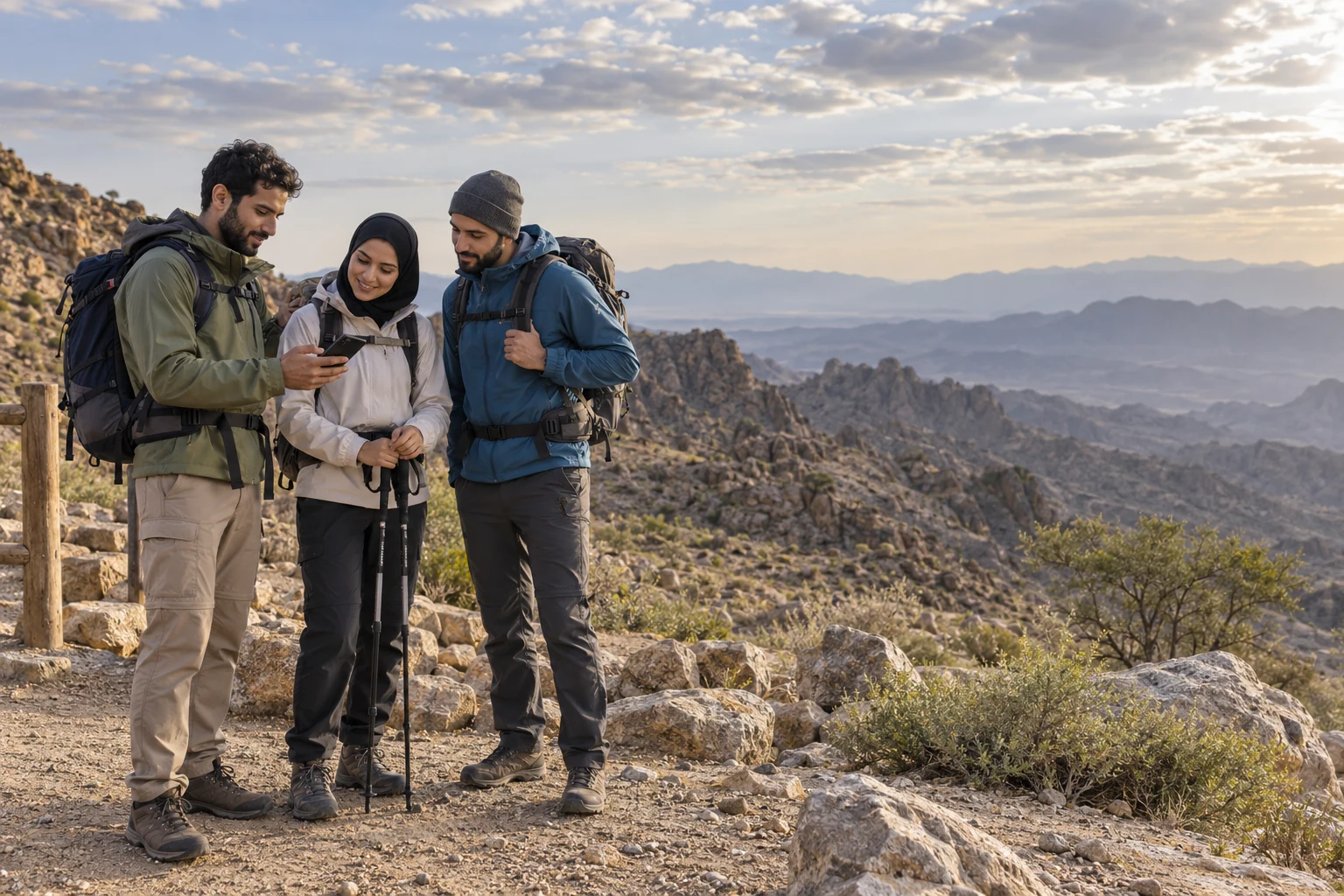
 عادل فيرق
Plan for hiking weather by connecting the forecast to the actual route, activity hours and return arrangements, then checking official alerts before departure. A city temperature and a sunshine icon cannot describe the whole outing. You need current information about the destination, a realistic alternative and a clear way to receive changes from the organiser.
Understanding hiking weather does not require becoming a forecaster. Start with four questions: where will the group walk, when will it be exposed, which conditions may affect the programme, and what happens if the plan changes? This guide offers a practical preparation process for trips in Saudi Arabia. It does not forecast a particular departure or certify a route as suitable.
Before booking around hiking weather expectations, browse Hike & Seek’s current hiking trips and Contact Hike & Seek with your date, experience and group requirements. Request the route description, activity timing, equipment list and change arrangements for the selected programme. A published listing does not establish availability on every date or confirm every detail of a future booking.
Locate your hiking weather forecast correctly
Your hiking weather check should refer to the destination rather than just the nearest familiar city. Record the region, route area and agreed starting point. Ask whether information supplied by the organiser describes the city or the walking area. This is particularly useful when transport takes the group between locations with different exposure and surroundings.
Put the programme beside the hiking weather forecast. Identify the journey, walking period, longer stops and expected return. You do not need to calculate mountain temperatures yourself. You do need to know whether the outing includes exposed ground, an evening gathering or time waiting outside after walking. Those are practical questions that change what you prepare and where you keep it.
Previous experiences can help explain a destination, but cannot settle hiking weather for a new departure. A friend’s comfortable visit last month describes a finished outing. Use their experience to ask better questions about facilities and access, then obtain new information for your date. An attractive photograph of clouds is similarly a picture, rather than evidence that reaching its viewpoint is appropriate today.
Make a hiking weather destination record
Create a hiking weather record with the destination, date, departure time, walking hours, expected return and source update time. Leave space for unanswered questions. This helps you distinguish yesterday’s screenshot from today’s message and a morning forecast from the afternoon activity. A simple note you can understand is more useful than collecting many disconnected screenshots without their context.
| Detail | Practical question | Information to record |
|---|---|---|
| Location | Does this describe the city or the walking area? | Confirmed destination and starting point |
| Timing | When are we walking and stopping? | Activity hours and expected return |
| Exposure | Which sections have limited shade or shelter? | Organiser’s description of the route |
| Source | When was this information updated? | Source link and update time |
| Changes | How will a revised plan reach us? | Agreed contact channel and responsible person |
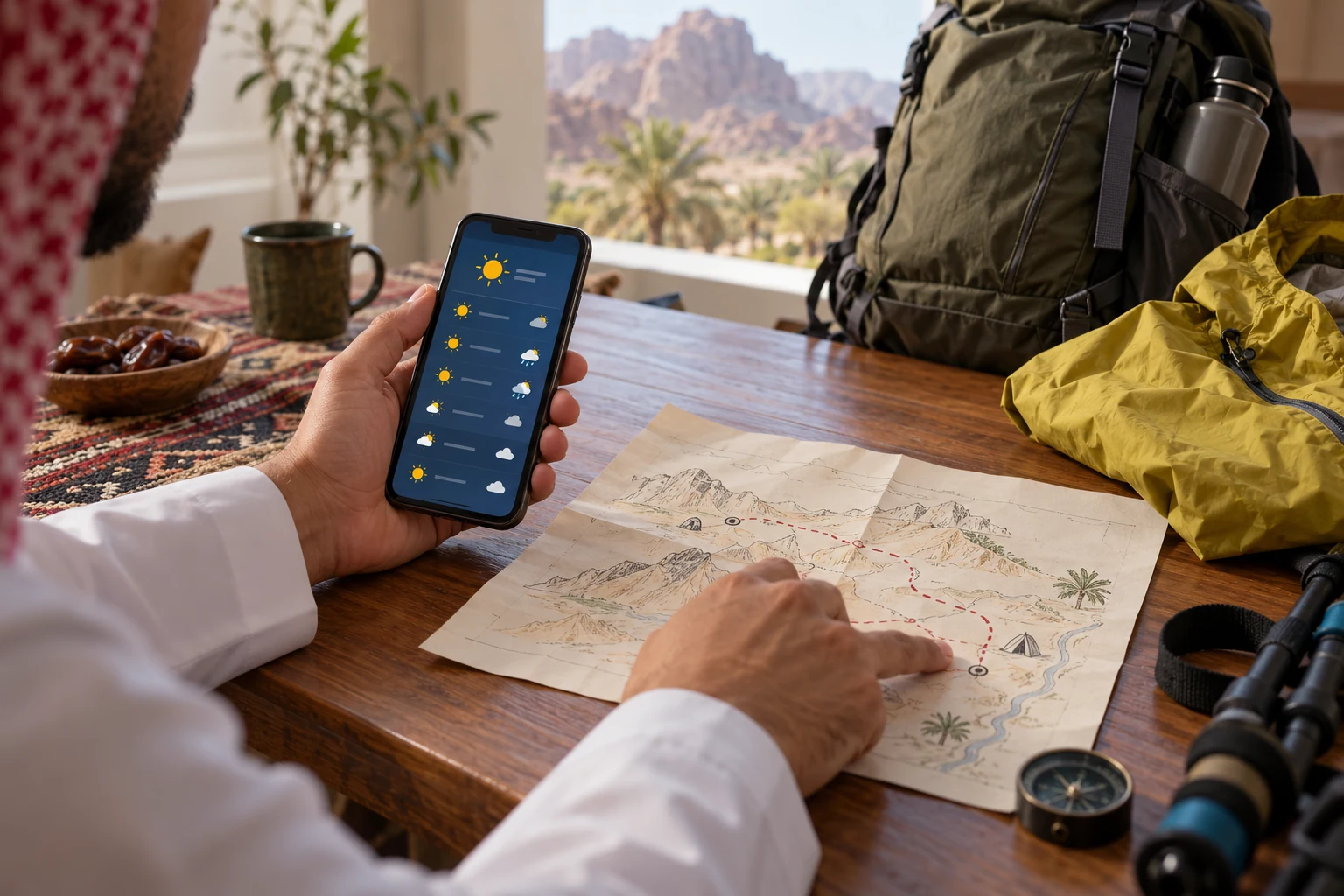
Separate hiking weather forecasts from alerts
Seasonal information provides background for hiking weather planning, while a forecast describes an approaching period and may change. An official alert concerns specified conditions, locations and times. These information types serve different purposes. Knowing that a season is popular does not remove the need to check a forecast and any relevant alert for your departure.
Use Saudi Arabia’s National Center for Meteorology as a starting point for official hiking weather information and warnings. Visit its official channels close to your trip and read the geographical coverage, timing and instructions. If a particular page is unavailable, seek the current official channel rather than replacing it with an unattributed screenshot. Establish when a message was issued before acting on it.
Different applications can display hiking weather using different locations, time periods or updates. Check those details before comparing their numbers. Looking for whichever application looks most encouraging is not a useful method. Keep the source identifiable, ask the organiser how the information affects the programme, and do not use disagreement between applications to dismiss an active official warning.
Read the entire hiking weather message
When an alert may affect hiking weather, read the named area, start and end times, associated phenomena and instructions. A colour alone or cropped headline cannot communicate the full message. Include the access journey and return in your questions. Conditions affecting a road may matter even when a photograph from the destination appears calm.
This article does not assign universal operating limits or fixed colour interpretations to hiking weather. Refer to the issuing authority’s current definitions and the relevant local instructions. If essential information remains unclear, resolve it before departure. Buying additional equipment or hearing that another group intends to go does not answer a missing route or access question.
Follow hiking weather through the activity hours
Draw a hiking weather timeline from leaving home to returning. Separate time in transport, time walking and time resting outside. A morning forecast cannot fully describe an afternoon activity. If the programme continues into the evening, account for the stop after walking rather than preparing only for how you expect to feel while moving.
Ask how hiking weather could affect reaching the meeting point. You may need to reassess the journey in line with current road instructions. Confirmation that an activity is proceeding does not certify every participant’s access route. If travel disruption changes your arrival, contact the organiser promptly rather than assume the group can delay or rearrange transport around an unreported problem.
Choose useful hiking weather review points rather than monitoring randomly throughout the week. Check when selecting the date, near departure, before leaving home and at the meeting point as appropriate to the programme. These are planning suggestions, not an official timetable. New information may require another review between them, particularly when an alert or organiser’s update arrives.
Give hiking weather questions a deadline
For an unresolved hiking weather question, identify who can answer and when you need the reply. Ask when the final programme confirmation will arrive and whether activity times may change. This lets you decide when to commit to less flexible accommodation or transport. It does not create refund rights beyond the actual conditions of each service you book.
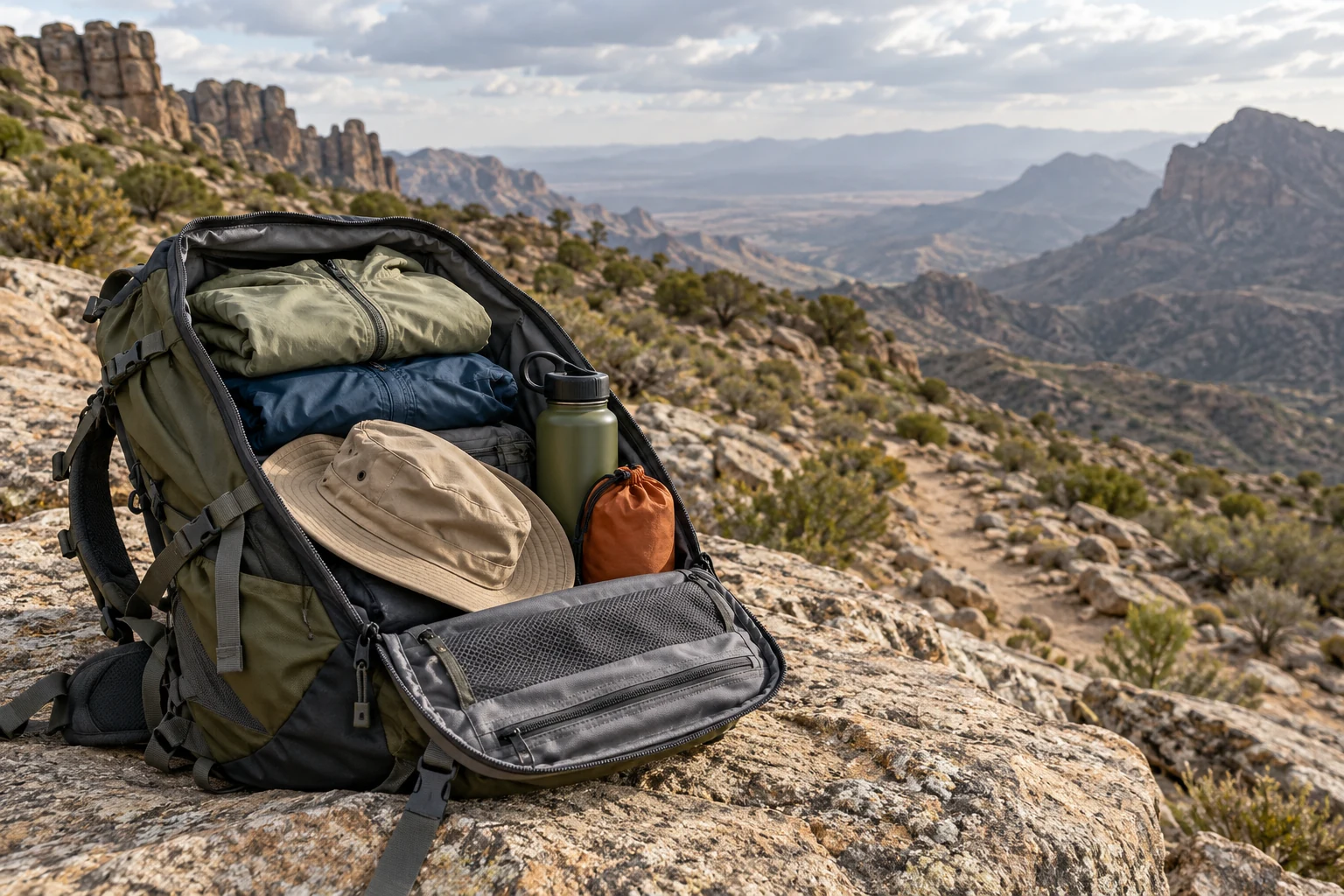
Turn hiking weather details into preparation questions
Temperature is one part of hiking weather, but a single number cannot explain your full experience. Connect it to time, shade, movement and stops. Another person’s clothing in a promotional photograph is not a personal equipment list. Read the programme requirements and choose familiar clothing you can adjust without emptying the entire pack at each stop.
When checking wind within hiking weather information, distinguish sustained wind from gusts if the source provides both. Do not invent one universal threshold for every trail. Ask how the forecast relates to exposed sections and planned stops. The organiser’s route assessment and local instructions matter more than transferring a number from a different destination or activity.
A rain probability in a hiking weather forecast is not a promise of continuous rain, and a small probability is not a certificate that hazards are absent. Consult the source’s explanation of its figures. Do not compare probability in one application with rainfall amount in another as equivalent measurements. Relevant warnings remain important whatever symbol appears on the main screen.
If hiking weather information includes fog or dust, ask about its effect on transport, navigation and the intended experience. The question is broader than whether you will get a good viewpoint photograph. A programme can change significantly while keeping its original name, so clarify what a revised version involves before assuming that your initial expectations still apply.
Keep hiking weather equipment accessible
Pack hiking weather items where you can reach them: suitable protection for a spare layer, your head covering and whatever the programme specifies. Check zips and practise wearing the outer layer with your pack. A general marketing label cannot establish suitability for every condition. Follow product instructions and avoid treating one new item as a substitute for a complete, understood plan.
Clarify the hiking weather decision process before payment
Ask about hiking weather changes before completing the booking. Who announces postponement, can the route change, and what happens to optional services? Read the written conditions for the selected programme. Do not assume that separately booked accommodation or transport follows the same financial arrangements as the activity, even if all services support the same weekend away.
When comparing two programmes affected by hiking weather, consider communication and alternatives alongside price. An incomplete description may need more questions before a meaningful comparison is possible. A long list of reassuring promises is not a substitute for specific answers about your date, group and booking. Look for clear responsibilities and understandable conditions rather than trying to extract certainty from promotional wording.
| Information available | Useful action before departure | Assumption to avoid |
|---|---|---|
| Clear forecast and confirmed programme | Check requirements and latest update | Conditions cannot change later |
| Official alert affecting the area or access | Follow instructions and obtain organiser’s decision | Sunshine cancels an alert |
| Incomplete route description | Request location timing and alternative | A city name explains the route |
| Revised activity time | Review transport accommodation and conditions | Every extra service moves automatically |
| Missing essential confirmation | Resolve it before an inflexible commitment | Silence means approval |
To discuss hiking weather preparation for a specific programme, contact the team with participant numbers, experience and relevant family needs. Request the confirmed equipment list and change process for your chosen outing. This helps establish whether the programme suits your group. It does not mean the company offers personal forecasting or guarantees particular conditions during the trip.
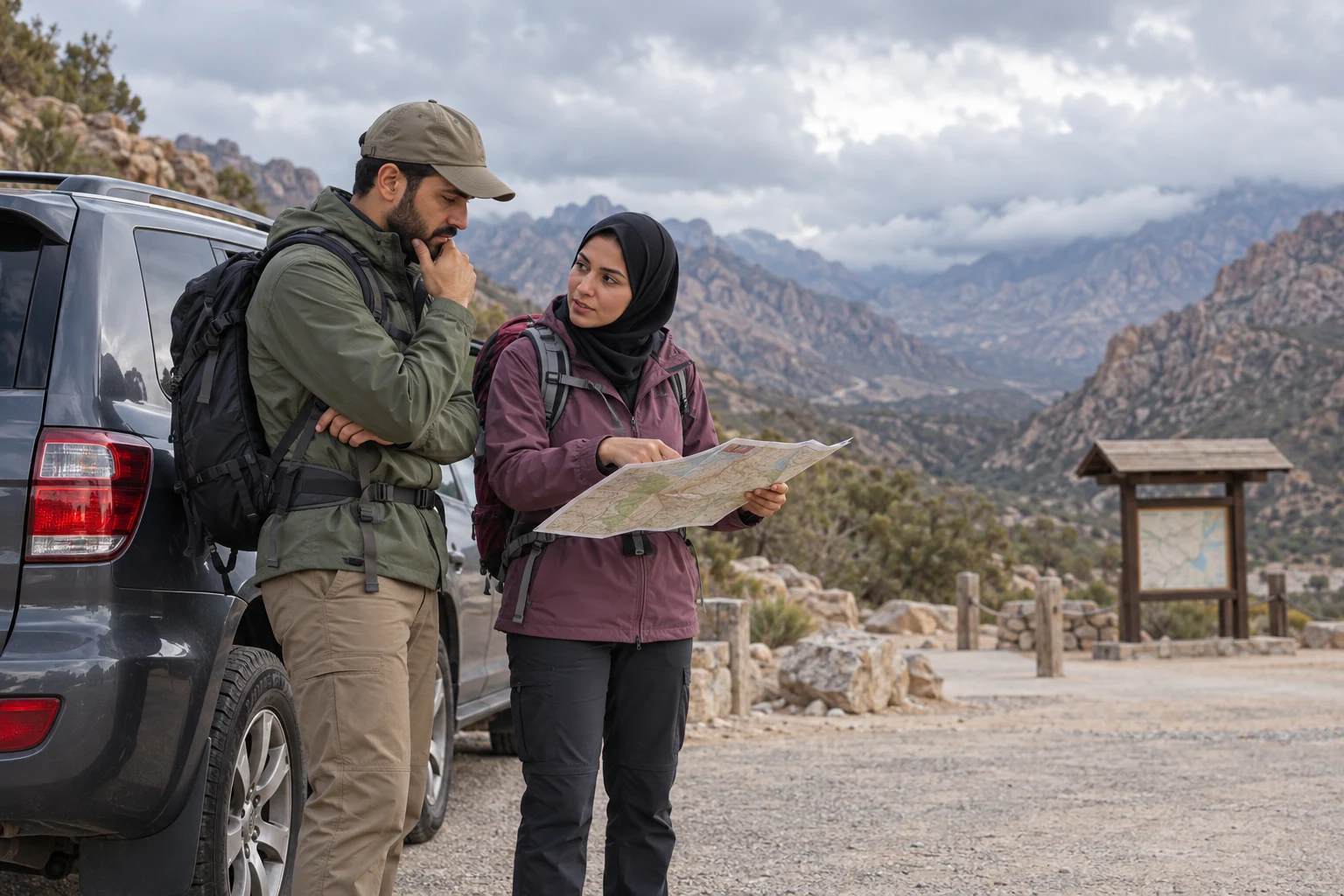
Make your hiking weather alternative usable
A hiking weather alternative needs more detail than deciding on arrival. Establish whether it means another date, a different activity or cancellation under the booking conditions. If another route is proposed, ask about its duration, timing, equipment and suitability. An alternative is not automatically a shorter version that suits everyone who accepted the original programme.
Include the group’s practical needs in hiking weather planning. A participant travelling from another city may need earlier information, while a family may need more time to change arrangements. Combine relevant questions into one clear message. Agree who will relay the confirmed answer to the group so that several informal retellings do not gradually change its meaning.
Consider an illustrative hiking weather scenario: a family receives a revised mountain departure time before travelling. They compare the new schedule with their journey and return commitments, then check conditions for services already booked. The lesson is not that every revision should be accepted. Each commitment needs review before the family can decide whether the proposed alternative still works.
Preserve the current hiking weather plan
Keep the latest hiking weather programme decision with its date and trip name. If coordinating friends, forward the organiser’s full confirmed information rather than an abbreviated interpretation. Ask everyone to read the current version. Replace an outdated pinned message or clearly mark it as superseded so that different participants do not arrive using conflicting meeting times.
Review hiking weather at the meeting point
Your final hiking weather review is more than opening the same application again. Ask about changes to timing and route, and listen to the responsible leader’s briefing. NPS weather preparation guidance supports reviewing conditions, shelter options and alternatives. Treat those as general planning principles while following Saudi alerts and instructions for the actual location.
If you notice changing hiking weather during the activity, tell the leader calmly and follow relevant instructions. Do not separate from the group to seek a better view or test a side route. Clarify the communication method before walking: whom to alert, how they will identify your position, and what to do if you cannot clearly hear the instruction being given.
Packing for hiking weather does not make a tent or picnic shelter safe from lightning. NWS lightning safety guidance directs people hearing thunder to a suitable building or enclosed hard-topped vehicle, and to wait at least thirty minutes after the last thunder before returning outside. Plan appropriate shelter access before exposure. A written article cannot replace a competent location-specific field plan.
Likewise, a hiking weather check does not justify crossing floodwater to shorten a return. NWS flood guidance advises against walking or driving into it. Follow local closures and instructions if the destination or access road is affected. Rain stopping where you stand does not establish that a channel or road is usable, and additional equipment does not create an exception.
Avoid hiking weather information mistakes
One common hiking weather mistake is forwarding a screenshot without its location or time. Ask for the original source before circulating it. Another is confusing conditions on the booking day with the departure forecast. A third is waiting for a participant’s arrival photograph instead of obtaining official information and the responsible organiser’s programme decision.
Another hiking weather preparation error is leaving all extra clothing in a transport bag that will not accompany the walk. Establish what stays in the vehicle and what you carry during the activity. Ask whether stored belongings will be accessible at stops. Do not assume that the vehicle follows every section or that spare personal equipment will automatically be distributed to everyone.
Good hiking weather coordination also means updating your own constraints. If a revised departure affects a flight, school collection or onward journey, say so before accepting it. The organiser cannot evaluate a commitment you have not mentioned. A concise practical answer is more useful than agreeing in the group chat and later discovering that the revised timing is impossible for you.
| Review point | Check | Useful outcome |
|---|---|---|
| Choosing the trip | Destination timing and change conditions | Understand the programme before committing |
| Day before departure | Updated source and organiser’s message | Equipment ready and questions resolved |
| Before leaving home | Current alerts and access implications | Clear decision about the journey |
| At the meeting point | Briefing and any latest changes | Shared understanding of the current plan |
| After returning | Missing information and useful equipment | Better preparation for another outing |
Keep transport details separate from walking equipment notes. Before travelling together, ask friends to check the latest confirmation so nobody relies on an outdated meeting location or departure time.
Frequently asked questions about hiking weather
Is the nearest city’s temperature enough?
No. Your hiking weather questions should include the route area, activity timing, exposure and stops. City information can start the discussion, but ask the organiser for the destination details. A comfortable number cannot complete a comparison when you do not know where and when the activity takes place. Avoid replacing that missing information with your own estimate.
When should I check the forecast?
Review hiking weather during planning, near departure, before leaving and at the meeting point as appropriate, while following new relevant alerts. Agree when the organiser will confirm the programme and which channel will carry updates. The purpose is to avoid relying on an old forecast, rather than treating a suggested set of review points as an inflexible rule.
Does a rain jacket make the trip appropriate?
A jacket cannot decide hiking weather suitability or remove lightning, flooding and visibility hazards. It is an equipment item whose usefulness depends on the programme and conditions. Understand its limits, follow current instructions and clarify alternatives when conditions affect the activity. Purchasing something new should not become a reason to continue with a plan that has not been properly assessed.
What if two applications disagree?
Compare the location, period and update behind each hiking weather display. Then consult official alerts and ask how the information affects your selected route. Do not choose whichever result best supports your wish to travel. Disagreement between two applications does not establish that an official warning is unimportant or that the organiser’s essential unanswered questions can be ignored.
Will cancellation refund every expense?
That depends on the booking conditions and related services, rather than on hiking weather terminology alone. Request the organiser’s policy before payment and check accommodation and transport booked separately. Keep written confirmations. Ask how postponement, programme changes and cancellation differ without assuming that every provider uses the same financial conditions or that all additional spending is automatically covered.
Does a guide remove my preparation responsibilities?
A guide supports the activity, but hiking weather awareness, following instructions and personal preparation still matter. Explain relevant requirements before the trip, listen to the briefing and report concerns. A leader’s presence does not mean ignoring an official warning, concealing information that affects suitability, or joining an activity whose programme and requirements you do not understand.
Can the group automatically move somewhere nearby?
A changed destination needs another hiking weather and programme review. Nearby locations do not necessarily share exposure, access or suitability. Ask about the alternative route, timing, transport, equipment and booking conditions. Make sure participants understand the revised plan rather than treating a short message about a new destination as complete confirmation of every practical detail.
What should I include in an enquiry?
Connect your hiking weather question to a specific date and trip, participant numbers, approximate experience and relevant requirements. Ask directly about the unresolved issue, such as activity timing or the change process. A message containing those details is easier to answer usefully than a general question about whether the weather will be nice somewhere in the region.
Prepare a flexible trip with clear information
Start hiking weather planning from the programme you will actually join, then connect forecasts, alerts and equipment to realistic change and return arrangements. Share current details with your group and retain flexibility when postponement is needed. To confirm requirements for a suitable Saudi outing, Contact Hike & Seek with your selected programme before completing the booking.