 عادل فيرق
Good hiking etiquette begins with choosing a suitable programme and arriving prepared, then listening to the briefing and respecting other people’s pace, privacy and space. You do not need years of experience to be a considerate companion. Ask when something is unclear, inform the responsible leader before making a change that affects the group, and obtain permission before photographing identifiable participants or sharing their images.
This guide turns hiking etiquette into ordinary decisions: asking for a stop, passing another group, offering help, taking photographs and resolving differences without embarrassment. These are practical cooperation suggestions. The actual site’s instructions and organiser’s arrangements still need checking before participation, because not every programme uses the same signals, roles or communication channels.
For your first group experience, browse Hike & Seek’s current hiking trips and Contact Hike & Seek about the selected programme’s suitability, briefing and group arrangements. Explain your experience and relevant requirements clearly. Discussing hiking etiquette before booking helps establish expectations; it does not confirm available places or additional services that have not been included in that programme.
Begin hiking etiquette before reaching the trail
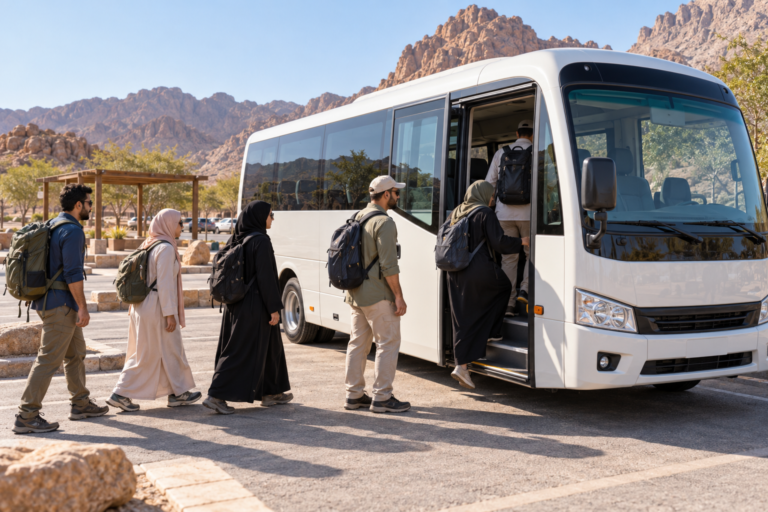
The first application of hiking etiquette is reading the programme rather than saving every basic question for departure. Check the meeting point, time, equipment requirements and inclusions. If booking with friends, send the complete information to each participant. Your own understanding cannot replace everybody reading what they need to bring and deciding whether the activity suits them.
Honesty about experience is part of hiking etiquette. Do not describe yourself as an experienced walker simply to join friends who have chosen a demanding programme. Ask about the route and expected pace. Selecting something suitable in advance is easier than discovering different expectations after arriving, when transport and group arrangements may already limit the alternatives available.
Share information affecting suitability privately with the responsible organiser. Good hiking etiquette does not require explaining personal details in front of everyone. You can ask about rest arrangements, access or particular practical needs in a direct conversation. Equally, do not discuss another participant’s circumstances as group entertainment or assume that being their friend gives you permission to disclose them.
If delayed, hiking etiquette means contacting the agreed person promptly with a realistic arrival estimate. Do not ask a friend to promise that transport will wait without consulting the organiser. Do not enter the trail independently to catch up. Ask what the actual late-arrival procedure allows and accept that the schedule may make joining late impossible.
Apply hiking etiquette when forwarding instructions
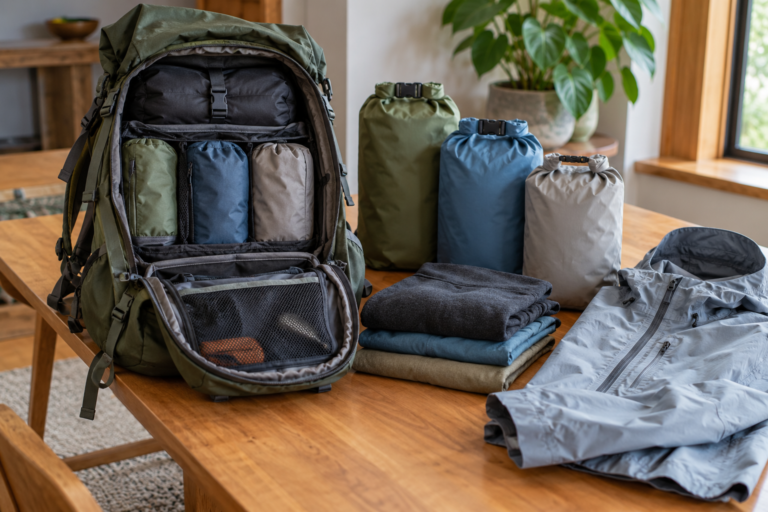
When coordinating friends, apply hiking etiquette by distinguishing confirmed instructions from your own suggestions. Do not reduce the equipment list to familiar things or promise spare items without asking their owners. Combine similar questions into one concise enquiry, then share the complete answer. A consistent reference helps prevent different participants arriving with different versions of the same arrangement.
| Before departure | Helpful hiking etiquette | Action to reconsider |
|---|---|---|
| Choosing the activity | Describe experience and request details | Agreeing only to keep up with friends |
| Sharing requirements | Speak privately to the organiser | Discussing somebody else’s needs publicly |
| Finding the meeting point | Confirm current location and time | Relying on an old description |
| Running late | Report promptly and ask about procedure | Assuming transport will wait |
| Preparing friends | Forward the full equipment list | Promising equipment you cannot provide |
Use the briefing to understand hiking etiquette
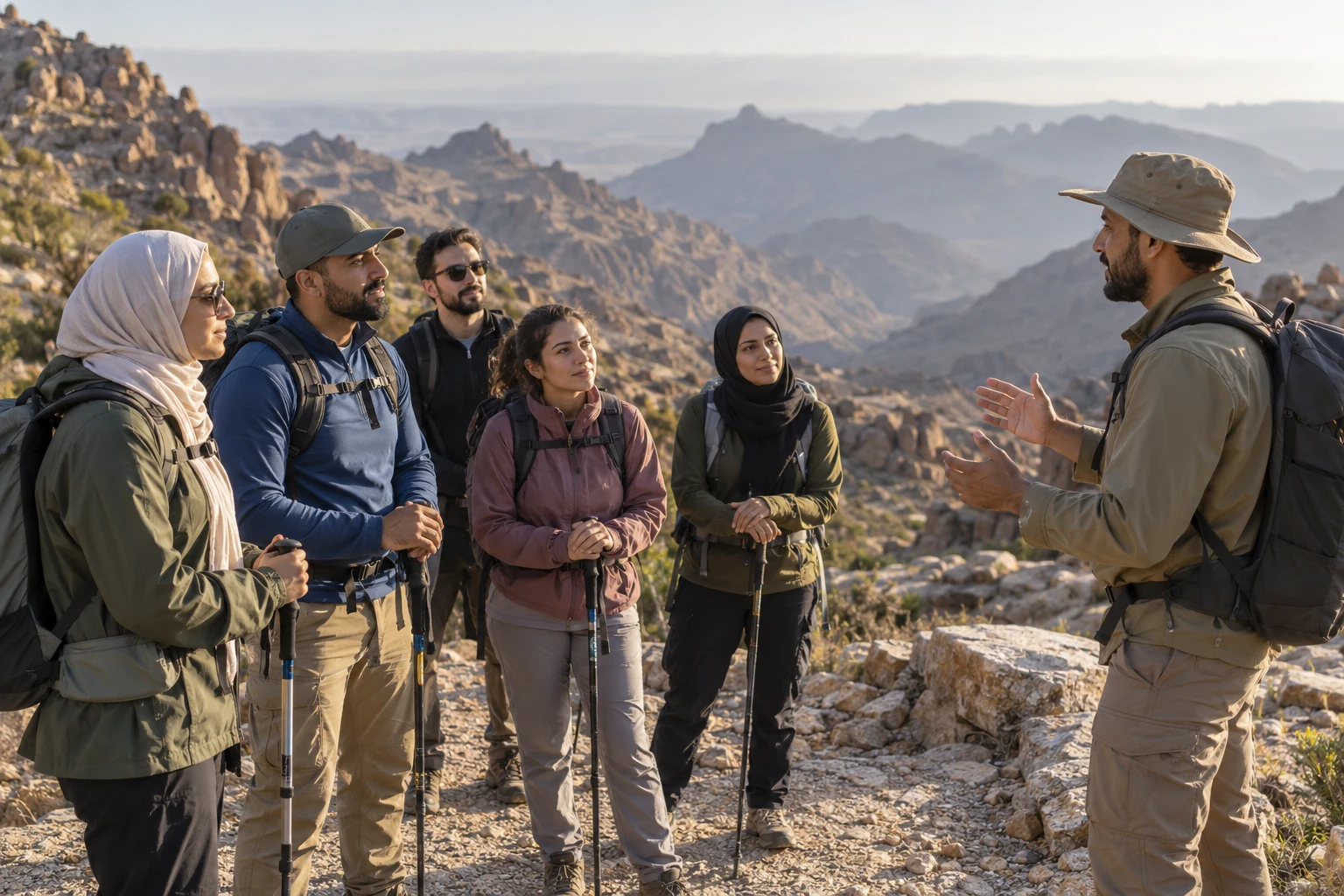
The briefing is where hiking etiquette becomes a shared arrangement. Pause side conversations and put the phone away while instructions are explained. Learn who leads and who follows the rear if those roles are used. Similar clothing is not enough to identify the person responsible for decisions, so ask rather than assume that the nearest confident participant is in charge.
Understand the actual signals used by the group. Considerate conduct includes asking whether a short message should be relayed along the line and how its receipt is confirmed. Do not invent warning calls as a joke or use attention-getting equipment without understanding its purpose. If you miss an instruction, request a repeat instead of copying someone else’s movement without knowing why.
Another part of hiking etiquette is knowing which communication channel serves which task. A booking chat may handle meeting times and photographs without being the agreed way to report a problem during the walk. Ask about the activity’s method and limitations of phone coverage. Sending a message does not establish that the leader has read it or knows your position.
Use clear requests in hiking etiquette
Clear hiking etiquette allows a simple request such as needing a short stop or clarification of the next meeting place. You do not need a long apology or exaggerated account. Conversely, hiding a significant problem to avoid inconvenience can make coordination harder. Report what matters early so the responsible person can respond within the programme and actual conditions.
In a multilingual group, hiking etiquette also means checking understanding without making somebody perform for everyone. Ask whether they received the instruction and involve the organiser when translation is needed. Do not improvise a different route instruction because explaining the original seems difficult. A friendly tone helps, but it cannot replace communicating the same confirmed information to all participants.
Apply hiking etiquette to different walking speeds
Different walking speeds are normal. Considerate conduct helps manage that difference without personal judgments. Avoid comparing someone with a faster friend or using jokes to pressure them into moving. If the planned pace does not suit you, tell the responsible leader and ask about the arrangements. Do not create a separate faster group or rearrange the walking order yourself.
Considerate hiking etiquette does not pressure a participant who needs rest, and it does not mean every requested stop can happen at that exact place. The leader may identify a more suitable stopping point or another arrangement. State the need, listen to the response and avoid explaining the decision’s motives publicly before you understand the situation.
Allow room for normal movement, especially around packs and poles. Considerate conduct includes asking before handling someone else’s equipment or offering physical assistance. Avoid grabbing a bag or pulling an arm as an automatic expression of help. If a situation requires urgent professional response, alert the responsible person and follow the relevant instructions rather than creating competing directions around the participant.
Use hiking etiquette when offering advice
A useful hiking etiquette phrase is asking whether someone would like a suggestion about organising a particular item. That is different from correcting everybody’s equipment uninvited. If your advice seems inconsistent with the leader’s instruction, ask the leader without confusing the group. Owning more equipment or having previous experience does not give you responsibility for managing someone else’s programme.
Apply hiking etiquette on shared trails
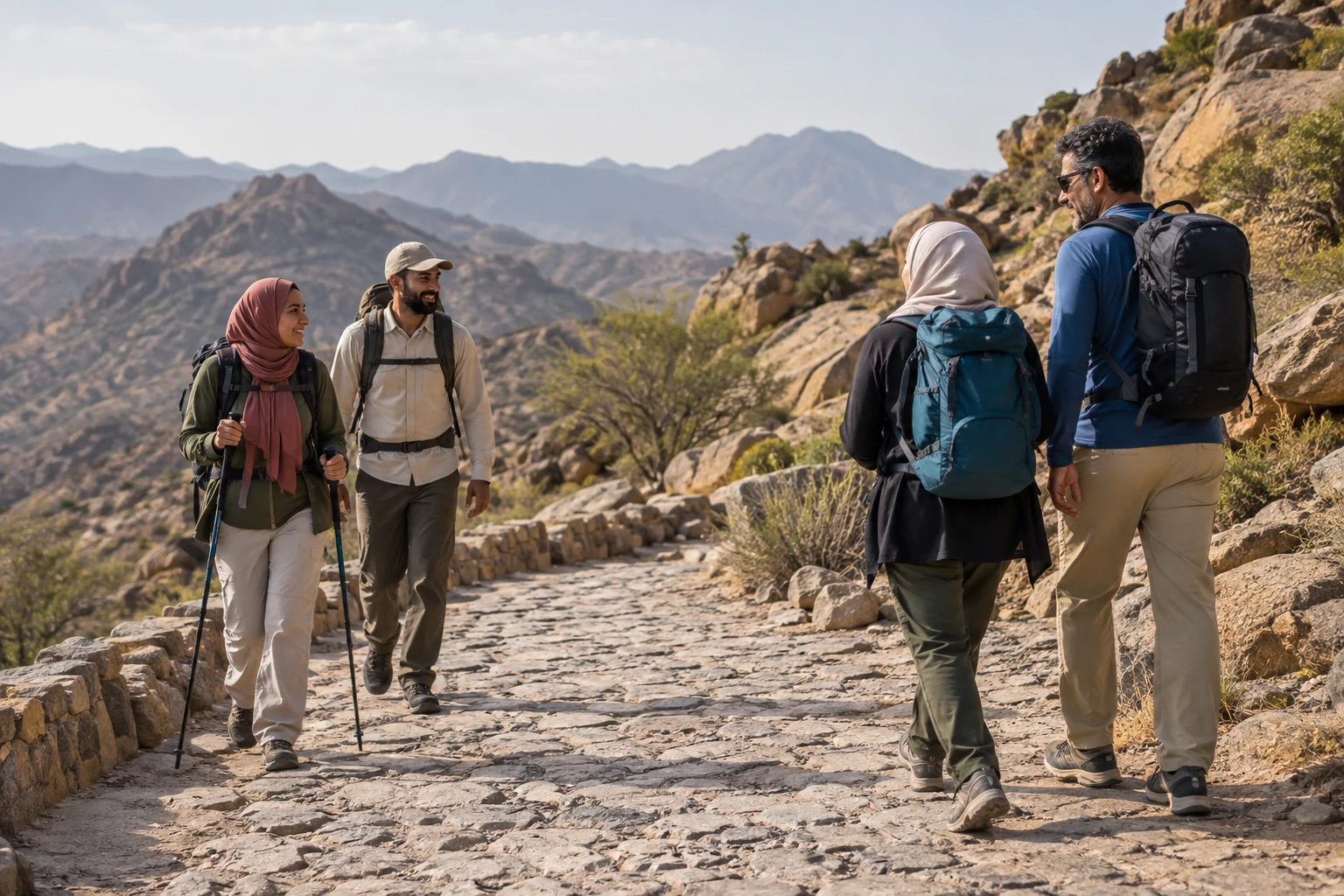
The route is shared space. Considerate conduct matters when another group, runner or person needing extra room approaches. Announce your presence calmly and wait for a suitable passing place rather than pushing through. Leave No Trace’s consideration principle provides a general foundation of courtesy, reduced noise and room for others, while local instructions determine how that works at the specific site.
Avoid treating hiking etiquette as a memorised priority rule to enforce regardless of the ground. Communicate and consider the passing space with the responsible leader. Do not ask anyone to step onto an exposed edge or fragile vegetation. Waiting and agreeing a clear movement is better than several people attempting to squeeze past in conflicting directions.
When encountering a rider or someone using an assistive device, apply hiking etiquette through calm communication and appropriate room under the site’s instructions. Do not approach equipment without asking or startle an animal by shouting. Give the person time instead of filming the situation as entertainment. Saving a few seconds is not worth making another visitor’s passage uncomfortable or confusing.
Follow hiking etiquette for photographs and sharing
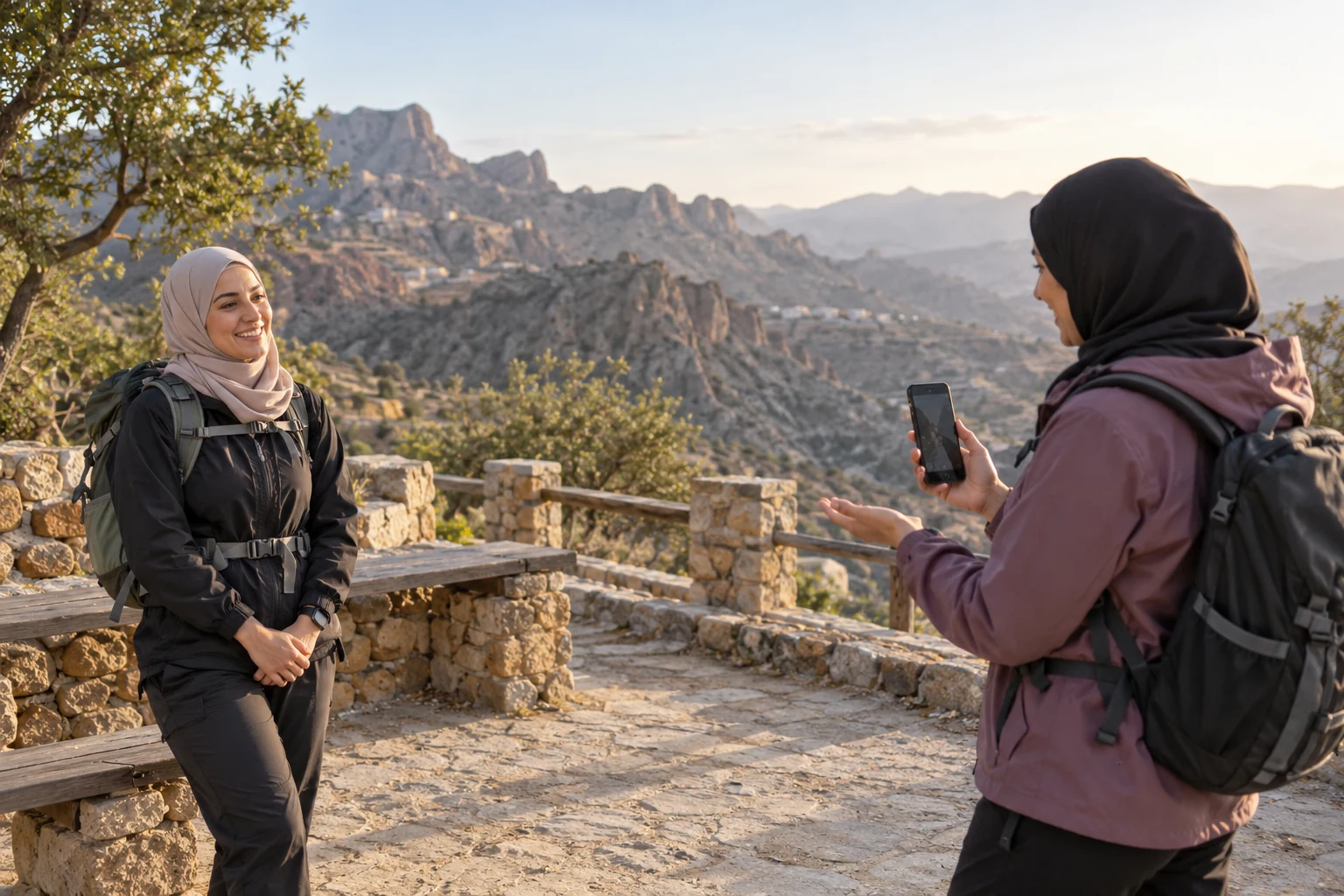
An essential part of hiking etiquette is separating permission to take a photograph from permission to publish it. Ask identifiable participants and explain the intended channel, such as a private group or public account. Someone may accept a private image and decline public sharing. Respect the answer without making refusal a joke or demanding a personal explanation in front of everyone.
For children, hiking etiquette calls for particular care. Obtain the responsible guardian’s permission and respect the child’s reluctance to appear. Avoid sharing details that reveal a family’s movements or private information. This is a privacy recommendation rather than a complete legal interpretation of photography. Ask about the programme’s policy and current site instructions before using images publicly.
Photography does not override hiking etiquette about timing and personal comfort. Do not delay the group for a lengthy setup or ask someone to stand somewhere they dislike. Clarify available photo stops and use an appropriate position. If your main aim requires a dedicated session, enquire about a suitable programme instead of turning a shared outing into a session others did not agree to.
Use hiking etiquette when tagging people and places
Considerate conduct continues in captions and tags after returning. Do not add somebody’s account to a public post or copy their number from a booking group without permission. Do not publish coordinates for restricted or private locations merely because you visited. Follow the responsible authority’s instructions and distinguish illustrative images from actual company-trip photographs when preparing business content.
| Situation | Question before acting | Considerate alternative |
|---|---|---|
| Personal portrait | May I take this photograph? | Photograph the scenery instead |
| Sharing a group image | May I share it in this channel? | Exclude anyone who declines |
| Photographing a child | Has the guardian agreed and is the child comfortable? | Photograph equipment or scenery |
| Tagging an account | Would you like me to tag you? | Send the image privately |
| Lengthy photo stop | Does the programme allow time for this? | Take a quick image or choose another activity |
If privacy or photography time affects your choice, contact the team before booking and ask about the particular programme. Explain the preference instead of expecting everybody to infer it. Matching hiking etiquette expectations with the right activity starts with that conversation, followed by confirmation of what can actually be arranged rather than an assumption of unadvertised special services.
Apply hiking etiquette at rest stops
At a rest stop, hiking etiquette means keeping the passing route clear and belongings within a reasonable space. Do not spread bags and poles across an entrance or reserve the entire area for friends still approaching. Ask where the group is stopping and when it will move again, then organise your own needs early enough to be ready without rushing others.
Keep voices and devices considerate. Considerate conduct recognises that one person may enjoy conversation while another prefers listening to the surroundings. Avoid a personal speaker that determines everybody’s experience. Respect any stated quiet periods. If a friend’s volume is a problem, make a direct private request rather than turning it into a public argument in the group chat.
When offering food, hiking etiquette includes asking what someone wants without insisting that they taste it or commenting on their choices. Keep personal utensils separate. Do not promise that shared food meets an allergy requirement when you cannot verify its ingredients and preparation. Discuss dietary requirements with the organiser beforehand instead of assuming a friendly offer meets those requirements.
Follow hiking etiquette for borrowed equipment
Becoming friendly quickly does not remove hiking etiquette around borrowing poles, a light or a power source. Ask permission, understand how the item should be used and return it as agreed. Report damage promptly instead of hiding it in a bag. Bring required personal equipment rather than making your preparation depend on an unconfirmed loan from somebody you have just met.
The same hiking etiquette applies when lending your own belongings. State any limits clearly and politely before handing something over. You can decline a request for an item you need yourself. If a participant lacks essential equipment, involve the organiser rather than promising that a quick loan solves the programme’s requirements without understanding the item or planned use.
Include the environment in hiking etiquette
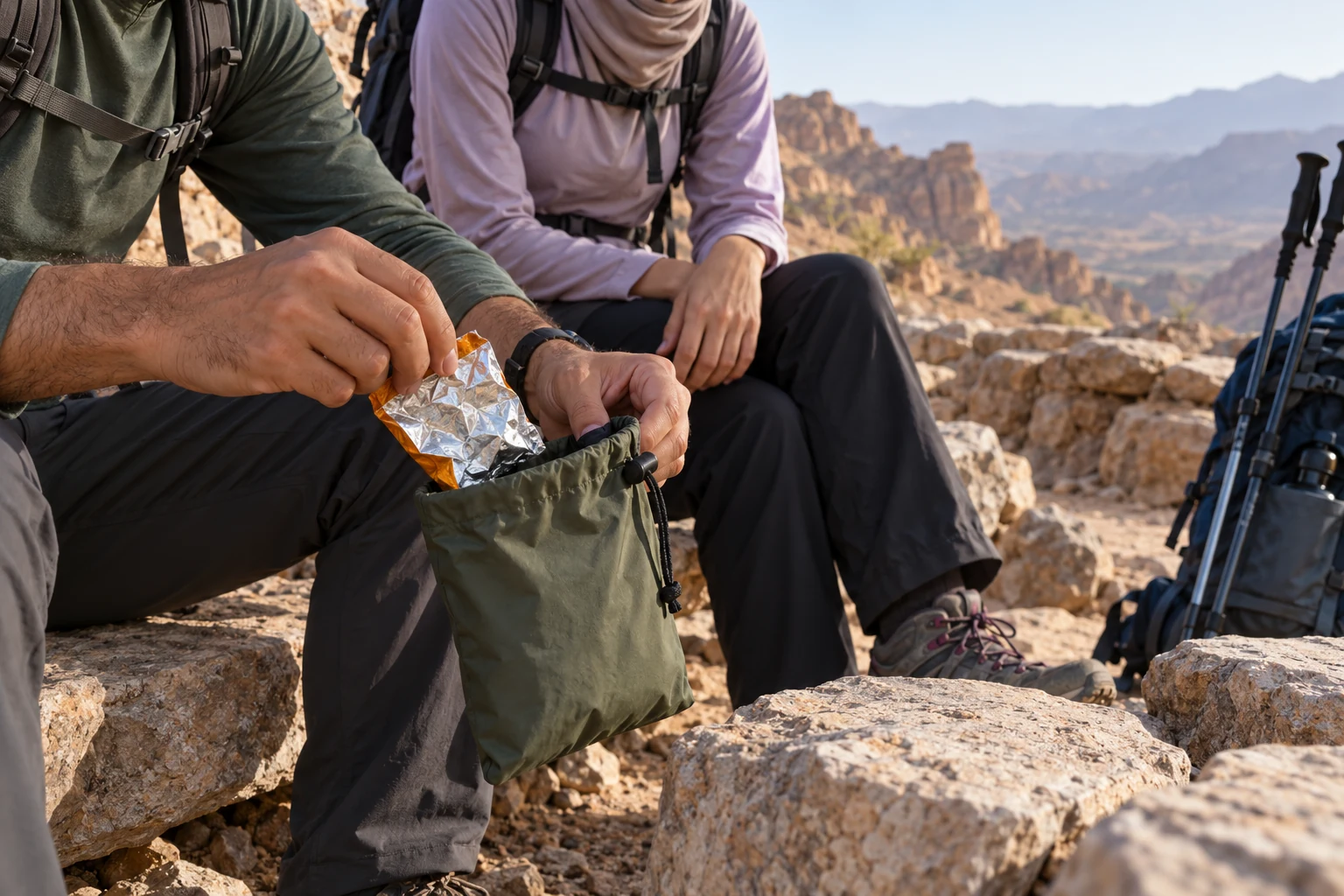
Responsible hiking etiquette includes planning a suitable waste pouch before departure and taking your waste away under site arrangements. Do not leave fruit peel or food scraps because they are natural materials. Do not place a bag beside a rest stop expecting an unidentified person to collect it. Leave No Trace waste guidance supports planning removal of what you bring.
Leave natural and cultural features as you find them. Considerate conduct includes avoiding writing names on rocks or moving objects to improve a photograph. Use permitted routes and stopping places. Seeing another visitor use a shortcut does not make repeating it appropriate. Ask the leader about approved rest and toilet arrangements rather than creating a new place without understanding the site’s requirements.
Observe wildlife without feeding, pursuing or attracting it into a photograph. Those hiking etiquette boundaries protect the visit from becoming repeated attempts to bring an animal closer. Leave No Trace wildlife guidance supports observing without interference. Refer to local instructions for applicable distances and restrictions rather than transferring a number associated with another species or country to your destination.
Use hiking etiquette to resolve differences
Participants can have different expectations, and hiking etiquette gives a practical way to address them. Describe the behaviour affecting you and the change you need, such as removing your photograph from a post or clearing a passing space. Avoid guessing motives or recruiting supporters against a person. A specific solvable request is more productive than a dispute that continues throughout the day.
If the disturbance continues, hiking etiquette means involving the responsible organiser rather than imposing a personal punishment or posting the participant’s name publicly. Explain what happened, when and what assistance you need. Report an urgent concern through the agreed method immediately. Being sociable does not require delaying important information because it might interrupt the mood or a group photograph.
| Situation during the outing | Useful hiking etiquette request | Appropriate contact |
|---|---|---|
| Missed instruction | Please repeat the next meeting point | Person giving the briefing |
| Need for a stop | I need to let the leader know I require a break | Agreed leader or responsible person |
| Unwanted published photograph | Please remove this image from this channel | Publisher then organiser if needed |
| Blocked passing space | Can we move the bags clear of the route? | Owners and responsible leader |
| Repeated disruption | This is continuing and I need your help | Organiser away from an argument |
Continue hiking etiquette after returning
Considerate conduct continues after the walk through returning borrowed belongings and reviewing which photographs can be shared. If writing a review, describe your experience accurately and distinguish your opinion from what happened. Avoid exposing participants’ private information. Send the organiser a specific improvement suggestion, such as clearer meeting instructions, rather than making a judgment about every activity from a single incident.
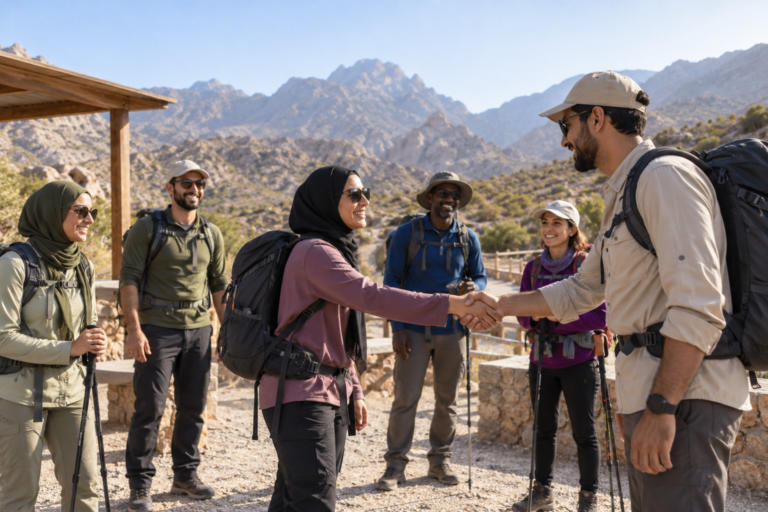
Welcome a newcomer by explaining names and how to ask questions, without requiring a long introduction. Give them room to choose how sociable they want to be. Quiet participation can be comfortable too, and friendly company does not require repeated personal questions or public commentary.
Frequently asked questions about hiking etiquette
Does hiking etiquette require previous group experience?
Considerate conduct does not demand years of experience, but it does call for honesty and a suitable programme. Ask about the route, pace and requirements before booking, then listen to the briefing. A first outing can work well with clear expectations. Claiming experience you do not have can create a mismatch between your needs and the chosen activity.
What does hiking etiquette suggest for slower walkers?
Apply hiking etiquette by telling the responsible person early and asking about the arrangement rather than hiding difficulty or separating. Do not compare yourself with others or assume every change is possible on that route. Suitability questions matter before booking; during the outing the responsible leader considers the actual conditions and what can be arranged for the group.
What is hiking etiquette for overtaking?
Considerate conduct supports polite communication when passing, but group order, leader instructions and available space determine the action. Ask and wait rather than crowding someone or stepping somewhere unsuitable. Passing one person is not permission to leave the agreed arrangement, set a separate pace far ahead or follow a different route without the responsible leader’s knowledge.
What is hiking etiquette for publishing group photographs?
Good hiking etiquette means checking with identifiable people about photography and sharing in the intended channel. Some friends’ agreement does not represent another participant or a child’s guardian. Avoid tagging accounts or circulating images beyond what was agreed. Ask about the organiser’s policy before public or commercial use, and respect a person’s request not to appear.
What is hiking etiquette for music at stops?
Considerate hiking etiquette means controlling noise and respecting site instructions and other people’s wish for quiet. Do not make a personal speaker define everybody’s experience. If an activity has a different advertised arrangement, clarify it before booking. Other groups using the same place still deserve consideration, even when your closest friends are happy to listen to your music.
What is hiking etiquette for offering help?
Start hiking etiquette with a short private question about the help wanted, rather than commenting publicly on ability. Do not take equipment or pull an arm without warning and agreement. Involve the responsible person when needed. Allow the participant to explain their needs instead of telling everybody their personal details or assuming that speaking for them is helpful.
How does hiking etiquette treat food scraps?
Yes. Responsible hiking etiquette includes collecting them and following the site’s disposal arrangements. A natural origin does not justify leaving material beside a trail or offering it to wildlife. Prepare a suitable pouch and check your stopping place before leaving. Do not assume another participant or an unidentified worker will collect the things you leave behind.
How do I ask about hiking etiquette and privacy?
Connect your hiking etiquette question to the trip and date, then state your preference clearly: avoiding photographs, avoiding publication or understanding group arrangements. Ask what can be confirmed and who handles communication. You do not need a long personal explanation. An answer before payment is more useful than discovering during the activity that an assumed arrangement was never discussed.
Choose a programme with clear hiking etiquette arrangements
Put hiking etiquette into practice through clear requirements, considerate movement, respect for privacy and care for the place you visit. Choose a suitable programme, ask, listen and cooperate. To clarify a particular Hike & Seek trip, Contact Hike & Seek with participant numbers, approximate experience and relevant preferences before completing the booking.