 عادل فيرق
Choose a camping tent by matching the people, their actual sleeping equipment and the campsite, then checking ventilation, pitching instructions and transport. The capacity printed on a bag is a starting point rather than a complete description of comfort. Measure your sleeping pads, try the entrance and practise assembly before relying on the camping tent for an overnight trip. A useful purchase solves a specific arrangement, rather than simply providing the largest specification you can afford.
This camping tent guide concerns ordinary trip preparation and buying questions. It does not identify one model for every Saudi location or certify a camping tent for weather outside its stated use. The right decision also depends on the permitted pitch, the programme and who will assemble and pack the equipment. Treat those details as part of choosing the product, rather than problems to resolve after arriving with a new bag of unfamiliar components.
Before buying a camping tent for a Hike & Seek programme, browse the published camping trips and Contact Hike & Seek about the selected booking. Confirm whether a camping tent, sleeping pads or other equipment is actually included. A camping category or an attractive photograph does not establish those inclusions for every departure. Retain the answer with your booking details instead of borrowing assumptions from an older programme with a different arrangement.
Describe the job before comparing a camping tent
Write a short description of the intended night: the number of adults and children, the sleeping arrangement, the length of the stay and how equipment reaches the pitch. Distinguish sleeping accommodation from a shaded social area. A camping tent selected for one task may not provide the other conveniently. If the family also wants space for chairs and a table, plan that separately before letting those items consume the floor area reserved for sleep.
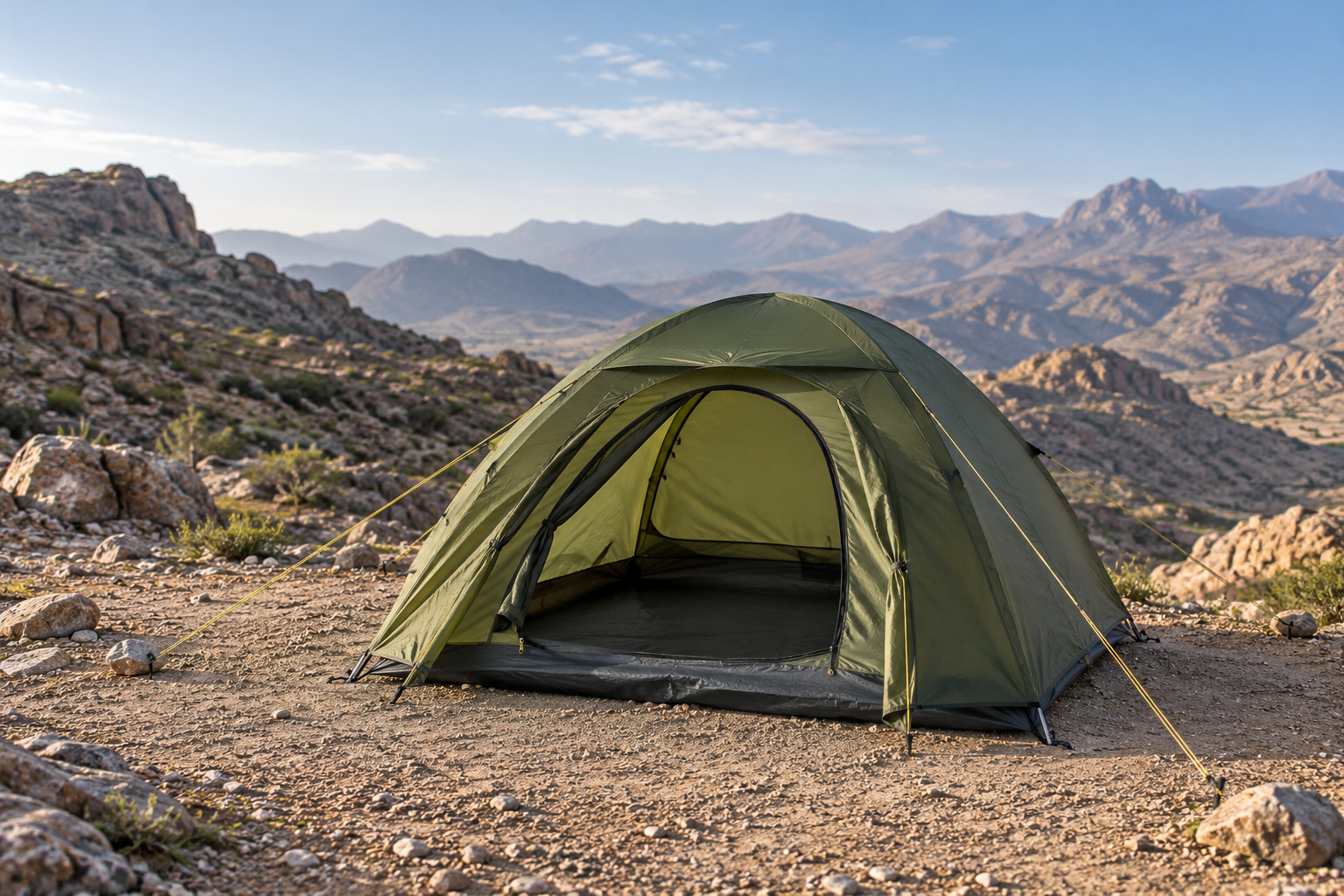
If the vehicle remains near the permitted pitch, packed weight may have a different priority from a trip requiring a long carry. However, choosing the biggest camping tent still creates trade-offs. It needs a suitable footprint, storage and people who can handle it. Ask about the actual allocated area before treating a large model as a straightforward improvement. The size that works in a garden may not suit the camping tent layout of an organised campsite.
Try a camping tent before committing to a purchase
A suitable borrowed camping tent can help identify what matters to you: reaching the pole clips, changing clothes, managing the entrance or fitting wide sleeping pads. Inspect borrowed equipment and obtain its instructions just as carefully as purchased equipment. A practice session at home explains handling and organisation. It does not prove that the camping tent is appropriate for any outdoor conditions you might encounter or remove the need to confirm the proposed trip arrangements.
Measure usable space inside a camping tent
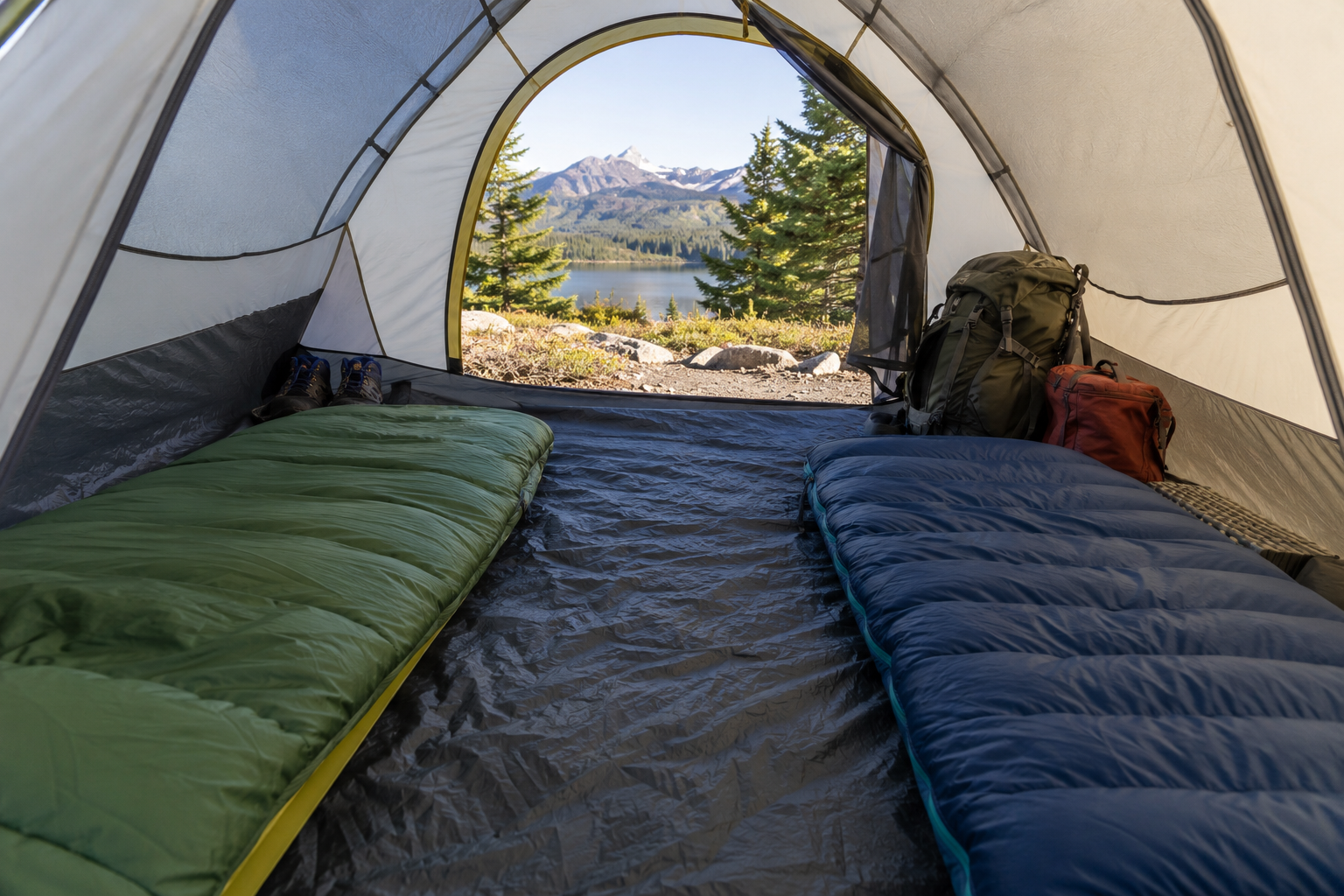
Compare the floor plan with the dimensions of your sleeping pads when fully laid out or inflated. Person capacity does not explain every allowance for bags or movement. REI‘s tent selection guide identifies intended use of the interior as an important part of sizing. Turn that principle into a real camping tent trial with your own measurements, instead of automatically buying a larger size because someone else felt cramped in unrelated equipment.
Mark the proposed dimensions on a clear floor and place the pads inside without folding their edges to make the drawing work. Check the head and foot positions and the doorway. Inside a displayed camping tent, sit and move as you normally would without pushing against the fabric. Sloping walls can reduce usable space above the perimeter, so floor area alone cannot describe the room available for sitting up or changing clothes.
Decide which belongings must remain inside the camping tent at night and leave a route through the entrance. Wet footwear and food containers should not be placed randomly beside bedding. Follow the site’s instructions for food and belongings, and identify appropriate storage before increasing shelter size to compensate for an unclear packing plan. A simple agreed place for essential items can be more useful than extra floor area filled without any shared arrangement.
| Comparison | What to inspect in a camping tent | Practical decision |
|---|---|---|
| Sleeping places | Actual pad dimensions | Do not rely on the person number alone |
| Body movement | Sitting and entering without pressing walls | Try the positions you normally use |
| Belongings | Essential storage and a clear doorway | Move nonessential items to suitable storage |
| Shared use | Doors pockets and sleeping positions | Agree the arrangement before buying |
| Booked pitch | Dimensions and permitted anchoring | Confirm that the camping tent can actually fit |
Examine ventilation with the camping tent assembled
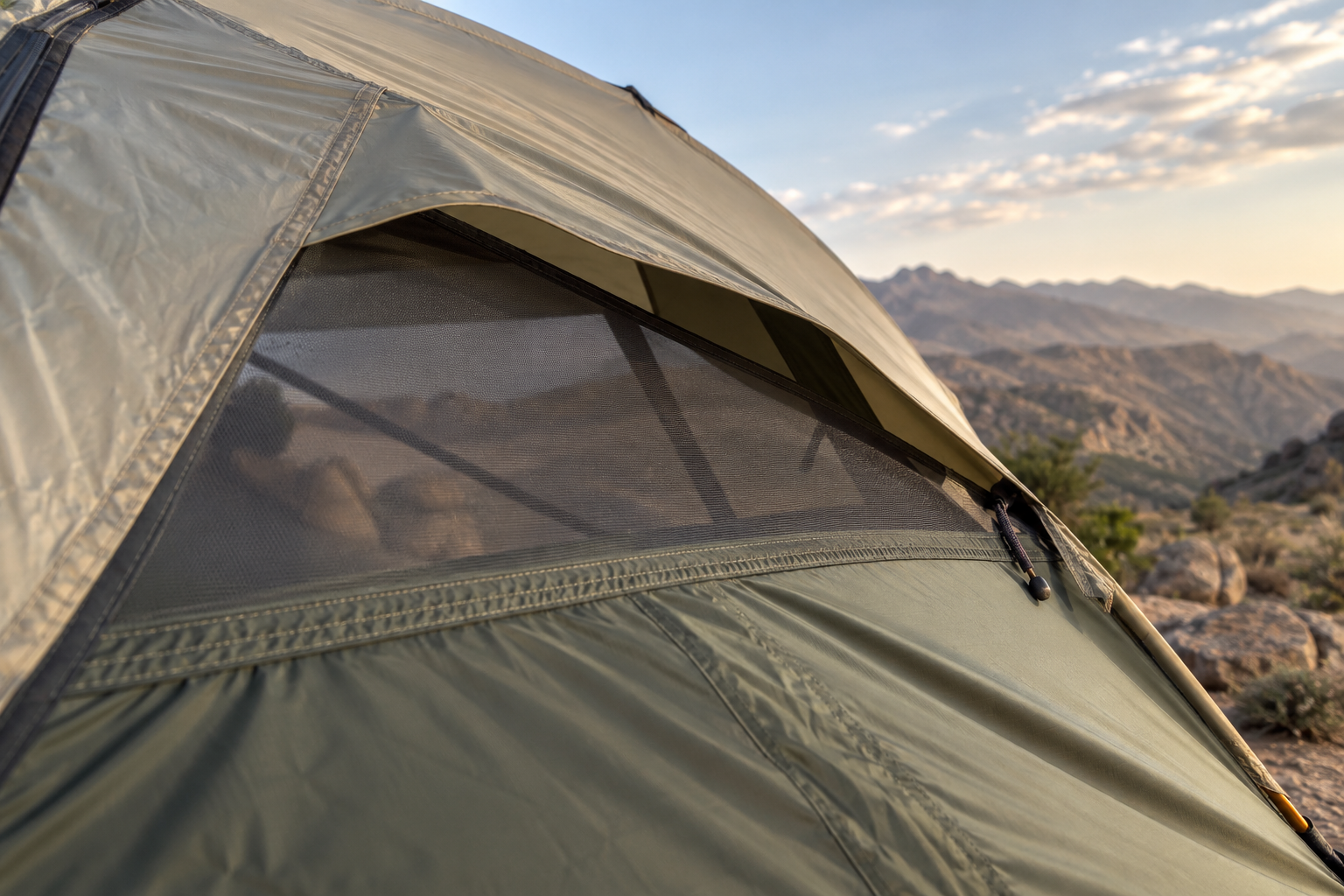
Inspect vents, mesh and the way they operate with the outer cover fitted. Do not assess a camping tent only with its main door wide open if you will close it while sleeping. Try the controls from inside and check whether the properly installed cover obstructs access. Read the manufacturer’s explanation of moisture management and condensation. Droplets inside the camping tent do not, by themselves, identify the water source or establish a particular fabric defect.
Relate ventilation to the programme and product rather than treating more mesh as a promise of identical comfort throughout the year. A camping tent suitable for one intended use may need a different arrangement elsewhere. Read the model’s instructions and stated limitations. When considering a review, carefully compare the setting, overnight conditions and assembly method before applying another customer’s experience to your own decision. Similar-looking fabric does not establish equivalent performance or an identical use case.
Understand the camping tent cover before buying
Learn how the cover attaches and where the specified separation or adjustment is needed. Do not add another layer or tension a panel to invent an unsupported use. During a camping tent demonstration, check access to doors and vents after completing assembly. If normal entry requires moving belongings or dismantling an awkward section each time, record that specific problem and discuss it before paying rather than assuming it will become convenient outdoors.
Test pitching and packing as separate tasks
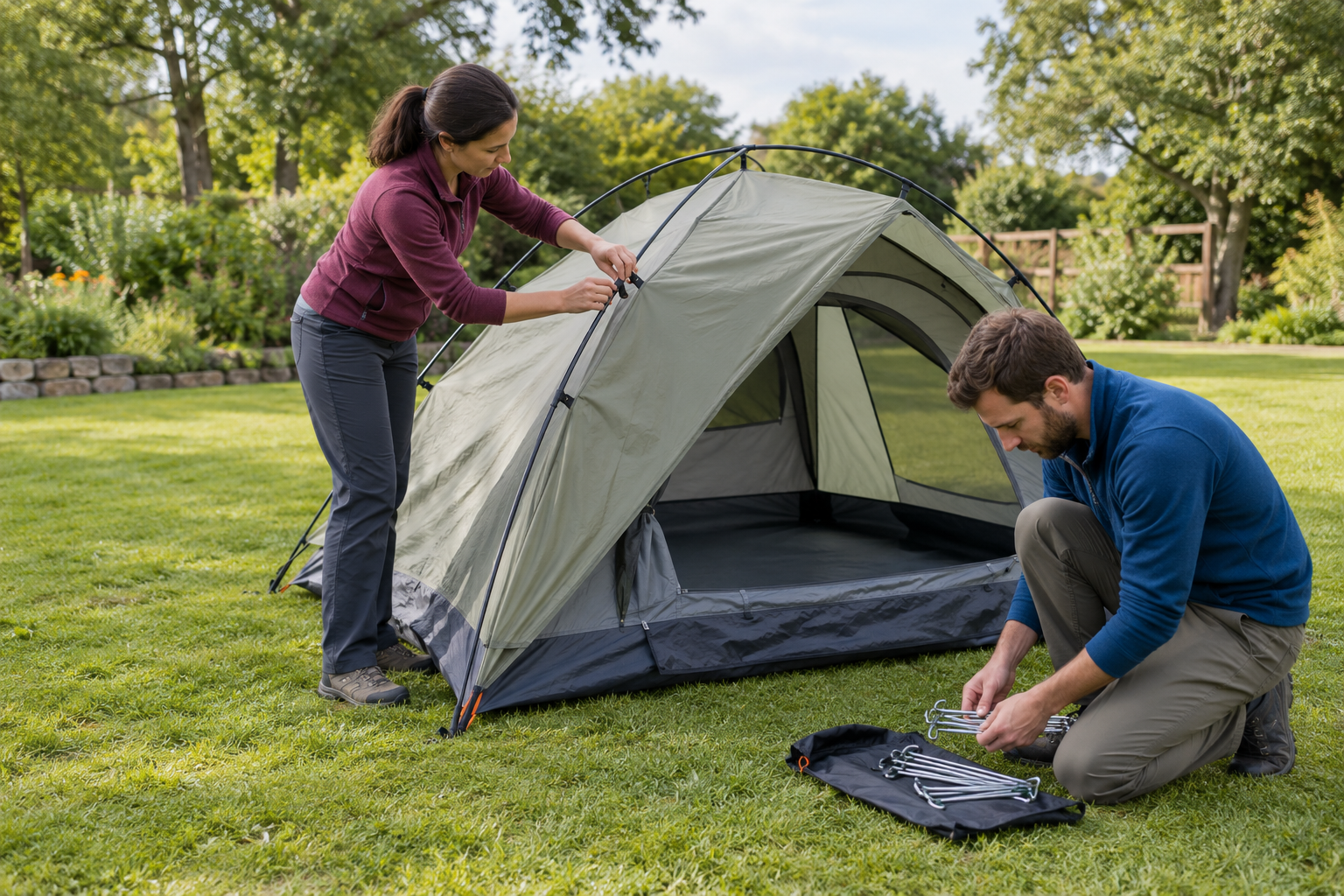
Do not judge camping tent setup from the quickest sequence in an advertising video. Read the full instructions and try the poles, clips and pegs yourself in an appropriate place. Ask how many people the process requires and whether your reach makes particular steps difficult. A camping tent that opens quickly can still require space, practice or a particular folding sequence to return to its carrying bag without damaging its components.
Give packing the camping tent its own trial. Organise small parts in a known place and count them before closing the bag. If a step is unclear, return to the illustrated instructions rather than forcing components or bending a pole against its intended direction. Another person sharing the camping tent should understand the basic assistance required. This keeps the whole task from depending on one participant who may arrive later than the rest of the group.
Practise the camping tent in daylight and describe problems precisely: a confusing pole sequence, a hard-to-reach clip or an apparently incompatible fitting. Send a clear photograph to the supplier if you need clarification. This practice is for learning the approved assembly and confirming completeness. It is not a reason to expose the camping tent to unsuitable weather merely to see what happens or to assume that successful garden assembly proves every aspect of outdoor suitability.
Read intended conditions and anchoring instructions for a camping tent
A seasonal description helps identify a category of intended use, but it does not replace the camping tent instructions, current local alerts or the organiser’s assessment. Do not interpret a broad label as a guarantee for any wind, rainfall or ground. Ask about documented limitations, the prescribed anchoring arrangement and the required accessories. Compare that information with the actual trip instead of using a product label to overrule a decision about unsuitable conditions.
Confirm which pegs and lines the camping tent includes and how they are intended to work on the permitted surface. Do not damage vegetation or alter the campsite to improvise an anchor. Keep lines out of movement routes. If the allocated pitch does not allow the required assembly, discuss another suitable arrangement before staying overnight. An unsuitable pitch should not be resolved by silently changing product instructions or ignoring the rules of the site.
| Question about a camping tent | Information to obtain | Insufficient evidence |
|---|---|---|
| How does it anchor on this ground | Specified method and suitable accessories | A photograph from another location |
| Which conditions are intended | Written model description and limits | A season label without details |
| Who can assemble and pack it | A practical trial and clear assistance | Watching a short demonstration only |
| What does the return policy allow | Written trial and defect conditions | An unspecified verbal assurance |
| Can components be replaced | Part names and ordering process | Poles that happen to look similar |
If a particular booking prompted the camping tent comparison, contact the team about the sleeping area, available dimensions, assembly responsibility and personal bedding requirements. Ask a question tied to your booking rather than a general question about whether the equipment is good. Precise inclusions can prevent buying something you will not need to transport or depending on an accessory that was never listed as included, available to borrow or appropriate for that programme.
Plan camping tent transport and home storage
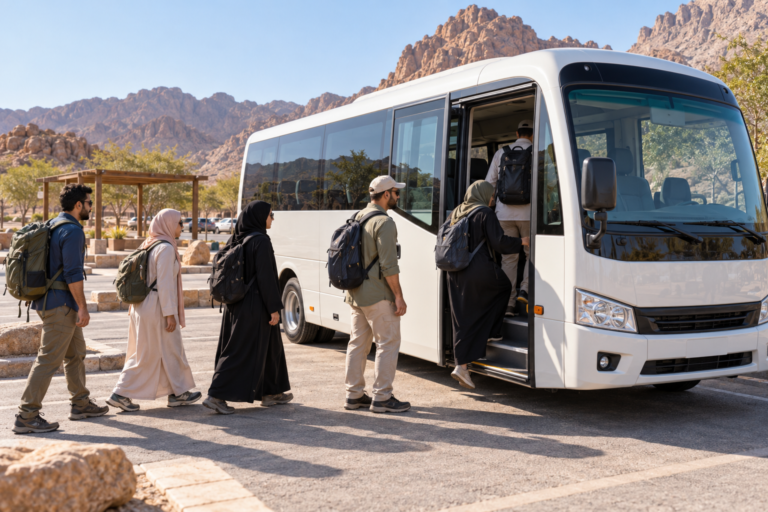
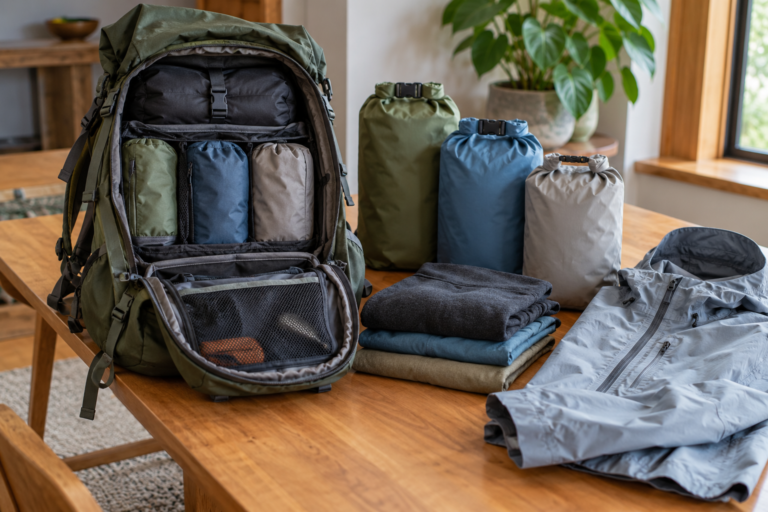
Read both the camping tent weight and the packed bag dimensions, then establish what the stated weight includes. Place it beside the rest of the actual load or try the intended carrying arrangement without forgetting poles, cover and pegs. Fitting it into an otherwise empty vehicle is not the complete test. Leave room for bedding, food and passenger luggage, and keep road essentials accessible without repeatedly unpacking the whole shelter during the journey.
Identify where you can dry, inspect and store the camping tent at home according to its instructions. A large shelter can become difficult to maintain if you lack an appropriate drying area. Include that constraint before purchasing rather than discovering it after your first damp return. Storage is part of ownership even when the equipment will be used only occasionally. A packed size that fits a cupboard does not explain how you will manage drying beforehand.
Keep road essentials separate from sleeping equipment
Use a small accessible bag for things needed during transport instead of reopening the camping tent bag whenever you need a personal item. When shared equipment travels in different vehicles, record who carries the poles, cover and pegs and who arrives first. Dividing weight without a clear inventory can leave an essential component far from the pitch while everyone believes that another participant has brought the complete shelter and knows how it will be assembled.
Keep cooking outside the sleeping shelter
Separate cooking and fuel-burning equipment from the sleeping area and follow appliance, site and safety instructions. Camping safety guidance requires fuel-burning stoves to be used outside tents and enclosed spaces. Opening a camping tent door is not a substitute for a suitable outdoor cooking location. Do not use cooking as an improvised heating method inside the camping tent. A larger or more expensive product does not turn the sleeping area into a suitable kitchen.
Keep sharp, dirty and wet items away from the camping tent floor and bedding, and follow local instructions for food, odours and rubbish. Decide where shoes, lights and phones belong before bedtime while retaining a clear entrance. A fabric pocket is not suitable for every item simply because it is available. Check its intended use and arrange belongings so that they do not hang over sleepers, obstruct a zip or require someone to crawl across another person’s space.
Inspect the complete sleeping arrangement
Bring sleeping pad and bag measurements when comparing a camping tent and ask whether an assembled demonstration is available under the shop’s policy. Try entering, sitting and operating zips without excessive tension. Do not judge the interior only while standing outside it. For a family, discuss sleeping positions and getting up during the night before choosing a layout that makes normal movement difficult for the actual people who will share the space.
Check what the camping tent includes and what is sold separately, then retain the component list with the invoice. Ask how missing parts are handled and which return conditions change after outdoor use. Compare the full cost of genuinely necessary equipment rather than the box price alone. Equally, avoid adding accessories without a known purpose simply because they appear beside the product or feature prominently in an attractive promotional setup photograph.
Clean inspect and dry before storage
After returning, open the camping tent in an appropriate place and inspect it while observations are still fresh. Remove dirt according to the manufacturer’s method rather than using a strong cleaner or treatment just because you already own it. Examine poles, zips, lines and pegs and record replacement needs. Care does not promise to restore every component to new condition. It helps establish the equipment’s actual state before you rely on it again.
Do not store a damp camping tent for an extended period. Follow its drying and packing instructions. If circumstances require packing before it is fully dry, make opening and drying it at your destination an explicit task rather than leaving the bag closed for days. Count the parts again after cleaning and keep a short note of required replacements. Assign responsibility for obtaining them before the next departure instead of discovering the same missing piece at another campsite.
A hypothetical buying comparison
Imagine a family planning one night with two wide sleeping pads and vehicle access to an organised campsite. Their camping tent comparison begins with measuring the pads and confirming the allocated pitch. They then try sitting, entering and leaving, and decide which belongings require separate storage. If a smaller model fits the pads but blocks the doorway, they record that problem and look for an arrangement that addresses it rather than automatically selecting the biggest product available.
The larger camping tent might then prove awkward to assemble or difficult to pack alongside the family’s other luggage. Their next comparison could include different pad dimensions, suitable borrowed equipment or a programme with clearly confirmed sleeping arrangements. This example is illustrative, not a documented customer experience. It shows an order of decisions rather than prescribing one capacity, product or purchasing budget for every family and every permitted camping location in Saudi Arabia.
| Decision stage | Camping tent check | Information to retain |
|---|---|---|
| Before shopping | People pad dimensions and pitch | A short needs list |
| During the trial | Entry sitting ventilation and assembly | A specific observation for each difficulty |
| Before paying | Components accessories and shop policy | Invoice and written conditions |
| Before departure | Practice assembly and count parts | Complete bag and assigned responsibility |
| After returning | Cleaning drying and damage inspection | Maintenance list before the next outing |
Frequently asked questions about a camping tent
Is person capacity enough to choose a camping tent?
No. Begin with the number of sleepers, then compare actual pad dimensions, the floor shape, necessary belongings and the entrance route. A stated capacity may suit people using narrow pads but not a family with a different arrangement. Measurements and a practical trial are more informative than copying a friend’s choice. Confirm the permitted pitch as well; extra capacity cannot help if the camping tent will not fit where you are allowed to assemble it.
Is camping tent height more important than floor area?
The answer depends on what you need to do inside. Height can affect sitting or changing clothes, while floor length and width determine bedding fit. Examine both together with wall slope and door design. Do not pay for unused standing height while ignoring cramped foot space, or accept generous floor measurements without trying the movements that your own group will repeat during an overnight stay.
Is a more expensive camping tent automatically better?
Price does not determine suitability alone. Compare space, weight, pitching method, ventilation, intended conditions, included accessories and replacement support. Identify actual needs before comparing the full cost of suitable models. A weight-saving feature may be valuable on a long carry and less important beside a vehicle. Understand the reason for the difference rather than treating a higher price as proof that a product fits your family or itinerary.
Can I assemble a camping tent for the first time on arrival?
A daylight practice beforehand is preferable. Use the product instructions and involve the people who will assist with pitching and packing. Confirm the components and learn how they return to the bag without force. Late arrival, fatigue or a missing piece make unfamiliar steps harder. A home trial does not certify weather suitability, but it identifies handling problems early enough to ask questions or arrange an appropriate replacement.
Does a camping tent replace a sleeping bag and pad?
Treat the camping tent and sleeping equipment as separate parts of the complete arrangement. Pad, bag and clothing choices depend on conditions, product instructions and personal needs. Confirm booking inclusions instead of assuming that a supplied shelter means every pillow, pad and bag is included. Check dimensions together and decide who carries each component, so that responsibility does not disappear between different participants’ assumptions about what somebody else has packed.
What if my camping tent becomes damp?
Follow the manufacturer’s drying, cleaning and inspection instructions. Distinguish moisture during use from a possible leak before deciding what happened. Do not store it wet for an extended period or apply an arbitrary treatment. Record recurring problems and contact the camping tent supplier when needed. An improvised repair should not become a reason to rely on damaged equipment before understanding whether it remains suitable for the next intended use.
Can I cook in a camping tent with the door open?
Do not use an open door to justify placing a fuel-burning stove in the sleeping shelter. Follow appliance and site instructions and arrange an appropriate outdoor cooking area with clear responsibility for fuel and hot equipment. Shelter size does not change that principle. Plan meals beforehand so that lack of time, unfamiliar equipment or a change in conditions does not become an excuse to improvise beside bedding or tent fabric.
Does Hike & Seek provide a camping tent with every booking?
Do not assume that all programmes include one. Review the selected trip and its options, then confirm sleeping capacity, assembly responsibility and bedding requirements with the team. Arrangements can differ between programmes and dates. Retain the actual answer with the options you selected, and resolve uncertainty before buying additional equipment or relying on a photograph from an older departure as evidence of what your own booking provides.
Confirm the sleeping arrangement before departure
Choose a camping tent after measuring, trying the setup and understanding ventilation, anchoring and storage. Count its parts again before leaving. For a selected Hike & Seek programme, contact the team with the participant number, your equipment dimensions and specific questions about inclusions. A useful decision combines product fit with site instructions and a workable sleeping plan. It is not completed by a photograph or a list of specifications whose practical meaning you have not checked.