 عادل فيرق
Choose a sleeping bag by considering the intended overnight conditions, your usual sleeping preferences and the pad underneath you, then examine fit and transport. Do not reduce the decision to the lowest number on the packaging. Labels can describe different ratings, and some figures may be a manufacturer’s estimate rather than a standardised test. Read the rating name, unit and source before comparing products or deciding that a number suits a particular trip.
This sleeping bag guide explains useful shopping and preparation questions rather than prescribing one temperature for all Saudi destinations. A rectangular model, a tapered design and different insulation types can serve different arrangements. The useful comparison concerns the sleeping bag you will actually use, how you move while sleeping and whether you can care for it. A specification is evidence to interpret, not a personal promise of identical comfort in every place and circumstance.
For a Hike & Seek departure, review the published camping trips and Contact Hike & Seek about the sleeping equipment included in your chosen booking. A supplied tent does not automatically establish that a sleeping bag, pad and pillow are all available. Keep the confirmed personal equipment list with the programme details. Check what you already own before shopping, and avoid reproducing another participant’s packing list without understanding the differences in your own needs and equipment.
Start with the night you intend to spend outdoors
Record the location, date, duration and transport arrangement, then review current conditions with the organiser. Do not select a sleeping bag from a broad city average when the actual sleeping place differs. Establish the programme’s sleeping arrangement and equipment requirements before comparing colours, pockets and compression sacks. Suitability for the trip comes first; a convenient product cannot make an otherwise unsuitable itinerary appropriate for your current preparation or personal circumstances.
Consider your usual sleeping preferences in cooler settings. Do you regularly remove covers or need an extra layer? That observation can guide questions about a sleeping bag without becoming a medical assessment. If a health condition or personal need affects overnight participation, discuss the activity with an appropriate professional and the organiser. A general product description cannot make that individual decision, and a review from someone with different circumstances should not be treated as its substitute.
Match a sleeping bag to the carrying arrangement
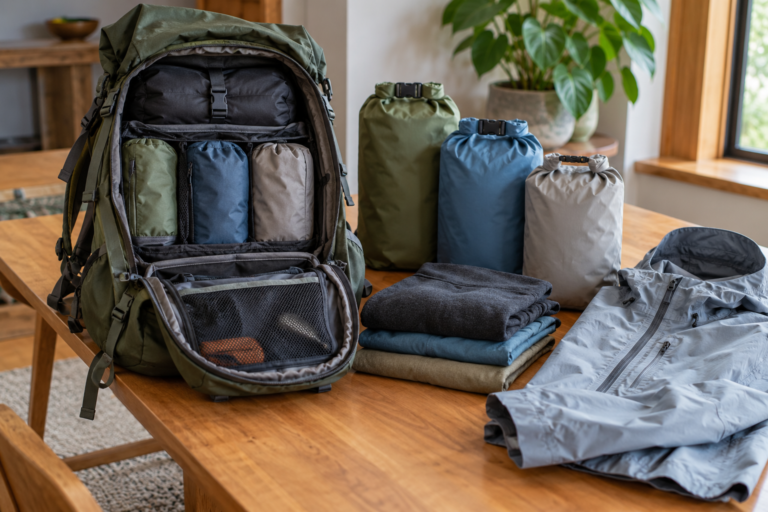
Vehicle access can allow different priorities from carrying all equipment on your back. Nevertheless, compare the packed sleeping bag with the real load, including pads, clothing and other participants’ luggage. Light weight is not the only objective, and a compact sack does not describe sleeping comfort. Choose around the use you actually expect rather than an imagined future expedition whose requirements you have not yet established or a packing photograph that omits half the necessary equipment.
Read the sleeping bag rating name before the number
Look for the terms attached to each temperature and confirm whether the unit is Celsius or Fahrenheit. Temperature rating guidance explains why comparisons require the same kind of rating. A sleeping bag model name containing a number is not automatically comparable with another product’s stated comfort rating. Ask which figure the name represents, how it was established and where the full specification is available before making a decision from a short shop listing.
Manufacturers’ explanations, including Rab’s rating guide, distinguish comfort from other reported limits and identify extreme ratings as an emergency context. Do not plan ordinary sleeping bag use around an extreme figure as though it describes relaxed sleep. If the label is unclear, request the sleeping bag sheet and a plain explanation. Resolving that uncertainty before buying is more useful than choosing the lowest visible number and trying to reinterpret it after an uncomfortable first night.
Tests describe specified conditions rather than every combination of body, clothing, pad and equipment condition. Use a sleeping bag rating as a comparison tool within its scope. A friend’s comfortable night is not a guarantee for you, while different reviews do not necessarily mean that one person misread the label. Compare the whole arrangement and intended use. A clear understanding of the test is useful precisely because actual camping introduces variables that a single product number cannot describe.
| Sleeping bag information | Useful question | Next step |
|---|---|---|
| Number in the model name | Which rating and unit does it represent | Read the complete specification |
| Comfort rating | Which test or estimate supports it | Compare equivalent information |
| Reported lower limit | What exactly does the limit describe | Do not automatically equate it with comfort |
| Extreme figure | Does it describe an emergency context | Do not plan an ordinary night around it |
| Unexplained temperature | Is it tested or estimated | Request clarification before choosing |
Review the pad before replacing the sleeping bag
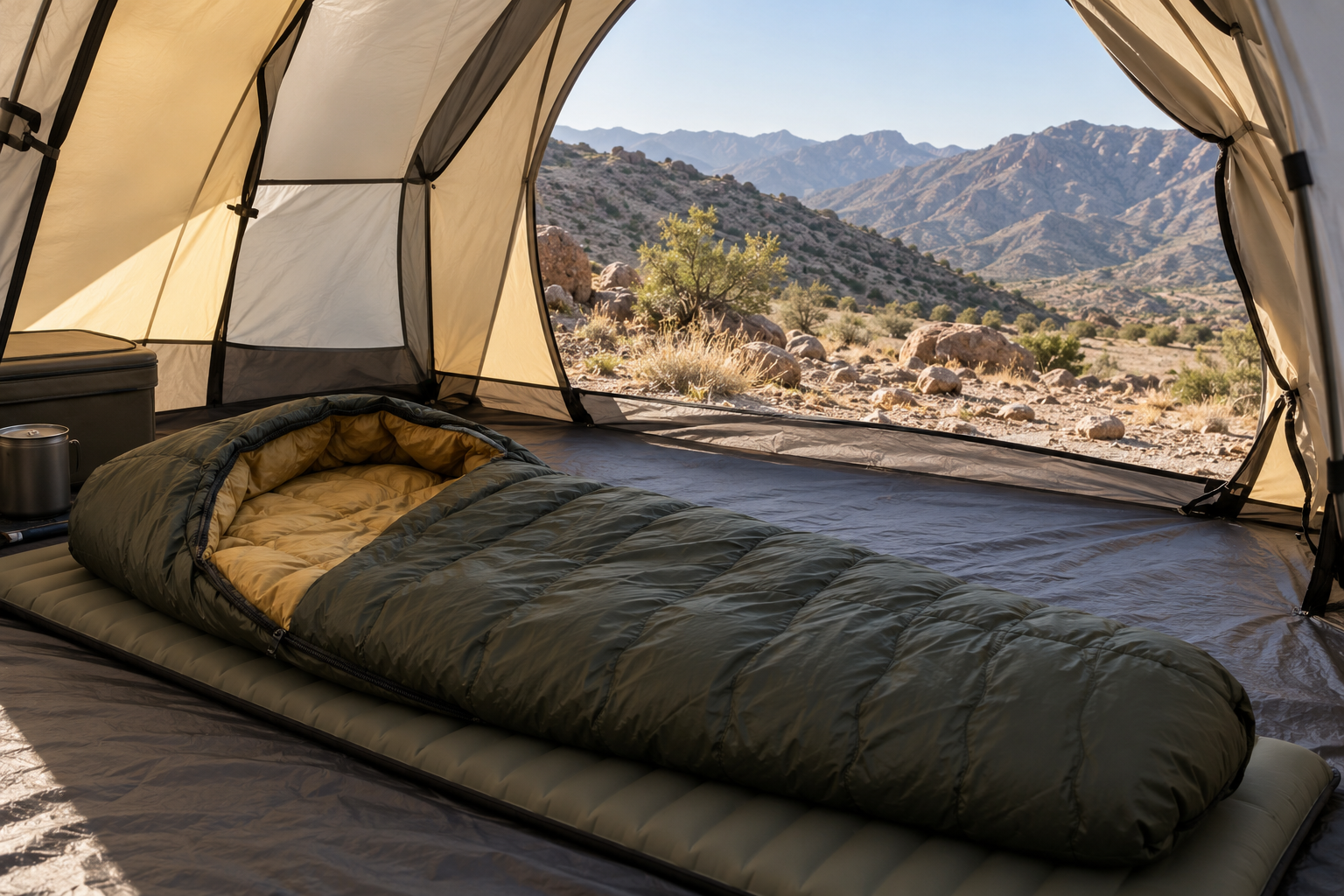
Do not assess a sleeping bag independently of the pad. Sleep system guidance explains that the pad insulation underneath the body influences the arrangement. Obtain the pad’s specification and dimensions and check how the two products fit together. Buying a more expensive cover without understanding what lies beneath your sleeping bag may leave the original problem unresolved. Treat the sleeping system as a set of interacting choices instead of assuming that one premium component determines every result.
Try the pad and sleeping bag together in an appropriate familiar setting where you can change the plan easily. Observe slipping, movement beyond the pad edges and access to controls. A home trial can reveal fit and handling problems, but it does not reproduce every outdoor condition. Combine those observations with actual programme information. Do not turn a comfortable indoor trial into certification for an unrelated location or a reason to continue with conditions beyond the equipment’s intended use.
Test sleeping bag length width and normal movement
Read the intended user measurements for the particular model rather than assuming that general size names mean the same thing between shops. Check shoulder and foot dimensions where available. Enter the sleeping bag on a pad without dirty footwear or sharp objects, close it and try your normal sleeping position. Handling the fabric from outside does not reveal how much usable room remains once the sleeping bag zip is closed and your body occupies the interior.
Notice pressure around the feet, pulling at the shoulders and restrictions on turning. An excessively long sleeping bag is not an automatic answer to inadequate shoulder room, while persistent discomfort should not be dismissed as something every outdoor participant must tolerate. Compare a different size or shape and discuss the specific problem with the supplier. Accessories cannot necessarily change the fundamental cut or dimensions of a product that does not fit the person who will use it.
Operate the sleeping bag zip from inside
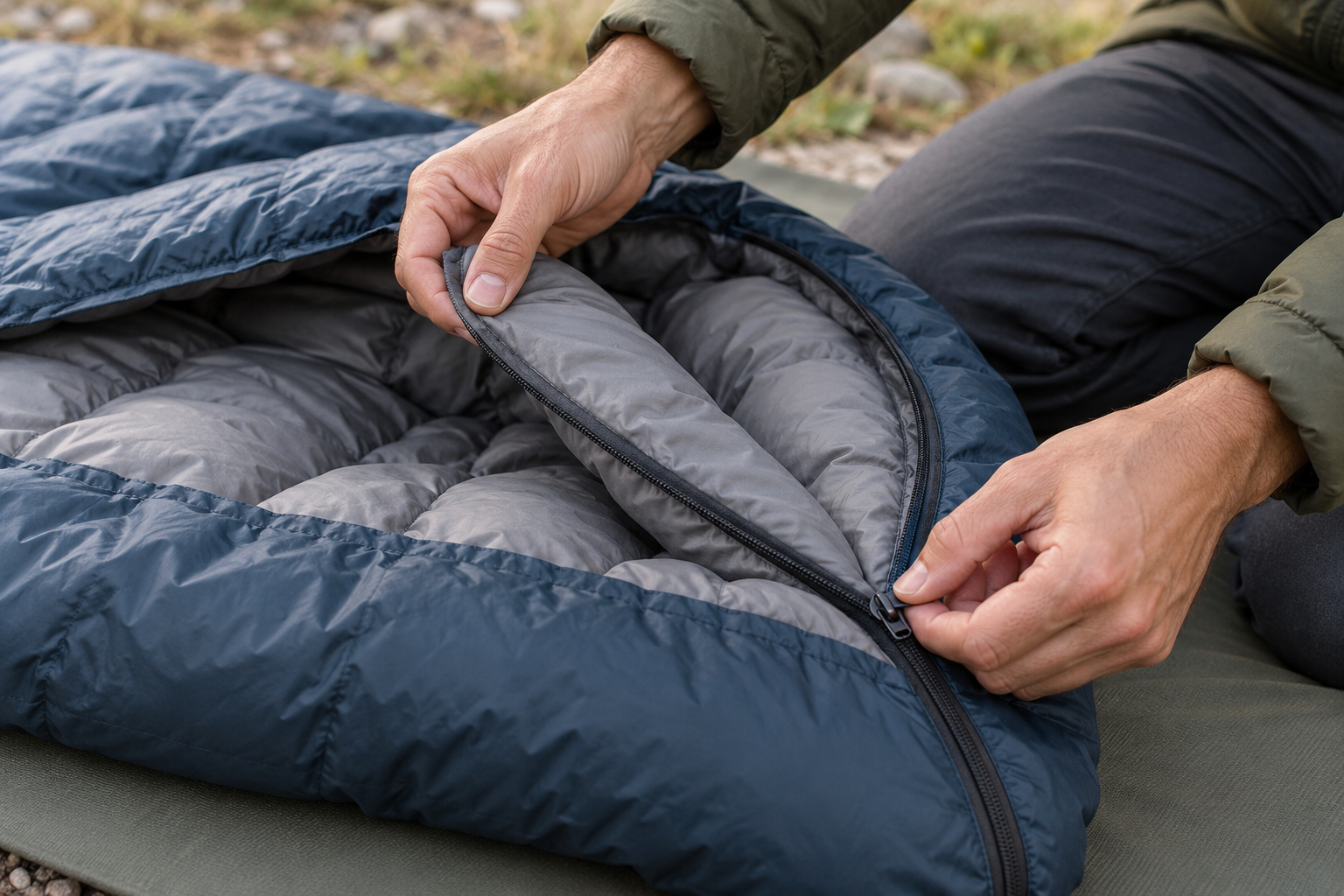
Try the sleeping bag zip while sitting and lying down and understand its direction and the approved way to release caught fabric. Check partial ventilation if the design supports it. The purpose is normal operation, not pulling hard to prove strength. In a shared sleeping area, consider entering and leaving without scattering another person’s belongings or repeatedly switching on bright light. A small handling issue in the shop may become more disruptive when several people are trying to rest.
Compare sleeping bag shapes through an actual trial
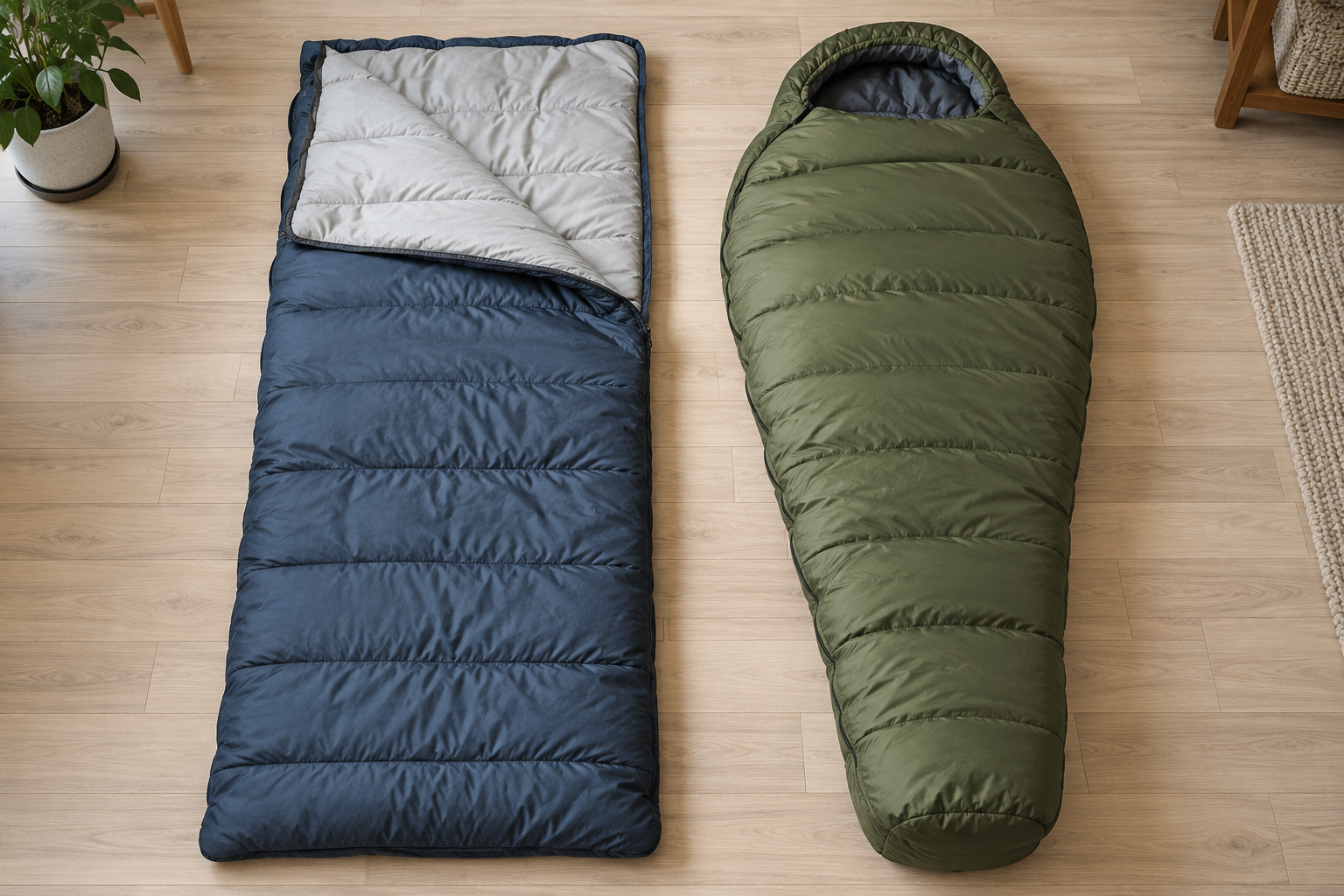
A rectangular sleeping bag and a tapered design offer different arrangements, while details vary within each category. The category name does not explain everything about warmth or comfort. Try shoulder room, foot space, the collar and hood where present, and the way the sleeping bag zip opens. Connect preferences with the intended conditions instead of choosing a shape simply because its photograph appears more technical. The appropriate product should serve the actual user rather than an imagined identity or experience level.
For a shared or double sleeping bag, discuss both people’s movement and preferences and check the matching pad dimensions. One person’s trial cannot establish comfort for both. Separate bags may suit different requirements, but that decision still needs a practical comparison. If joining two products is advertised, confirm the precise compatibility rather than assuming that similar-looking zips, matching colours or the same broad size name establish that different brands can be connected correctly.
| Trial area | Sleeping bag observation | Decision based on use |
|---|---|---|
| Shape | Movement after closing the zip | Try it rather than judging a flat photograph |
| Length | Foot comfort without fabric tension | Use the stated user measurements |
| Zip | Access and operation from inside | Ask about handling and maintenance |
| Shared use | Both users and matching pads | Do not rely on one person’s trial |
| Transport | Packed volume beside other equipment | Compare the complete load |
To establish personal sleeping bag requirements for a selected programme, contact the team with your current equipment and specific questions about inclusions. Then use the supplier or manufacturer’s information for model-specific claims. A trip organiser cannot reasonably guarantee an unfamiliar product’s performance from a vague description, while a shop listing cannot explain the responsibilities of a departure it does not know. Keep these two questions connected without expecting either source to replace the other.
Compare sleeping bag insulation in a complete product
Down and synthetic insulation are broad descriptions, not a complete buying decision. Compare the sleeping bag model’s declared weight, packed size, care requirements, cost and other relevant properties. Relate those to how you will protect and transport it. Do not transfer every claim from a specialised product to all equipment using a similar insulation name. A useful comparison concerns actual models with the measurements and support you can confirm before purchasing.
Ask whether you can clean and dry the sleeping bag as instructed, where you will store it and whether its packed volume leaves room for the rest of your equipment. Those questions produce a more useful shortlist than ranking materials as universally best or worst. A price difference may relate to weight or features you do not need, while a different fit or simpler ownership arrangement could be far more important to the way you actually camp.
Separate sleeping bag transport from long storage
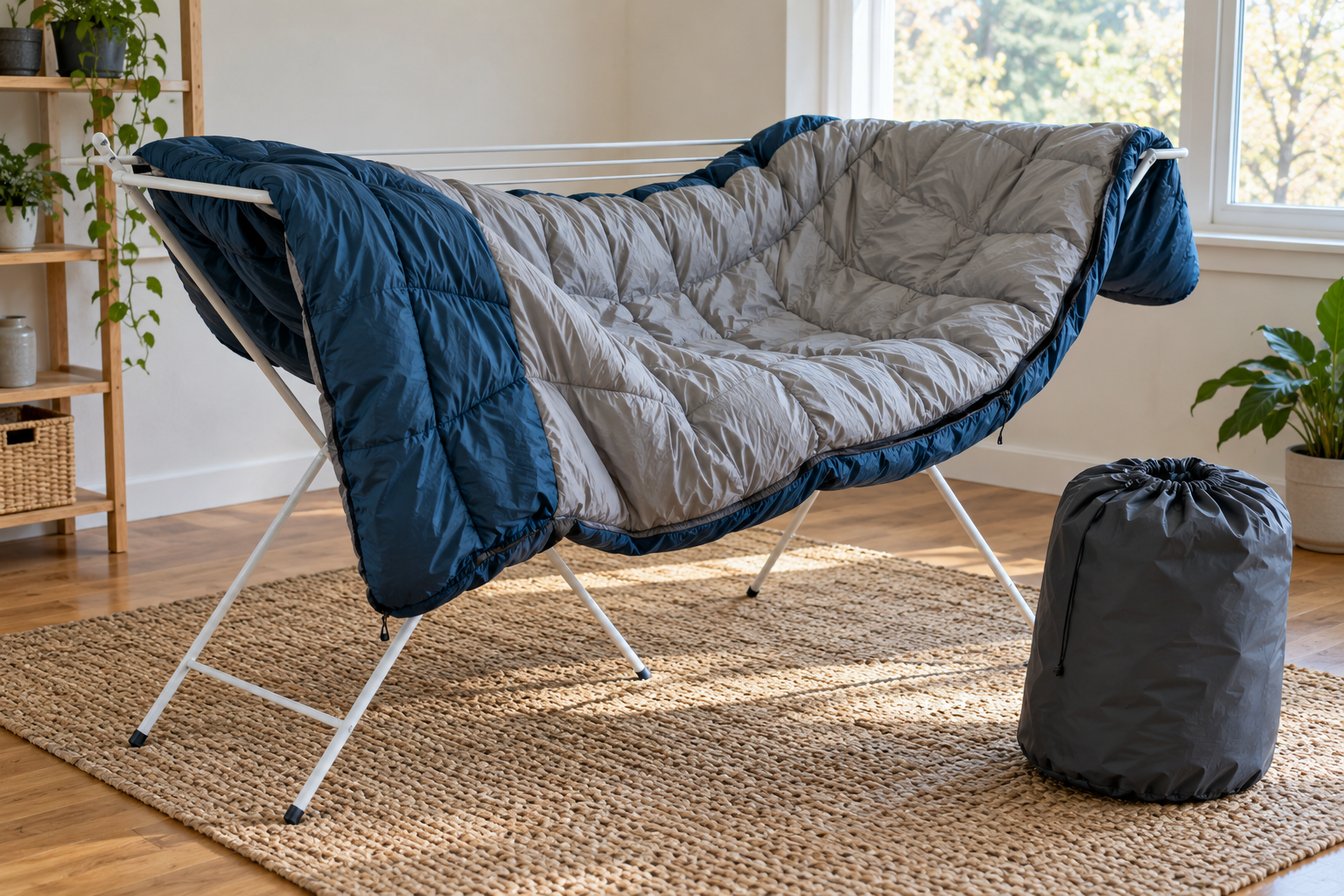
A compression sack serves a particular transport purpose and is not automatically the right place for long-term storage. Follow the sleeping bag manufacturer’s packing and storage instructions. Care guidance distinguishes compact packing for a journey from loose storage after thorough drying. Identify a suitable place at home before buying a product with storage requirements you cannot accommodate. Ownership includes the weeks between outings, rather than only the hours spent carrying equipment to a campsite.
Practise packing the sleeping bag yourself and confirm whether the supplied accessories include the transport sack. Allow time for the task on departure morning rather than forcing fabric, stitching or the sleeping bag zip into an inconveniently small container. If packed size matters to a backpack, try the relationship with other equipment already inside. A successful demonstration on an empty shop table does not explain whether the complete load will remain accessible or manageable during your actual journey.
Organise dry sleeping bag equipment deliberately
Identify what must remain dry and what will be separated from clothing worn during the day. Follow the instructions for the sleeping bag and its protective storage. An outer backpack cover does not establish that every item is protected in every situation. Learn the closure and inspection process before departure. Keep damp belongings separate rather than placing them against insulation and expecting the overall sleeping arrangement to remain identical to the dry setup you tried at home.
Give the first sleeping bag trial a clear purpose
Begin in a familiar appropriate setting where an unsuitable arrangement can be changed. Retain the sleeping bag instructions and record specific observations about fit, pad compatibility, handling and transport. A description such as good or bad is less useful than identifying a zip you cannot reach or shoulder room that prevents normal turning. Do not turn the first outing into an endurance test intended to justify a purchase regardless of changing conditions or personal discomfort.
Consider a hypothetical participant who owns a correctly sized sleeping bag but has not checked the pad or understood the figure in the sleeping bag model name. Before replacing it, they collect the rating explanation, pad information and overnight requirements. They may identify a reading, compatibility or handling problem requiring a different response. This is an illustrative decision process, not a diagnosis of a real person’s experience or proof that one piece of equipment caused an uncomfortable night.
Clean the sleeping bag according to its instructions
Read the care label and manufacturer’s guidance before washing or drying, and establish whether spot cleaning or a complete wash is appropriate. A familiar clothing cycle is not automatically suitable for sleeping bag insulation. Washing guidance emphasises the product’s own method and appropriate cleaning products. If the required facilities are unavailable at home, ask a competent service about handling that construction instead of experimenting with a detergent or machine merely because it is convenient.
Inspect the sleeping bag after cleaning and drying, including stitching and unusual changes in insulation distribution. Do not compress damp equipment into a sealed container and postpone checking it until the next trip. Retain the sleeping bag model information and record any issue for the supplier. Organised care supports informed maintenance decisions. It cannot erase damage or establish a fixed useful life for every product, storage arrangement and pattern of use, so reassess the actual item before relying on it again.
Write sleeping bag questions that can be answered
Ask for the rating name, unit and source, intended user measurements, complete weight, packed dimensions and care requirements. Add trial and return conditions and repair support where relevant. Specific questions create information you can retain and compare. Asking whether a sleeping bag is the best generally produces a much less useful answer, because the comparison lacks your pad, body dimensions, transport constraints and the actual overnight conditions that prompted the sleeping bag purchase.
Shortlist two or three sleeping bag models intended for the same need rather than assembling a long list with unrelated purposes. Give each comparison a decision point: acceptable fit, manageable operation, feasible storage and clear rating information. If an essential point remains unclear, obtain an explanation before buying. A temporary discount should not remove a suitability requirement, and an optional liner should not be treated as permission to exceed a performance limit the manufacturer has not confirmed.
| Stage | Sleeping bag check | Record to keep |
|---|---|---|
| Before shopping | Overnight conditions pad and transport | A realistic needs list |
| Reading the label | Rating unit and source | A clear product specification |
| During the trial | Fit turning and zip operation | Specific observations |
| Before departure | Complete packing and moisture protection | Assigned equipment responsibility |
| After returning | Drying inspection and correct storage | Maintenance before the next outing |
Frequently asked questions about a sleeping bag
Is the lowest sleeping bag temperature the comfort rating?
Not necessarily. Read the rating name, unit and manufacturer’s explanation. The figure may describe another limit or a brand estimate. Compare equivalent information and consider the pad and intended conditions. An extreme or emergency figure is not an ordinary comfort promise or a temperature you should deliberately plan to reach during a routine overnight trip. Ask for clarification whenever the listing does not identify what its headline number actually represents.
Can one sleeping bag serve every season?
That depends on the product’s intended range and the conditions you actually plan to encounter. Review the location, overnight arrangement, pad, clothing and your usual sleeping preferences. Do not assume that success on one mild night establishes suitability for a different departure. Equally, equipment intended for colder use is not automatically comfortable for every warmer programme. Compare a real use case rather than relying on a country’s name or a broad seasonal label.
Does a sleeping bag replace a sleeping pad?
Do not disregard the pad’s role. Read its specification and instructions and check dimensions alongside the bag and shelter. A more expensive cover is not a substitute for understanding the complete arrangement. Try the combination appropriately and confirm programme requirements. Tested ratings describe a specified setup, while actual experiences can differ, so a product number should not be separated from the other equipment or treated as identical performance for every participant.
Should I buy an excessively long sleeping bag?
Use the model’s stated user measurements and a practical trial. Extra length does not automatically solve narrow shoulders or restricted turning, while foot pressure should not be ignored. Try different shapes where possible and understand the shop’s trial conditions. Compare actual dimensions between products instead of assuming that general size names are universal. A colour or marketing category alone does not establish which fit will serve your normal sleeping position.
Does sleeping bag insulation alone determine quality?
No. Compare the complete construction, fit, fabrics, weight, care and support with your actual requirements. An insulation name does not explain zip reliability, movement comfort or feasible storage at home. Obtain model-specific information rather than transferring another product’s claims. A useful decision identifies why a feature matters to you instead of declaring one material the winner for every journey, climate, budget and ownership arrangement without considering the particular equipment involved.
Can a sleeping bag remain compressed all year?
Follow the manufacturer’s instructions. A compact transport sack is not automatically suitable for long storage. Confirm that the equipment is dry and use the specified storage arrangement with adequate space. Do not infer permanent storage instructions from how a shop supplied a compressed product. If the requirements do not fit your home, resolve that before purchase. Closing damp insulation in a bag and leaving drying until the next departure is not an adequate maintenance plan.
Can I wash a sleeping bag with ordinary clothing?
Do not apply one familiar detergent, cycle and drying method to every insulation type. Read the specific care instructions and use an appropriate service if the necessary equipment is unavailable. Unsuitable handling can affect fabric or fill. Keep the instructions after buying and inspect the item before storage. Completion of a machine cycle does not by itself prove thorough drying or mean that repeating the same wash will resolve an unexplained problem.
Does Hike & Seek include a sleeping bag?
Do not assume that every programme provides one. Review the current booking and ask what sleeping equipment is included, what you must bring and how any shared equipment is allocated. Retain the reply with your trip details. Older images and another participant’s different departure do not establish your own inclusions. For technical questions about a personal product, use the manufacturer or supplier’s model-specific information alongside the organiser’s explanation of the actual programme.
Keep the size and version beside your purchase record. A later request for a replacement component should identify the item you tried rather than a named alternative.
Complete the sleeping bag decision with the whole system
Choose a sleeping bag after understanding the rating, trying the fit and movement and reviewing the pad and care requirements. Confirm the equipment list before departure. For a selected Hike & Seek programme, contact the team with the departure and specific inclusion questions. Retain the product information and trial observations. Each purchase or adjustment should address a clear practical need instead of a marketing number or a general ranking that does not describe your intended overnight arrangement.