 عادل فيرق
Begin camping with children by choosing an experience the family can realistically manage: an appropriate duration, understood facilities, a familiar sleeping arrangement and clearly assigned adult supervision. An attractive location does not answer those questions. The first objective is enjoyable time outdoors, rather than completing the largest possible activity list. Extend the duration or complexity later, using what you learn about your own children’s interests, routines and difficulties rather than copying another family’s successful photograph or itinerary.
A plan for camping with children depends on age, experience, conditions and individual needs. This guide does not prescribe one starting age or promise that every child will sleep comfortably outdoors. It helps you prepare useful questions before booking and packing. Seek appropriate individual guidance for health-related needs. Joining a group or seeing an activity supervisor in the programme for camping with children does not automatically replace the parent or other responsible adult’s agreed role in supervising each child throughout the experience.
Before camping with children on a Hike & Seek programme, browse the published camping trips and Contact Hike & Seek about the specific departure. Give the children’s ages and ask about participation requirements, facilities and accompanying adults. Do not assume every departure has the same family policy. A general description such as beginner-friendly does not establish that every activity, sleeping arrangement or facility suits every child. Obtain the details that your family actually needs before purchasing equipment around an unconfirmed booking assumption.
Choose the duration of camping with children from current experience
A short visit or nearby trial may be more appropriate than a full overnight stay for some families. Notice how the child responds to unfamiliar places, waiting, noise and using different facilities. Avoid making camping with children a surprise endurance test. Explain what will happen in straightforward language and ask what seems exciting or worrying. A question about darkness or wind can identify a preparation task that matters more than buying another toy or adding an activity to the schedule.
Set one or two objectives for the first experience, such as eating outdoors and trying the sleeping arrangement, with unscheduled time between them. Constant transitions can turn camping with children into repeated rushing. Review the booked arrival and departure times and whether the family can meet them comfortably. In a group, do not assume that the entire programme can change because your family would prefer a later start or an earlier return that has never been discussed with the organiser.
Try part of camping with children before travelling
Prepare the sleeping equipment in a safe permitted place at home or during a suitable nearby trial. Let the child understand the entrance, light and available space. The exercise does not need to reproduce every campsite condition to be useful. A trial before camping with children can reveal a difficult zip, insufficient room or a concern that needs explanation. Keep the experience of camping with children manageable and record specific observations, rather than treating one reaction as a final judgement about the child’s ability or all future outdoor trips.
Check facilities before camping with children
Ask about toilets, access after dark, potable water, changing arrangements and the actual sleeping space. Everyday facilities can influence camping with children more than the number of scenic photographs in a listing. Confirm the distances and route between the facilities and sleeping area, together with any instructions participants must follow. Resolve essential uncertainty before booking or buying equipment based on the expectation that a service is available without restrictions. A facility existing somewhere on a large property does not explain practical access from your allocated area.
Review vehicle arrival, unloading and the distance equipment must be carried. Transporting bags when camping with children may work differently if one adult must stay with a child instead of helping move boxes. Do not assume every family member can carry an equal load. Allocate equipment according to actual ability and identify what needs to remain accessible during the journey and immediately on arrival. The first hour’s necessities should not be buried beneath the rest of the vehicle’s load.
| Family decision | Information to confirm | Reason to reconsider |
|---|---|---|
| Duration | Previous experience and actual timetable | The stay exceeds the family’s preparation |
| Facilities | Toilets water and access route | An essential need remains unclear |
| Sleeping space | Dimensions and required personal equipment | The proposed arrangement does not fit |
| Participation | Accepted ages activities and adult responsibilities | The programme conflicts with a child’s needs |
| Return | Timing and permitted changes | The plan depends on an unconfirmed exception |
Assign adult responsibility when camping with children
Agree which adult is responsible for each child during arrival, setup, meals and activities. Everyone watching is not a clear supervision arrangement. When camping with children, a change of responsibility should be confirmed directly between the adults involved. Simply being in the same area does not show that someone accepted the task. Do not transfer it to an older child or another participant without an appropriate agreement and a clear understanding of what that person can reasonably do.
Discuss ordinary situations rather than relying on a promise that the family will never separate. Who stays with a child when an adult returns to the vehicle? Who accompanies them to the facilities? How will two children with different interests be supervised? Make these decisions before camping with children becomes busy with tent setup and meal preparation. Review them when the activity or location changes. Explicit handovers help adults cooperate without leaving a gap that each person assumes somebody else has already covered.
Explain boundaries as part of camping with children
Show the permitted area, explain how to ask for help and identify the responsible adult. Use landmarks the child understands and ask them to explain the arrangement for camping with children in their own words. Do not deliver one long instruction and assume it covers the whole trip. Boundaries change when camping with children moves from the tent to an activity or facility. The adult still provides actual supervision; a child remembering a rule does not transfer responsibility for the entire safety arrangement to them.
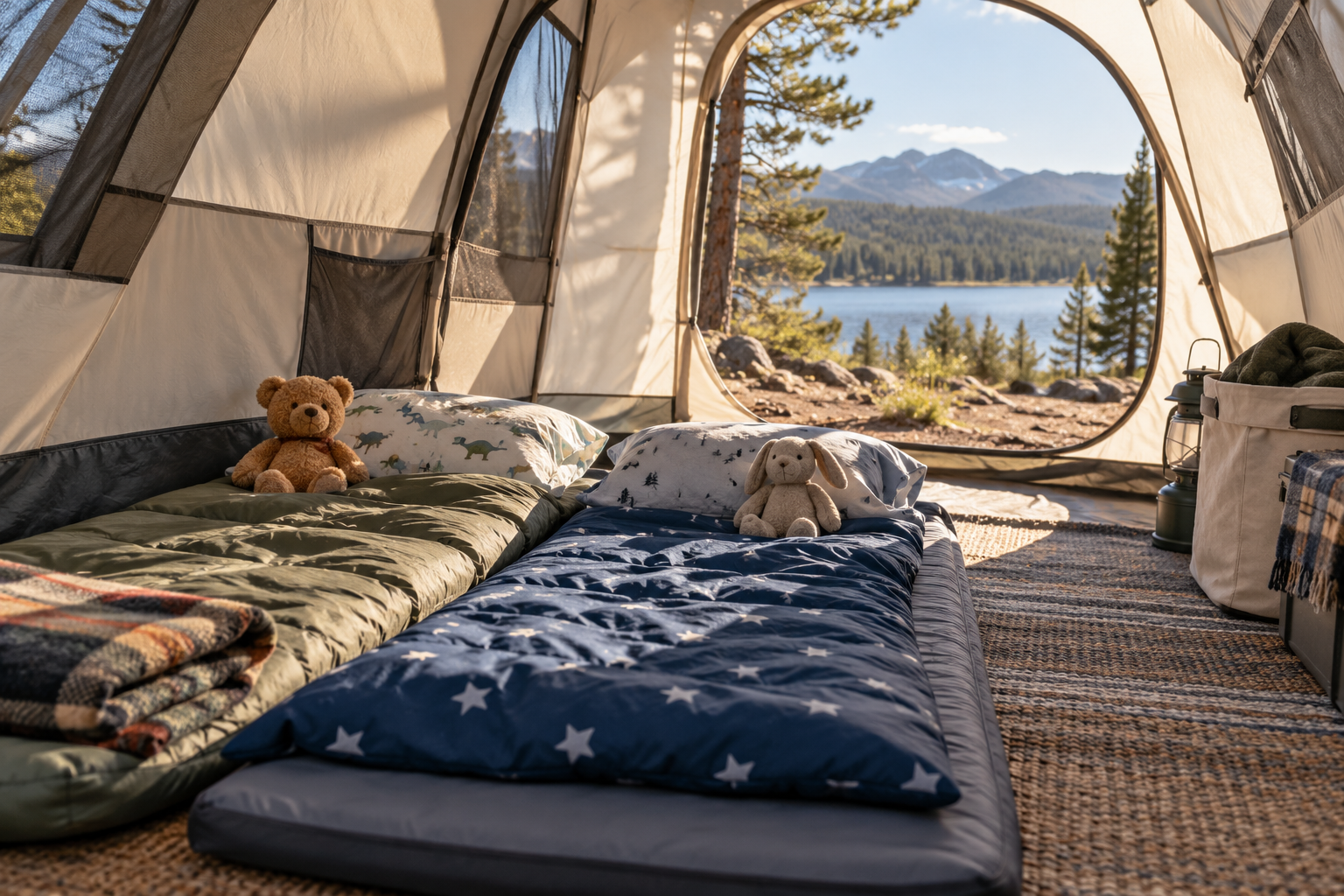
Prepare sleeping equipment before camping with children
Check dimensions and the equipment manufacturer’s intended age and use information. Do not apply an adult product’s size or rating automatically. Camping with children requires room for movement and access without filling the sleeping surface with bags. Choose clothing and equipment for the confirmed conditions and actual user. This article does not provide infant-sleep instructions or a universal temperature prescription for children. Questions involving a specific child’s needs require suitable guidance rather than a general assumption based on an adult camping purchase.
Keep a small useful familiar item and bedtime essentials accessible. These may support a calmer transition without guaranteeing uninterrupted sleep. Explain lighting and facilities before bedtime. Camping with children should not make the end of a tiring day the first moment a child learns what the tent looks like or how to leave it. Reduce unnecessary changes and allow time for adult assistance, rather than filling the schedule until the last minute and expecting a familiar home routine to happen immediately in a new setting.
Plan meals and water before camping with children
Start with familiar food that can be stored and handled appropriately, then confirm what the programme for camping with children provides. Do not assume a tired child will accept any available meal. Camping with children benefits from understood meal and snack arrangements, while respecting each person’s needs. Discuss allergies or health-related dietary requirements with the appropriate professional and organiser. A general meal description, or removing one visible ingredient, does not establish that an individual requirement can be met in the actual preparation and serving arrangement.
Separate participation in food preparation from operating equipment or using tools that are unsuitable for the child. A child may choose plates or arrange suitable non-sharp items with appropriate supervision, depending on age and ability. Not every task involved in camping with children becomes appropriate simply because an adult is nearby. Keep food and water in suitable containers and identify who manages hygiene and storage. Participation should increase understanding and enjoyment without assigning an unfamiliar operating responsibility the child cannot appropriately undertake.
Pack practical clothing for camping with children
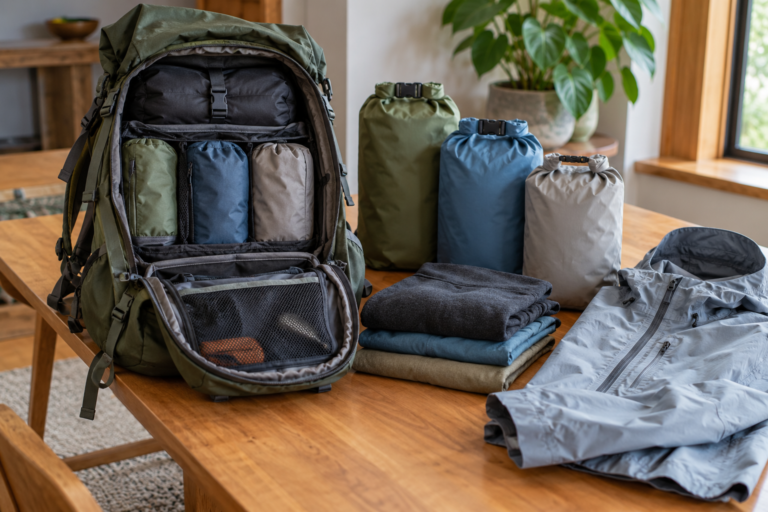
Review clothing for movement, sitting and sleeping, with an accessible replacement when needed. A bag for camping with children should distinguish the first items required from equipment that can remain packed until later. Return used items to an understood place. Try footwear and unfamiliar clothing before the journey. Opening a new item at the beginning of an activity can turn a simple fitting problem into a difficulty that follows the child throughout a day whose timing and alternatives are already constrained.
Where appropriate, let the child choose a small personal item or learn where their hat belongs, while an adult reviews the actual contents. The adult retains responsibility. Camping with children is not a competition to carry the largest bag or prove independence. Clear organisation helps everyone find equipment. Excessive items make it harder to track what is missing, separate used clothing and return everything to the vehicle. Keep the quantity manageable while retaining the essentials that the family’s real conditions require.
| Stage of camping with children | Item to keep accessible | Adult responsibility |
|---|---|---|
| Journey | Water and confirmed travel necessities | Manage arrival and stops within the plan |
| Arrival | Required clothing or familiar item | Supervise before sorting the remaining load |
| Activity | Tools appropriate to age and ability | Choose the task and supervise participation |
| Bedtime | Suitable lighting and sleeping essentials | Explain facilities and accompany when needed |
| Departure | An understood bag for used belongings | Check the location and every family member |
For camping with children on an organised departure, contact the team about activities, distances and actual duration rather than the scenery alone. Explain what your family needs to confirm about sleeping, facilities and accompanying adults. If an activity does not suit someone, ask about permitted alternatives before booking. Do not assume your family can remain at a separate site, arrange a different pickup or change the return time without explicit coordination. The organiser’s answer should refer to the programme for camping with children you intend to join.
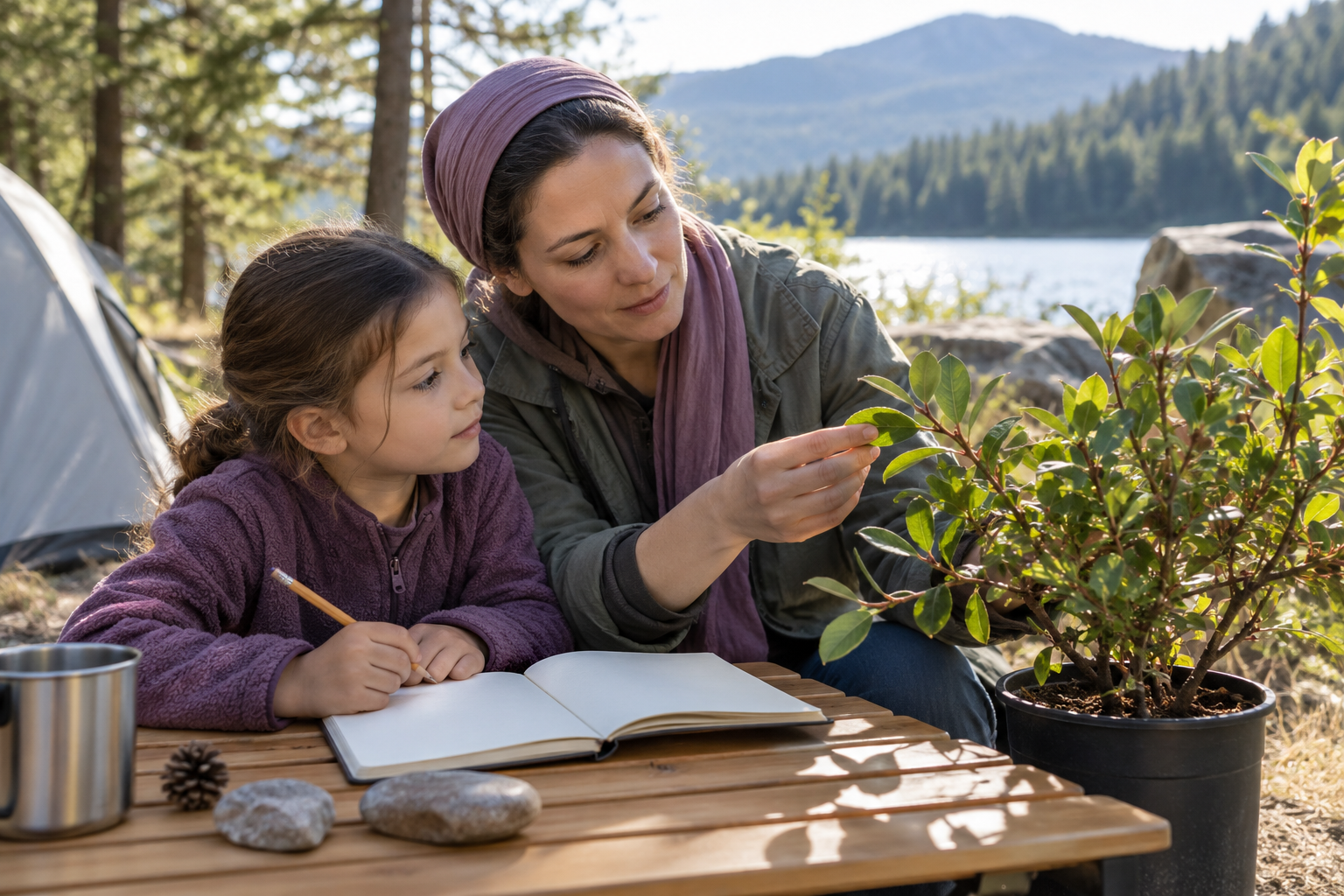
Choose short activities when camping with children
Try observing a plant, drawing a view or playing a simple spotting game rather than demanding a finished result from every activity. Camping with children does not require collecting objects from nature. Children can observe and draw while leaving plants and wildlife undisturbed and following site rules. Provide a quiet option for waiting, then allow an activity to finish when interest changes. An outdoor experience need not become a sequence of assignments that adults expect every child to complete in the same way.
Encourage a specific effort without comparing siblings. One child may enjoy arranging belongings while another prefers listening and noticing colours in the landscape. When camping with children, an activity succeeds by fitting the person and conditions. NPS guidance on involving children offers general ideas, but choose what is appropriate to your family and location. Do not transfer every suggested activity involving fire, food or tools to every child. The adult must still assess the task and provide supervision appropriate to the actual situation.
Agree how to change the plan when camping with children
Discuss what the adults will do if the family cannot continue as expected. This does not predict that camping with children will fail; it identifies who contacts the organiser and which alternatives actually exist. Keep booking details, the meeting point and a means of contacting the team accessible to the adults. If arrangements change, notify the responsible person. Do not leave a group location without coordination or assume that sending an unacknowledged message establishes that everyone understands a revised plan.
Distinguish a preference for another activity from a problem requiring an appropriate immediate response. This guide does not diagnose symptoms or prescribe treatment. Use suitable judgement, official guidance and relevant assistance when needed. Camping with children should not depend on forcing everybody to continue simply to complete a booking. At the same time, avoid promising a separate return vehicle or alternative sleeping place unless the family has confirmed that option for the actual programme and knows how it would be arranged.
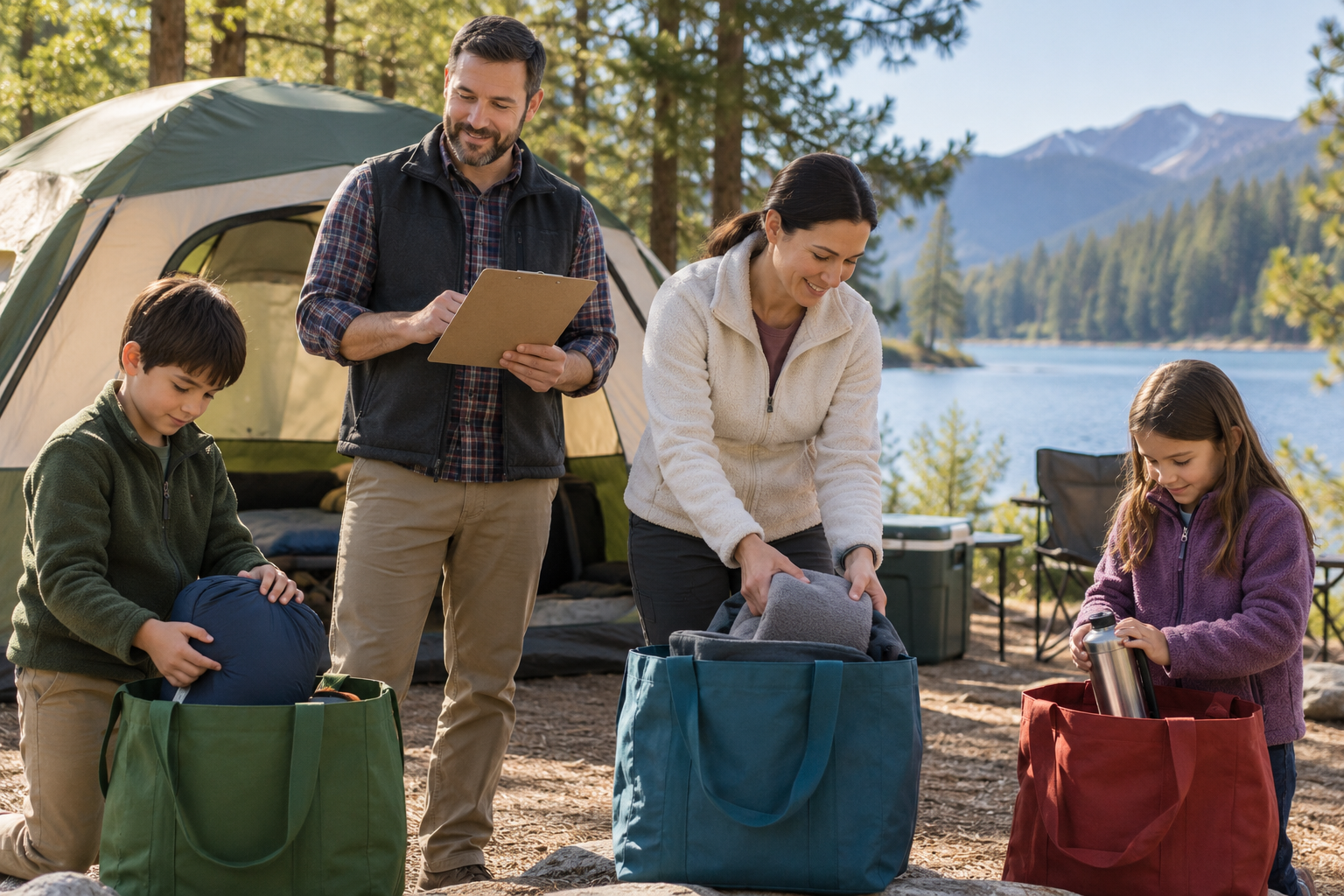
Review the experience of camping with children before repeating it
After returning, ask about one enjoyable part and one thing the child would change. Review the adults’ work as well: was arrival too late, were there too many belongings, or did facilities require more time? Treat camping with children as learning from specific experiences. Avoid deciding that a child either loves nature or cannot camp based on one difficult moment, especially when the difficulty may have concerned timing or an arrangement that could have been changed before the trip involving camping with children.
Record one or two realistic adjustments for next time. A shorter stay, daylight arrival, less equipment or more flexible activity time may help. Improving camping with children does not automatically require more purchases. Use experience to choose a programme closer to the family’s needs, then verify its current details. A previous location does not establish another site’s facilities, while a successful past departure does not guarantee identical age policies, activities or inclusions for a different future booking.
A hypothetical first-family-experience comparison
Imagine a family considering camping with children for the first time. Initially, they choose a busy overnight itinerary from attractive photographs. After reviewing the journey and trying the sleeping equipment, they prefer a shorter experience with understood facilities. This is a planning example, not an advertised Hike & Seek product. Every family need not follow the same sequence. The useful principle is to connect the choice to preparation and verified booking details rather than comparing the family’s holiday with another person’s published experience.
| Observation in the example | Possible planning decision | Information still needed |
|---|---|---|
| Tent sleeping is unfamiliar | Try the equipment before a longer stay | Suitable equipment and its instructions |
| The journey is lengthy | Choose a more manageable arrival arrangement | Actual programme timetable |
| Children have different interests | Use simple activities with flexible time | Adult supervision and boundaries |
| Facilities are unclear | Request details before booking | Water toilets and access route |
| Many belongings were unused | Reduce the next packing list | Retain the confirmed essentials |
Frequently asked questions about camping with children
What is the right age to start camping with children?
No single age establishes suitability for every child and programme. Starting camping with children depends on individual needs, the family’s preparation, sleeping equipment, facilities and the organiser’s participation conditions. Ask about accepted ages for the selected activity and seek suitable guidance for health needs or infant-specific questions. A shorter or daytime experience may suit your family without being an obligatory stage for everybody. Children of the same age can still need different support and arrangements in an unfamiliar location.
Should the first experience of camping with children be long?
Choose a duration the family can manage, rather than one that seems better value on paper. A simpler experience may help you understand camping with children before adding more activities or nights. Consider travelling, waiting, sleeping and returning together. Length does not guarantee enjoyment, while a short trip is not automatically suitable. Understand the actual timetable and discuss changes with the organiser before relying on them. An unconfirmed early-return option should not be the foundation of the booking decision.
Does camping with children in a group replace parental supervision?
Do not assume that. Ask what the supervisor does and what accompanying adults remain responsible for. Camping with children requires actual attention, particularly during activity changes, facility visits and equipment setup. Keep responsibility clear instead of leaving it between people who each expect someone else to watch. If a programme provides a specific supervision service, ask about its scope and conditions. The job title alone does not explain supervision throughout every stage of transport, sleeping, meals and free time.
What if a child cannot settle when camping with children?
Try to understand the reason and review the setting without promising a particular result. Explanation, familiar belongings and a short trial may help, but camping with children should not become coercion to preserve an ideal photograph. Agree the available alternatives beforehand and coordinate necessary changes with the organiser. Do not promise a return vehicle or separate sleeping place that has never been confirmed. The practical response depends on the child’s situation and options the family can actually use at that location.
Should I bring many toys when camping with children?
Choose a limited number of useful appropriate items and a quiet option for waiting. Camping with children does not require transporting a playroom. Ask whether one small familiar object matters and give used belongings a known place. Nature activities can involve observation and drawing without picking plants or disturbing animals. Fewer objects are easier to carry and track, but keep what the family genuinely needs. Reducing clutter should support the experience of camping with children rather than remove an essential comfort or practical item merely to make the bag smaller.
Does camping with children require different sleeping equipment?
Do not automatically apply adult dimensions and ratings. Read the manufacturer’s age and intended-use information and plan suitable space, clothing and equipment for the actual child and conditions. Camping with children should not make arrival night the first trial of unfamiliar bedding. This guide does not provide infant-sleep guidance or individual thermal and health guarantees. Obtain an appropriate reference or individual advice where a general product description does not answer the child’s specific sleeping needs.
How do I check a Hike & Seek programme for camping with children?
Send the programme for camping with children name, date and children’s ages to the team. Ask about facilities, duration, activities, sleeping equipment and adult responsibilities. A general question about camping with children does not obtain the details of a particular departure. Keep the answers with the booking and review what to bring. Resolve essential uncertainty before purchasing. Do not attribute childcare, meals or equipment to the company unless the programme description or the team’s confirmation actually establishes those arrangements for your booking.
How should we choose the next experience of camping with children?
Use what happened: a workable timetable, useful equipment, an activity the child enjoyed and a difficulty that can be reduced. Increase duration or complexity only when it fits the family and selected programme. Camping with children is not a race towards a harder trip. Repeating a simple experience with better organisation may be more useful. Check the next booking’s details again, because a successful previous location does not establish the facilities, requirements or inclusions of every other destination and departure.
Invite children to describe the next familiar step rather than asking whether they enjoyed everything. A concrete answer about meals, bedtime or one specific activity gives adults clearer information for adapting the following experience without making comparisons between siblings.
Record the child’s preferred quiet activity before choosing entertainment for the journey.
Confirm the family arrangement before departure
Review duration, facilities, sleeping, meals, supervision and return arrangements with the responsible adults, then Contact Hike & Seek about the programme for camping with children you intend to book. State the family’s needs and request answers about that specific departure. A plan for camping with children becomes more workable when adults know who supervises each child, where essentials are packed and how to request help or coordinate a change. Leave room for flexibility and let the family’s actual experience guide the next decision.