 عادل فيرق
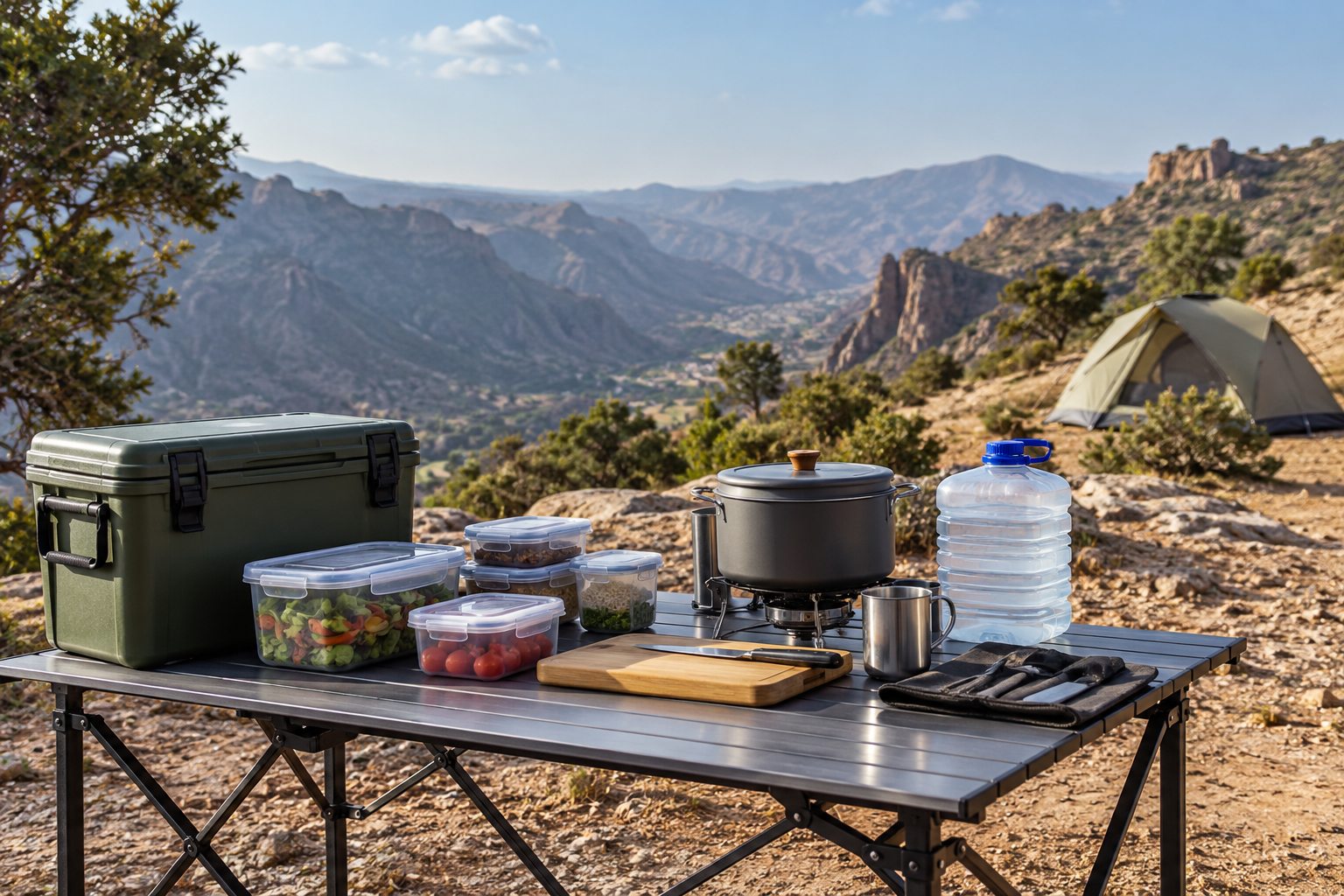
Start a camp kitchen plan with the meals, the number of people and the way you will keep food safe. Choose equipment afterwards. A large folding table or a box full of pans does not establish that a meal will run smoothly. Identify who buys the ingredients, maintains cooling, prepares the food and cleans the camp kitchen equipment. These practical decisions help you reduce the load without removing something necessary for the actual menu or relying on an unspecified volunteer after arrival.
A camp kitchen for a short vehicle-accessible stay differs from one carried farther to an overnight location. This guide provides a planning method rather than one equipment list for every Saudi campsite. Confirm the location’s facilities and instructions, and read the documentation for your food and appliances. A tap in a photograph does not establish potable water, while an attractive dining area does not prove that electricity, washing facilities or waste disposal are available to your particular booking.
Before planning a camp kitchen for Hike & Seek, check the published camping trips and Contact Hike & Seek about the selected programme. Ask which meals and equipment are included and what participants must bring. Another departure’s description does not establish the arrangements for yours. State the participant count and any relevant dietary requirements. A clear answer prevents preparing something already provided or arriving without a meal because an unconfirmed inclusion was treated as a promise.
Define the camp kitchen task before shopping
Write down the arrival time, first meal, final meal and the number of preparations required on site. A journey starting after breakfast may need a different arrangement from a longer overnight stay. Do not reproduce your home kitchen automatically. List the actual camp kitchen tasks, such as reheating a prepared dish, cutting ingredients or making a hot drink. Select equipment that supports those tasks, then question every extra item that serves no identified purpose in the camp kitchen menu.
Confirm the carrying distance between the vehicle and the permitted setup area. A box that two people can move easily on level ground may be awkward on a narrow path. Divide the camp kitchen into suitable carrying units and protect sharp equipment. Do not build the camp kitchen arrangement around a vague expectation that someone will help later. Check the real attendance and arrival times so that an essential item does not remain in the bag of someone joining after the first meal.
Identify the camp kitchen problem you want to solve
If a previous trip involved too much washing or a delayed dinner, identify the cause. Did the recipe require several simultaneous pans? Was the food in bags arriving at different times? Did nobody know how to operate the appliance? A larger camp kitchen box will not solve unclear responsibilities. Likewise, an additional device may increase work if it brings unfamiliar fuel, accessories and cleaning requirements. Solve the specific difficulty instead of making equipment ownership the measure of a successful meal.
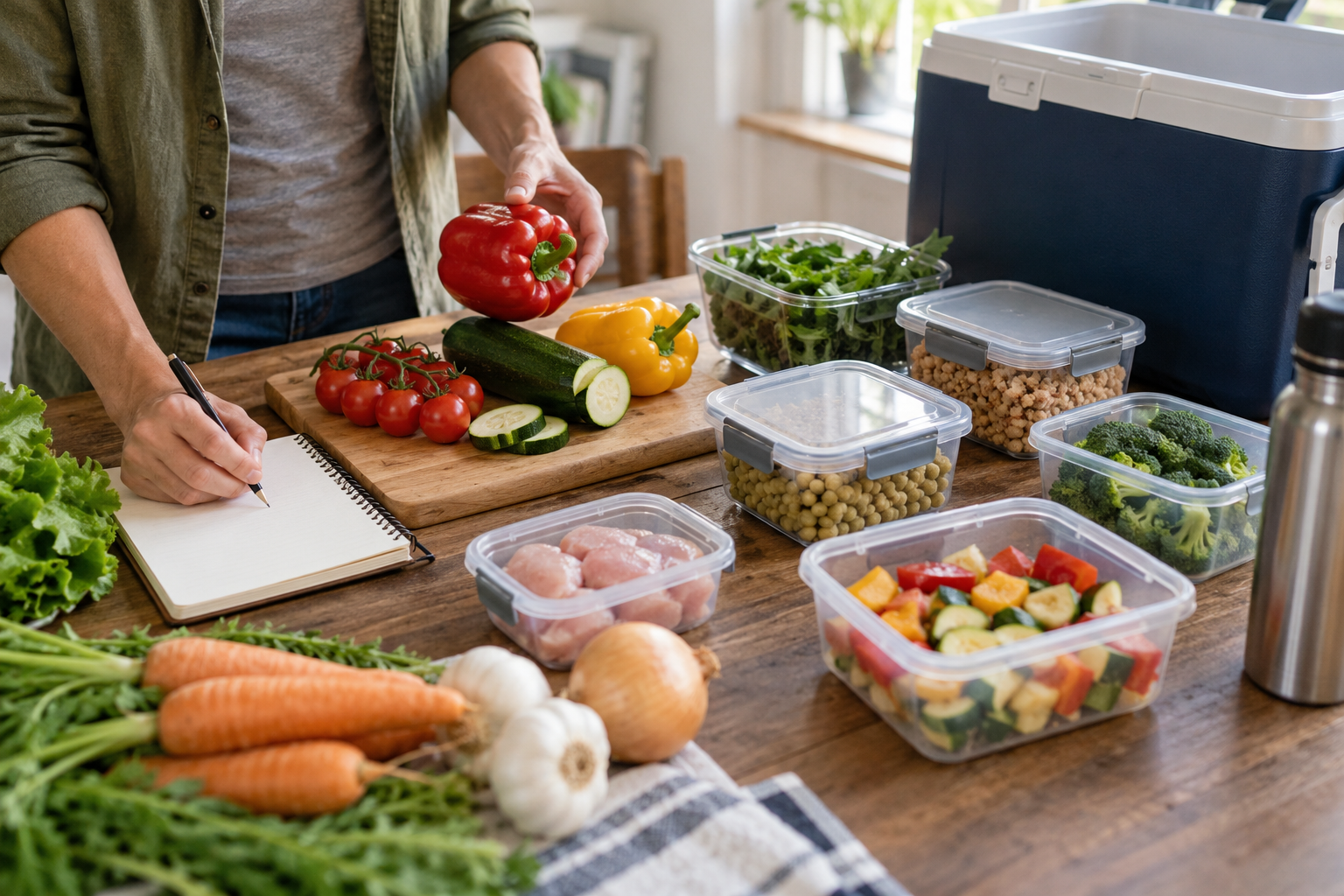
Choose a camp kitchen menu your equipment can support
Build the camp kitchen around meals whose preparation you understand. Familiar ingredients and tested methods make it easier to estimate portions and allocate work. Write quantities in the units you will purchase or pack, then confirm the actual number of diners. Ask which participants are bringing their own food and whether children need a different arrangement. One person’s appetite is not a sufficient estimate for everyone, but buying a large surplus also creates cooling and leftovers decisions.
Separate preparation at home from work in the camp kitchen. Earlier preparation is useful only when food can be handled, stored and transported safely afterwards. Read ingredient instructions and preserve necessary packaging information. Do not treat cutting everything the previous evening as an automatic improvement. The practical objective is to reduce organised work at the destination while maintaining the required conditions throughout the journey. Remove a complicated dish if the available facilities cannot support its handling and storage needs.
| Meal decision | Question before purchase | Equipment consequence |
|---|---|---|
| Prepared dish for reheating | How will it be stored and reheated correctly | Suitable container and reliable cooling |
| Ingredients requiring cutting | What could contact ready-to-eat food | Clean equipment and clear separation |
| Hot drink | Is the appliance permitted and understood | Compatible appliance and stable serving tools |
| Individual dietary meal | Does it need separate storage or utensils | Identified container and responsible person |
| Meal requiring no cooking | Do its ingredients still need refrigeration | Do not assume a cooler is unnecessary |
Plan camp kitchen cooling rather than choosing a large box
Capacity does not prove safe food storage. Plan camp kitchen cooling around the food, duration and transport conditions, using a suitable, clearly readable thermometer to check performance. USDA food-safety guidance recommends keeping cold food at approximately 4.4 degrees Celsius or below. Follow the food and cooler instructions. The outside of a container feeling cool, or a remaining piece of ice at the bottom, does not establish what happened to the temperature of every ingredient during the journey and subsequent meal preparation.
USDA also gives a general limit of two hours out of refrigeration for perishable food, reduced to one hour when ambient temperature exceeds approximately 32 degrees Celsius. Do not use those limits as a target for leaving camp kitchen food out unnecessarily. Plan to maintain the required conditions. Do not taste questionable food to test it or assume reheating corrects an unknown storage history. Smell and appearance cannot replace a clear record of appropriate handling, temperature and time.
Reduce unnecessary access to the camp kitchen cooler
Arrange ingredients in order of use and identify the person monitoring the camp kitchen cooler. Keeping frequently accessed drinks separate can help organisation where suitable equipment is available, but it does not replace temperature checks. Protect food from leaking containers and keep ingredients requiring separation properly contained. A camp kitchen list should say where an item is packed. Repeatedly opening everything to search for a small ingredient creates avoidable work and makes it harder to keep the handling process clear and controlled.
Confirm camp kitchen water and containers
Identify the potable water available for drinking and food preparation, as well as the water needed for cleaning. There is no single quantity that fits every camp kitchen, participant group, duration and condition. Calculate your actual tasks and confirm the organiser’s supply arrangements before deciding what to bring. Do not assume visible water at the location is suitable for food use. Use appropriate containers rather than repurposing a vessel that previously held an unrelated substance because it appears clean after rinsing.
Keep drinking-water equipment separate from dirty cleaning items, and maintain clean lids and pouring points. Test the tap and closure of a camp kitchen water container before transport. If you cannot arrange suitable handwashing and equipment cleaning, change the camp kitchen menu or facilities rather than ignoring the gap. Wiping food-contact tools with an already dirty cloth is not an adequate substitute for a suitable cleaning method. Plan where used water will go before using the supply, not after producing a basin of it.
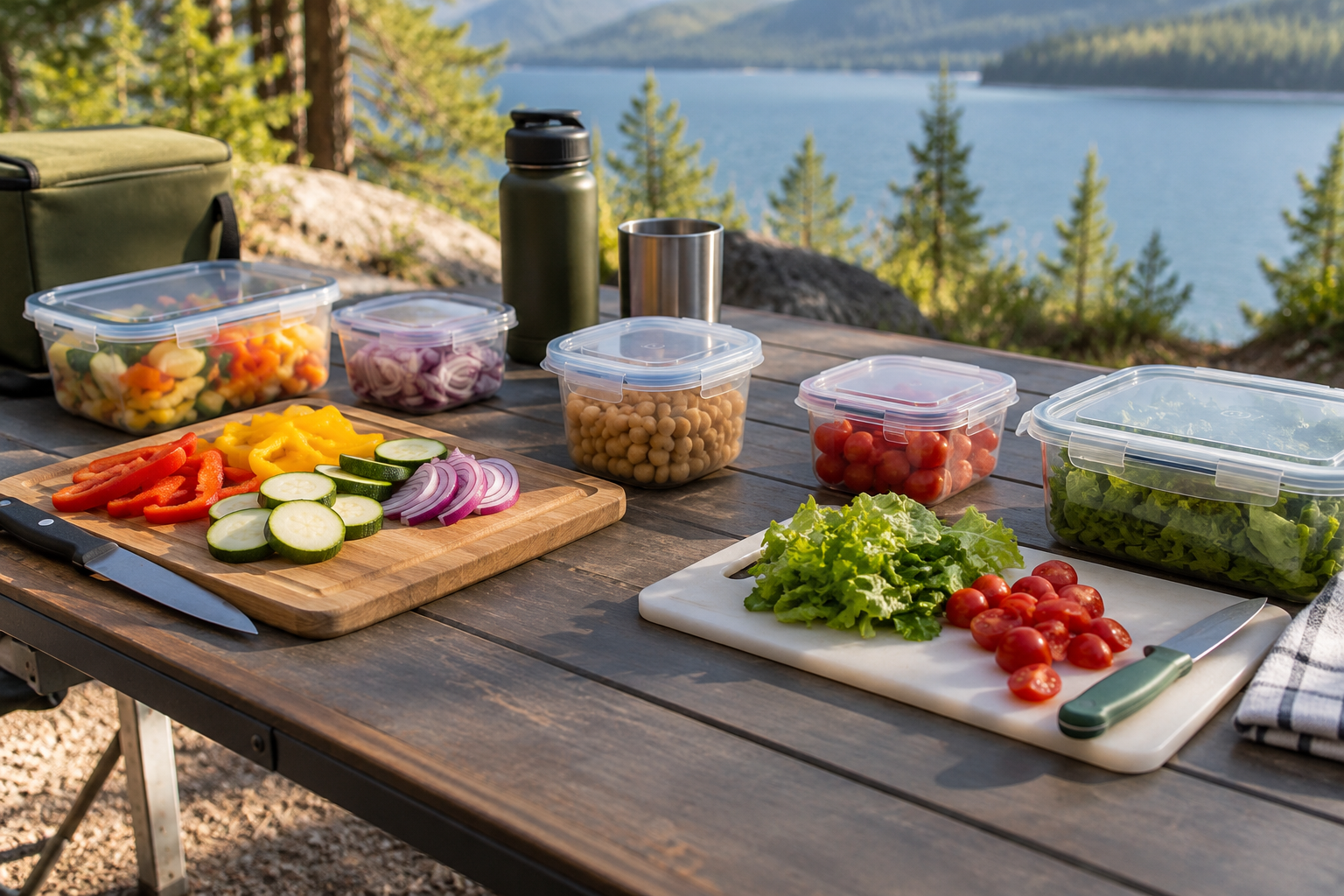
Organise camp kitchen surfaces and sharp tools
Use a stable surface suitable for the camp kitchen equipment and keep preparation clear of the main walking route. Assign places for ready-to-eat food, unused utensils and dirty equipment. A camp kitchen becomes harder to manage when everything returns to one crowded table. Do not leave sharp tools concealed in wash water or under a cloth. The person cleaning should know what is present and how to handle it without searching by hand through a crowded container or receiving an unexpected blade.
Choose boards and utensils around the menu while preserving appropriate separation. USDA‘s clean, separate, cook and chill principles apply to the work sequence, not simply to equipment ownership. A different-coloured board does not help if cooked food goes back onto an unclean plate that held raw ingredients. Review how the camp kitchen moves food from storage to preparation, cooking and serving. Give each stage a suitable place and explain the arrangement to anyone helping with only one part of the camp kitchen meal.
Understand the appliance before using the camp kitchen
Read the actual manufacturer’s instructions and the campsite rules. Confirm fuel, connections, permitted cookware and the operating process for the particular appliance. The camp kitchen should not be the first place you discover an unfamiliar assembly. If the camp kitchen equipment does not work correctly or you do not understand its operation, resolve the issue before departure or arrange a suitable alternative. Do not improvise connections or wind barriers from nearby materials that may change the conditions under which the appliance is intended to operate.
Never operate fuel-burning cooking equipment inside a tent or enclosed sleeping space. CPSC camping-safety guidance warns against that practice. Opening the doorway does not make it an appropriate camp kitchen location. Follow the appliance’s instructions and the site’s required separation and positioning. If the conditions prevent safe operation, use a suitable meal alternative that requires no cooking. Do not solve an unsuitable outdoor setup by moving the appliance into a shelter or using it as an improvised heater where people sleep.
| Camp kitchen responsibility | Person to identify | Decision before departure |
|---|---|---|
| Ingredients | Purchasing coordinator | Diner count quantities and storage instructions |
| Cooling | Cooler coordinator | Temperature checks containers and access order |
| Cooking appliance | Person familiar with the model | Permission operation and correct compatible fuel |
| Serving | Named meal helper | Clean utensils and individual requirements |
| Cleaning | Allocated participants | Water disposal and waste collection |
For a camp kitchen associated with a group booking, contact the team about who provides the camp kitchen meal and whether personal cooking equipment is permitted. Include the programme name in the question. Ask about water, washing and the approved waste arrangement as well. Those details belong to the selected activity. Appliance compatibility and operating instructions come from its manufacturer. Confirmation that a meal break is scheduled does not establish that participants can bring and operate any device they happen to own.
Prepare serving before the food is ready
Identify clean serving equipment and a suitable location before cooking finishes. A crowded camp kitchen at the final moment can encourage someone to pick up a nearby plate without knowing its previous use. Where safe cooking requires checking internal temperature, use an appropriate food thermometer and the recommended temperature for the particular ingredient. Colour alone does not prove that every part reached the required temperature, especially when pieces vary in thickness or the cooking arrangement heats different areas unevenly.
Serve manageable quantities and keep the remainder under its required storage conditions. Do not place all camp kitchen ingredients outside cooling simply to create a fuller-looking table. Plan leftovers in advance: suitable containers, reliable temperature control and a known handling history are necessary. If those conditions cannot be maintained, reduce preparation quantities. Distributing questionable leftovers does not resolve their storage problem, and acceptable appearance does not establish that the earlier handling and cooling process was safe throughout the trip.
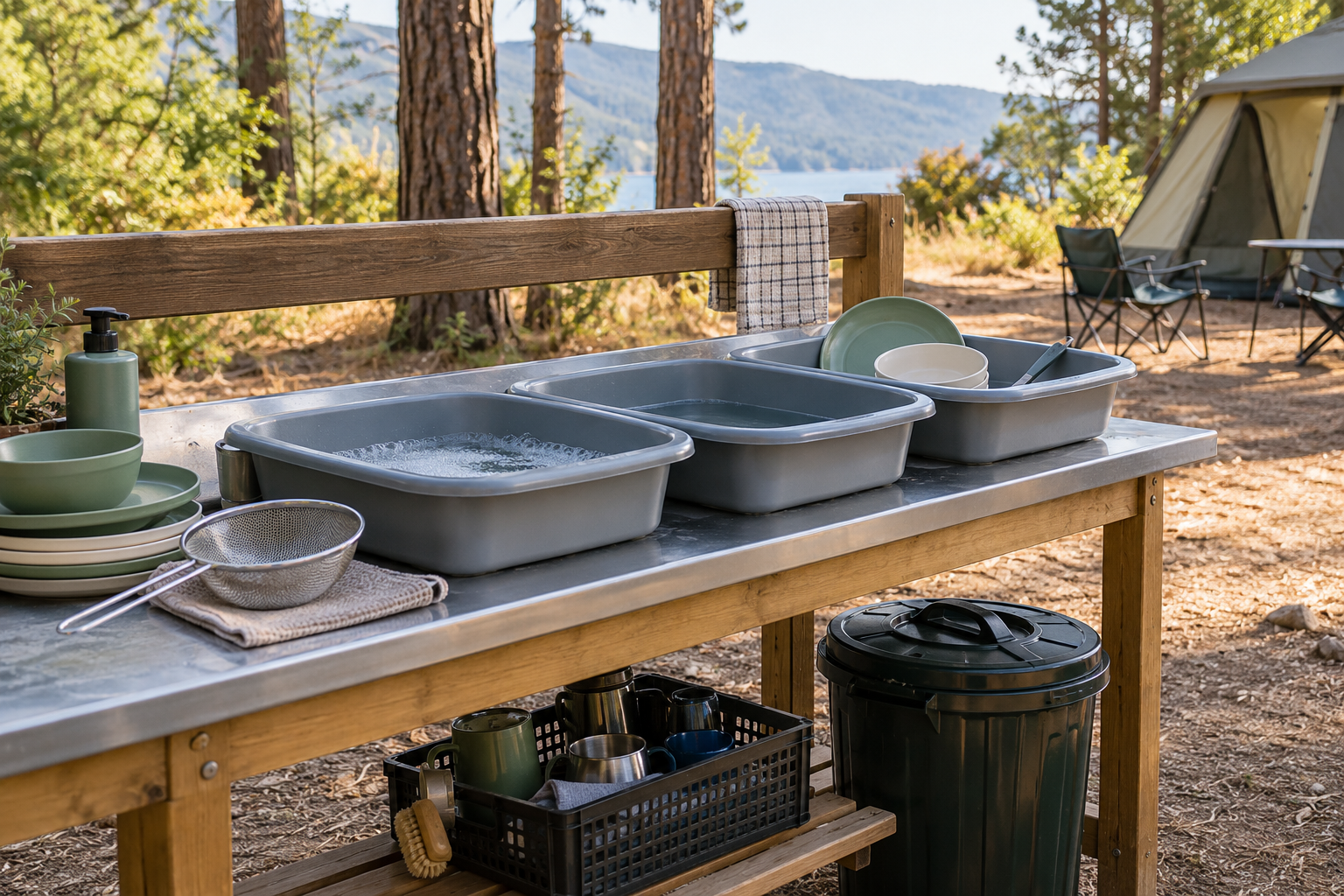
Include cleaning in the camp kitchen meal plan
Count washing equipment and containers in the transported load. Separate solid food scraps from wash water and follow the location’s designated facilities and disposal instructions. Leave No Trace guidance on dishwater explains why food residue should not be spread around a site. Do not treat an overseas park’s specific procedure as Saudi law. Apply the environmental principle alongside the actual local rules, and ask the responsible site staff when the approved disposal arrangement is unclear before arrival.
Collect waste in suitable closed containers and check beneath the table and around the preparation area before leaving. A camp kitchen includes returning the location without packaging fragments, tissues or food scraps. Do not bury waste or leave it because it is described as biodegradable. Keep rubbish separate from ingredients and clean tools. Plan its journey back so that bags do not leak into a vehicle or rub against equipment participants still need for drinking or eating during the return.
Practise a complete camp kitchen meal at home
Prepare one planned meal using only the camp kitchen equipment you intend to take, then clean and repack it. Note anything missing, unused or awkward to return to its container. This camp kitchen trial reveals more than arranging equipment for a photograph. You may find that a lid does not fit, the serving tool is absent or the largest pan cannot fit in the transport box once the water and cleaning supplies are added. Correct those practical issues before adding decorative or duplicate items.
Review the trial with the participants and assign every essential item to a confirmed person. Avoid describing the camp kitchen simply as somebody’s responsibility if that person arrives late or leaves before the final meal. Equipment needed at the beginning and end must match actual attendance. Transport sharp tools, fuel and other items requiring particular handling according to their own instructions and the transport provider’s rules. A written allocation is useful only when the participants understand what they have agreed to bring.
A hypothetical camp kitchen planning example
Imagine three friends planning an overnight stay close to vehicle access. Their first proposal involves three dishes with separate equipment and ingredients. After reviewing the camp kitchen work, they simplify dinner and breakfast, allocate cooling and agree on the washing arrangement. This is an organisational example, not an advertised Hike & Seek programme. Its value lies in starting from the people, storage conditions and available resources rather than copying a table photograph without accounting for the work, transport and food handling behind it.
| Stage in the hypothetical plan | Decision | Reason it reduces complexity |
|---|---|---|
| Before purchasing | Confirm actual diners and meals | Avoid ingredients for an unnecessary meal |
| Before packing | List the equipment each dish needs | Remove items without an identified task |
| On arrival | Confirm surface water and cooling | Avoid preparation before conditions are ready |
| After the meal | Clean dry and collect waste | Do not postpone everything until departure |
| After returning | Review missing and unused items | Improve the next plan from experience |
Frequently asked questions about a camp kitchen
Do I need a complete cookware set?
Start with meals, quantities and diners, then select the necessary pieces. A camp kitchen can work with a modest compatible collection, but fewer items do not justify removing appropriate separation or cleaning. Try a real recipe and record the tools used in sequence. If each dish requires an entirely different arrangement, consider simplifying the camp kitchen menu before buying another set. Additional cookware brings washing, packing and storage work as well as the ability to prepare another dish.
Is a small cooler enough?
That depends on its performance with the actual food, quantity, duration and conditions. Do not judge a camp kitchen cooler from its size or colour. Read the instructions, test the packing arrangement and use a suitable thermometer. Include travel and serving time in the plan. If you cannot maintain the required conditions, change the ingredients or arrangement. Being close to the intended eating time does not make an uncertain cooling history an acceptable basis for serving perishable food.
Should I prepare every ingredient at home?
Prepare what can be handled, stored and transported safely while reducing useful work at the destination. Earlier cutting does not automatically improve a camp kitchen plan. You need to know how the prepared food is stored, which containers it uses and when it will be eaten. Preserve relevant instructions and keep ingredients requiring separation apart. The objective is to organise the work, not conceal the food’s handling history or extend the period during which it sits outside appropriate refrigeration.
Where should I wash the camp kitchen equipment?
Use designated facilities and follow the actual instructions for water, cleaning products and disposal. If the camp kitchen arrangement is unclear, ask before the trip and bring the appropriate equipment. A stream or empty patch beside the tents is not an automatic camp kitchen sink. Collect solid residue and retain waste until reaching the approved disposal point. Choosing meals that require fewer utensils may be more practical than assuming that an unconfirmed washing solution will be available when cooking has already finished.
Can I use the stove inside the tent in unpleasant weather?
Do not operate fuel-burning equipment inside a tent or enclosed space, and do not rely on an open door as justification. Keep the camp kitchen separate from sleeping and follow the appliance and location instructions. Prepare a suitable alternative that does not require cooking if conditions prevent correct operation. Avoid improvised connections, shields or operating positions. Changing a meal is a practical planning decision when the camp kitchen equipment cannot be used under its required conditions at that time.
Who should be responsible in a group?
Assign named people to purchasing, transport, equipment operation, serving and cleaning. Shared cooperation does not remove the need to define camp kitchen responsibilities. Specify where essential items are packed and when a task changes hands. Update the list if attendance or arrival times change. Do not put a critical item for an entire meal in the bag of someone whose participation remains uncertain. The plan should describe an arrangement people have confirmed rather than a hopeful allocation they have never seen.
Does a Hike & Seek booking include food preparation?
Check the selected programme and obtain confirmation from the team. This guide does not promise that a camp kitchen, all meals or personal cooking appliances are included in every booking. Ask which meals are provided, how relevant dietary requirements are addressed and what facilities are available. Identify the programme and date. Your equipment list should follow a clear answer about that departure, rather than applying details from a previous activity with different inclusions and practical arrangements.
What should I do after returning?
Empty containers, clean and dry equipment according to its instructions, and check small components before storage. Review the camp kitchen against actual use. Which item was unnecessary, what delayed preparation and which quantities were excessive? Record a specific change, such as removing a duplicate pan or reorganising access to the camp kitchen cooler. Preserve proper food handling and cleaning while simplifying the work. Repacking the same list without reviewing experience misses an opportunity to reduce the next trip’s avoidable effort.
Pack each permitted serving tool with the clean container it accompanies. Matching related pieces before loading makes an absent lid easier to notice early at home.
Confirm the camp kitchen arrangement before booking
Review meals, cooling, water, equipment and cleaning with the participants, then Contact Hike & Seek about the programme you intend to book. Explain what you plan to bring and which camp kitchen arrangements need confirmation. Keep the response with the trip list. Clear responsibilities and verified facilities make it easier to choose realistic meals and transport quantities, rather than discovering essential questions after arrival when food preparation is already expected to begin and the missing equipment is still at home.