 عادل فيرق
Choose a sleeping pad by considering insulation, comfort in your normal sleeping position and the work involved in transporting and preparing it. Thickness alone does not explain those three questions. Packed dimensions do not establish whether it fits the tent either. Read the particular model’s information, then try it with the sleeping bag and shelter you intend to use. Finally, compare that complete arrangement with the actual journey to the overnight location.
A sleeping pad can feel pleasant during a brief shop demonstration yet prove too narrow for turning, awkward to deflate or difficult to pack with its required pump. This guide provides a comparison process rather than one insulation figure for every Saudi camping trip. Conditions, equipment and users differ. Manufacturer guidance and the selected programme’s requirements matter more than reproducing another person’s purchase without understanding their sleeping arrangement, carrying distance or reasons for choosing it.
Before buying a sleeping pad for a Hike & Seek departure, browse the published camping trips and Contact Hike & Seek about the selected overnight arrangement. A provided tent does not automatically mean that a particular pad or suitable size is included for every participant. Confirm what you must bring and compare that answer with equipment you already own. A precise inclusion question can prevent unnecessary shopping and clarify an important gap in the sleeping setup.
Begin with the sleeping pad use case
Record the place, date, duration, carrying method and allocated sleeping space. A sleeping pad transported close to the pitch by car can have different priorities from one carried in a backpack. However, vehicle access does not remove the need to consider dimensions, insulation or preparation. A large product may still obstruct the tent arrangement or require storage and pumping equipment that does not fit the rest of your load. Consider the whole journey rather than one isolated weight figure.
Think about the person using the sleeping pad and their normal position and movement. Side sleeping, back sleeping and frequent turning can reveal different preferences during a trial, but those observations do not create one prescription for everyone. Where a health condition affects overnight suitability, obtain appropriate individual advice and discuss participation with the organiser. A general equipment description cannot diagnose discomfort or guarantee pain-free sleep in unfamiliar conditions for a particular person.
Identify the sleeping pad problem you want to solve
If you already own a sleeping pad, describe the reason for replacing it precisely. Is the issue shoulder room, carrying bulk, valve operation, an unclear insulation rating or compatibility with the tent? That description prevents choosing greater thickness without resolving the actual difficulty. Inspect the current equipment and instructions first. The problem may concern preparation, the surrounding layout or another part of the sleeping system rather than a need to buy the most substantial-looking replacement.
Separate sleeping pad cushioning from insulation
Surface comfort and resistance to heat transfer are different properties. A sleeping pad can feel soft while its declared insulation does not suit your intended use. Another model may feel firmer but serve a different role in the overall arrangement. Pad guidance explains R-value as a measure of resistance to heat flow. Read the value and test information for the actual model instead of estimating insulation from fabric colour, visible height or how plush the packaging photograph looks.
A higher tested R-value generally describes greater resistance to heat transfer, but it is not a direct conversion to one universal air temperature. Sea to Summit‘s explanation of pad temperature ratings illustrates why that conversion can mislead. Use the sleeping pad manufacturer’s guidance in context with the rest of the equipment and intended conditions. A simplified chart should not become a personal warmth guarantee or replace information about the actual ground and overnight arrangement.
Ask whether the figures for two sleeping pad models use equivalent testing and what any unexplained number means. Retain the specification and compare the same length, width and version. A size change can affect weight or packed dimensions. Similar model names do not establish identical information, and a small shop photograph may conceal an important version difference. A shorter, clearer shortlist with comparable specifications is more useful than a long list of attractive numbers with uncertain meanings.
| Sleeping pad question | What to read or try | Insufficient evidence |
|---|---|---|
| Is insulation suitable | Explained rating and intended-use guidance | Thickness or colour alone |
| Is the surface comfortable | Your normal sleeping position | Briefly sitting on the edge |
| Does it fit | Prepared dimensions and tent layout | Packed sack size |
| Can I carry it | Complete weight with accessories | The pad alone on a table |
| Can I maintain it | Valve repair and storage instructions | Category name or price |
Compare sleeping pad categories without a universal ranking
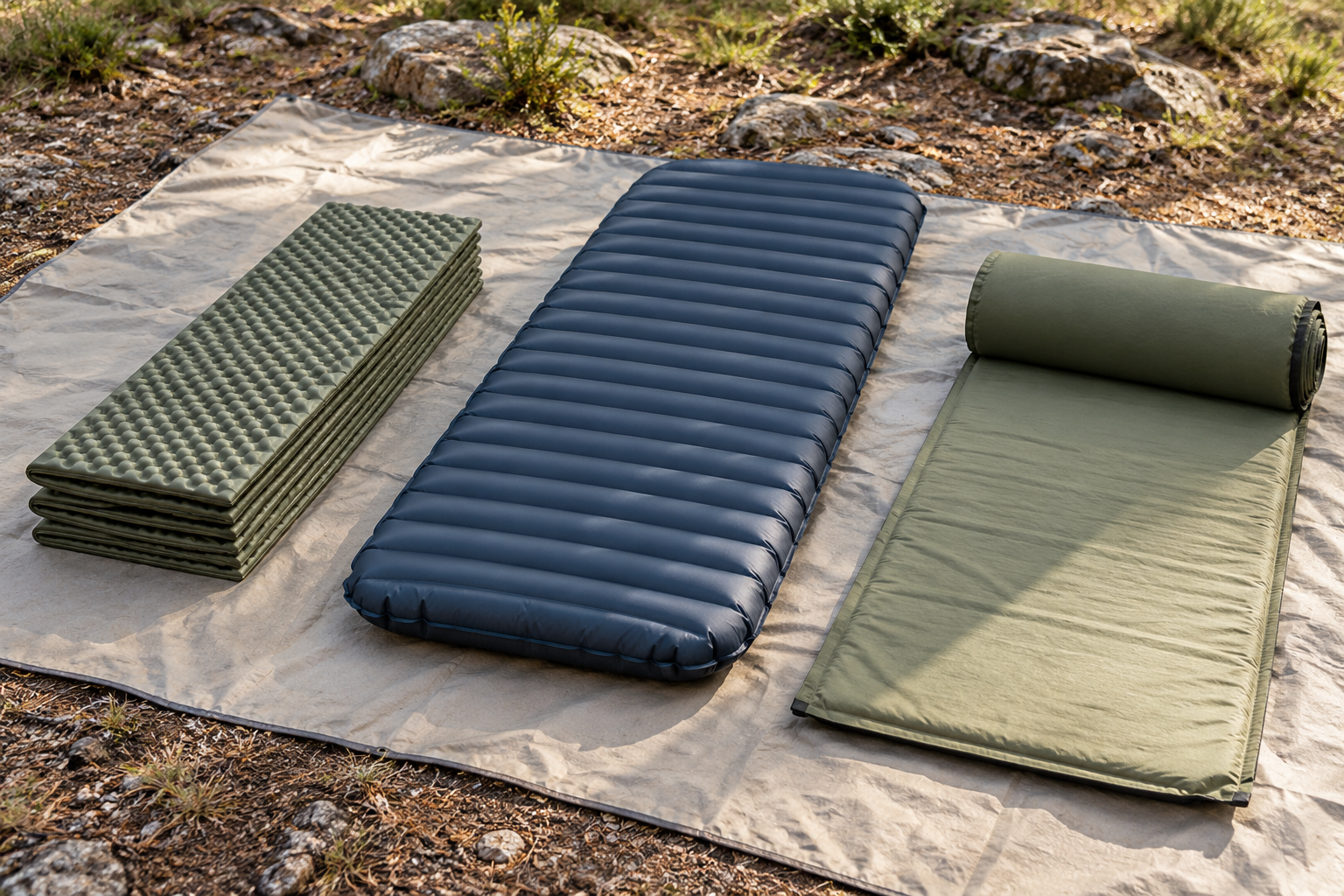
Common categories include closed-cell foam, inflatable air pads and products combining foam and air that are usually described as self-inflating. These names introduce construction and preparation, not a fixed order of quality. Read the particular sleeping pad specification. Air construction does not explain the insulation level by itself, while foam construction does not establish dimensions, comfort or packing convenience. Different products within one category can make very different compromises for different users.
A sleeping pad requiring no inflation removes some valve-related preparation, but may occupy more space in your carrying arrangement. An air model may pack compactly while requiring familiarity with inflation, deflation and damage procedures. Write down the trade-off that matters rather than choosing a category and defending it in every situation. Compare the tasks you will actually perform at the beginning and end of an overnight stay, including where you can put equipment while preparing it.
Read what self-inflating means for that sleeping pad
Check the sleeping pad instructions for preparation, any additional adjustment and the time or conditions involved. The category name does not describe the complete process. Do not judge the sleeping pad by pressing it before it has been prepared as directed. Ask for a valve and packing demonstration, then try returning it to the sack. Opening equipment easily does not establish that you can deflate and pack it conveniently before a group departure with a fixed meeting time.
Try sleeping pad dimensions inside the real layout
Compare prepared length and width with the shelter floor, wall slope and doorway. Lay out every participant’s sleeping pad where possible. Adding two widths on paper does not explain space for bags and movement or how tapered shapes fit together. Do not buy a wider product and assume that others can solve the blocked entrance after arrival. Establish the shared layout first, particularly when the booked pitch or supplied shelter offers no alternative arrangement.
Try the sleeping bag on the sleeping pad and move your arms and feet as you normally would. Check the edges, pillow and wall position. A short trial cannot predict every night’s comfort, but it can reveal an obvious mismatch. For a double model, both users should test the arrangement and discuss movement and access. One person’s impression does not describe the effect of the second person’s turning or how the pair will enter and leave the shared space.
Notice sleeping pad noise and sliding
Move naturally and consider sound and sliding with your own sleeping equipment. These details may be hard to notice while pressing the sleeping pad by hand in a busy shop. Do not improvise with adhesives or unapproved modifications to fix movement. Ask the sleeping pad supplier about correct use and compatible manufacturer accessories. The objective is a workable arrangement that does not require changing materials, complicating care or assuming that an improvised alteration will preserve the product’s intended performance or return conditions.
Learn sleeping pad valves and inflation accessories
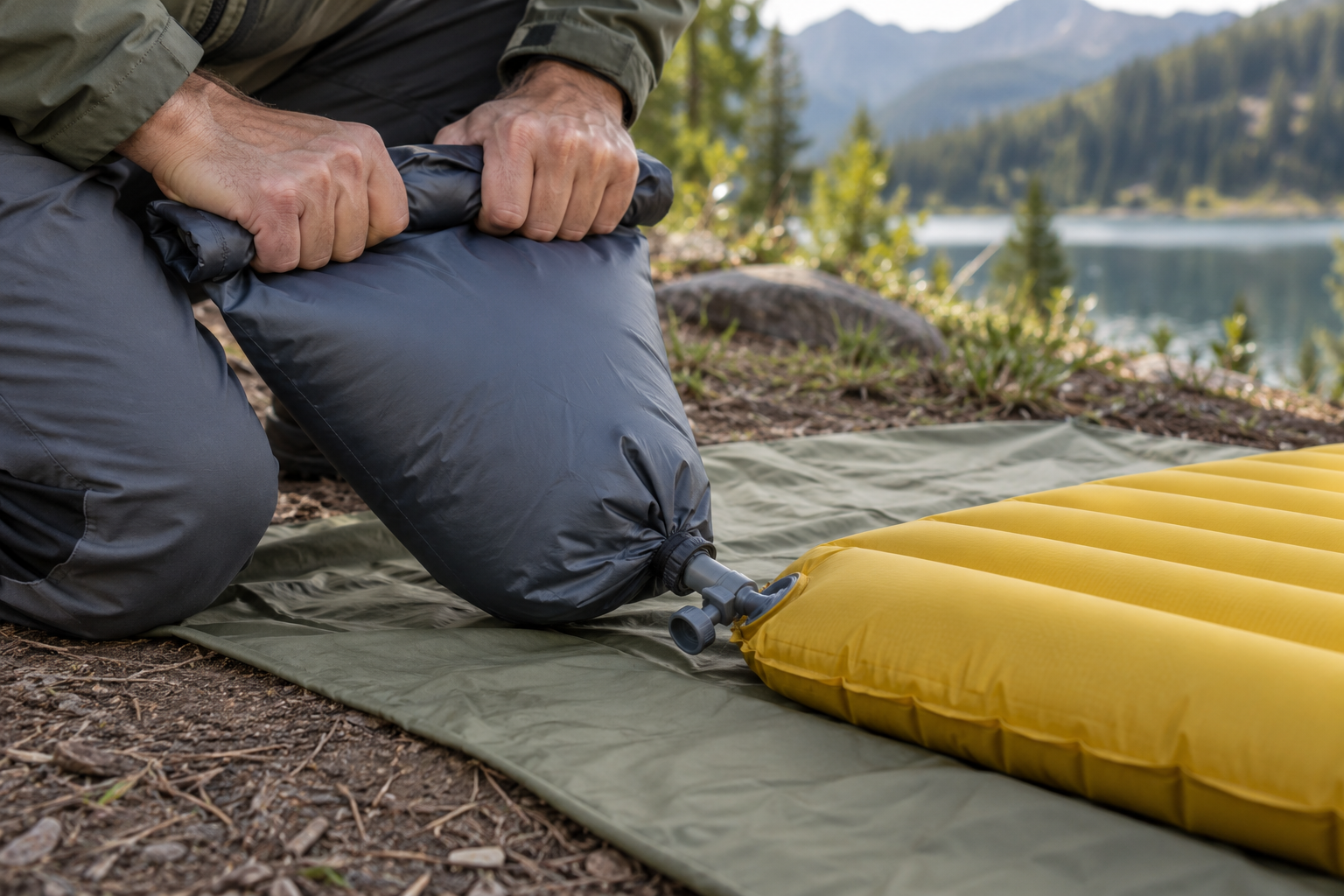
Understand how the sleeping pad valve opens, closes and adjusts and whether the pump or inflation sack is compatible and included. Similar-looking connectors do not prove compatibility. Follow the sleeping pad instructions for the permitted equipment and preparation process. There is no single inflation pressure to recommend for every model. The relevant limits and precautions must come from its own documentation rather than a visual comparison or a tip intended for a different product with different construction.
Give deflation and packing a separate trial after preparing the sleeping pad fully. Identify where small accessories belong. Successful inflation does not establish that you can remove the air and repack conveniently on departure morning. Retain the sequence and instructions somewhere accessible. If another person helps, explain the sleeping pad valve operation instead of allowing them to pull an edge or press aggressively on an unfamiliar part while trying to accelerate a task they have never practised.
| Sleeping pad type or feature | Practical trial | Trade-off to review |
|---|---|---|
| Closed-cell foam | Comfort bulk and carrying method | Simple preparation versus storage volume |
| Air construction | Inflation valve and deflation | Packed size versus care requirements |
| Self-inflating construction | Preparation adjustment and repacking | Convenient opening versus packing effort |
| Wide or double dimensions | Movement inside the shelter | Sleeping room versus remaining space |
| Inflation accessory | Valve compatibility and accessory size | Preparation convenience versus another item |
For a personal sleeping pad on a selected Hike & Seek trip, contact the team with its dimensions and your sleeping-space questions. Ask the sleeping pad supplier about insulation, valve operation and repairs, and ask the organiser about location, inclusions and the programme. Those are different information sources. A precise description is more useful than asking whether your equipment will suit every departure, especially when you own several similar products with different sizes, accessories or intended uses.
Prepare the sleeping pad area carefully
Follow the site, shelter and product instructions when arranging the sleeping space. Inspect the permitted position for objects that could damage the sleeping pad without removing vegetation or making unauthorised ground alterations. Keep sharp or dirty equipment away. A tent floor does not guarantee freedom from damage. Equally, an extra layer should not be assumed to provide a particular insulation or protection function unless the relevant product information supports that intended use.
Give bags, valves and inflation equipment a place clear of entry and exit routes. Decide how to move the sleeping pad if the arrangement changes. Dragging it while loaded with belongings or standing on it in dirty footwear is not a useful durability test. Read the handling instructions. For borrowed or shared equipment, explain the actual model before other participants apply familiar habits from a different design and unintentionally create a problem during preparation or packing.
Investigate changes before assuming a sleeping pad defect
If an air sleeping pad feels softer, review the preparation conditions, valve closure and manufacturer’s guidance before deciding the cause. Do not immediately declare a puncture or dismiss a genuine problem without examining it. Record what changed, when it happened and what you did. Specific observations help the sleeping pad supplier distinguish handling questions from a repair need. A vague statement that the equipment works or does not work offers much less information about the circumstances involved.
Repeatedly adding air should not conceal an unexplained problem. Do not rely on the sleeping pad for another intended use before understanding its condition and limitations. If it cannot be prepared as instructed, arrange a suitable alternative before departure. A repair kit does not guarantee that every defect can be addressed at the campsite. Likewise, one brief successful test does not remove the value of inspection before the next overnight stay or establish that a recurring issue has disappeared.
Check the sleeping pad repair process before needing it
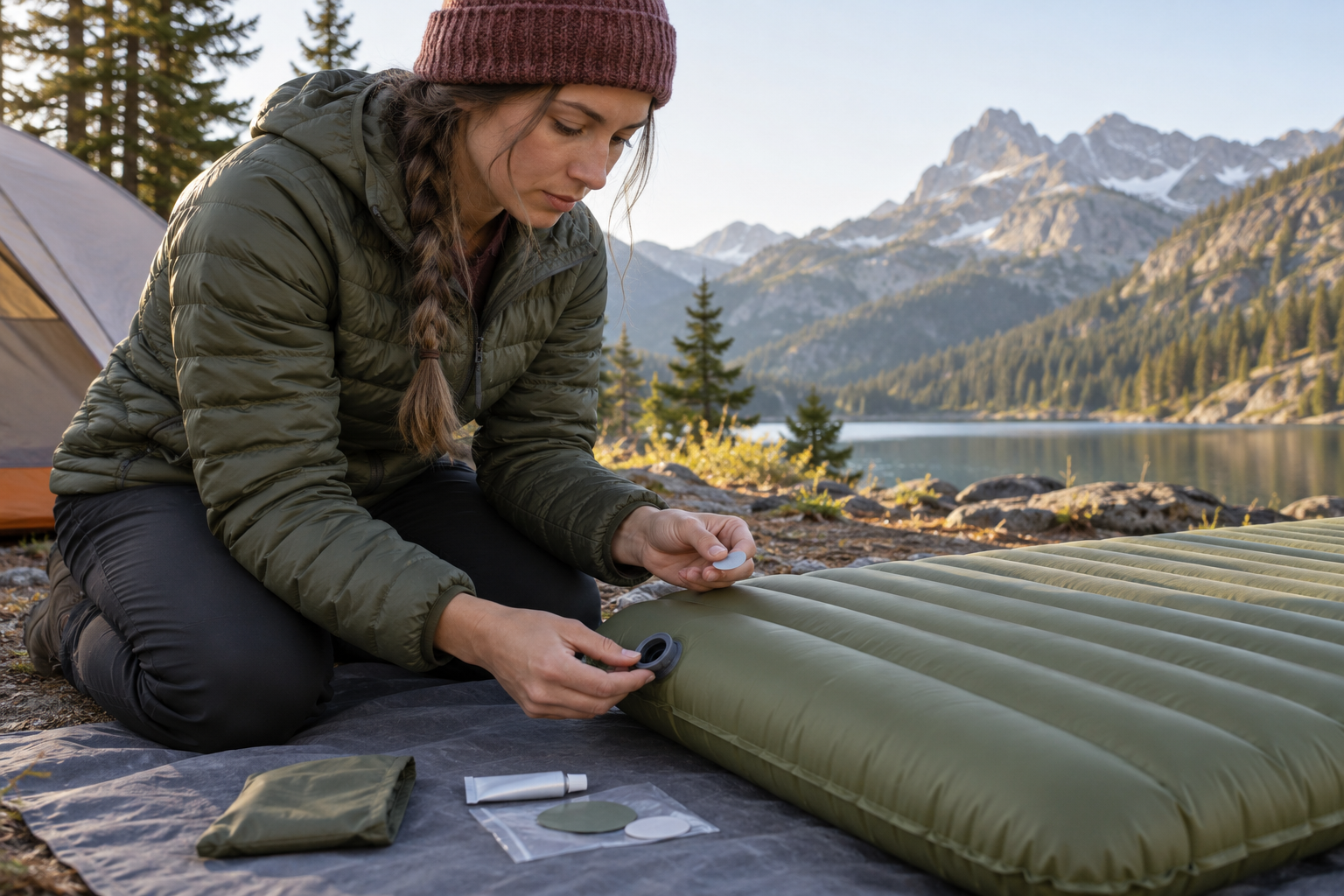
Ask about the compatible repair materials, method, timing and conditions specified for the sleeping pad. Do not choose a random adhesive because it is marketed as strong or worked on another fabric. Establish whether the item can be serviced and what the supplier’s policy covers. Learn the limitations at home and retain the sleeping pad model details so that a future request identifies the correct equipment. Repair preparation is a way to understand options, not a promise that every problem has a quick field solution.
Compare the complete sleeping pad purchase
The price may include an inflation sack, carrying bag or repair materials, or those may be separate. Read the contents list and identify which compatible accessories you already own. Compare sleeping pad weight and volume after adding the equipment actually required. A promotional image showing a complete setup does not establish the contents of the box. Avoid buying a duplicate accessory or relying on one that was only illustrated as an optional example beside the sleeping pad.
Check the sleeping pad trial and return conditions before opening, inflating or using it outdoors. This guide does not prescribe one policy for every retailer. Its purpose is to make the actual written conditions part of your purchasing decision. Keep the invoice, model, size and version information rather than depending on memory of a short verbal description. Resolve uncertainty before conducting a trial that might affect the seller’s stated return process or the way a defect is assessed.
Follow the sleeping pad cleaning and storage instructions
After returning, inspect the product and remove dirt using the permitted method, then follow its drying, valve and storage instructions. Do not apply the storage process for a foam sleeping pad automatically to an air or self-inflating model. Check the carrying bag and accessories too. A small missing component can prevent normal preparation. Discovering that at home is more useful than finding it absent while everyone else is already arranging their bedding at the campsite.
Store the sleeping pad away from accidental abrasion and sharp objects in the way its manufacturer specifies. Do not assume that long compression, leaving it inflated or hanging it is appropriate for every construction. Repeat the preparation trial after a long interval or a change of use. The equipment’s current condition matters more than a memory that it worked well last time. A brief inspection now can identify an unresolved maintenance task before it becomes part of a departure-day problem.
Two hypothetical sleeping pad comparisons
Imagine a participant driving to a campsite with a narrow tent and seeking more room while turning. Their sleeping pad comparison begins with measuring the floor and neighbouring bedding, then trying a model with suitable declared insulation. If its comfortable surface blocks the doorway, greater thickness does not solve the problem. They need a different dimension or layout, or another shelter where the programme permits it, rather than expecting other participants to absorb an untested purchase decision.
Another participant packs a sleeping pad for a backpack journey and discovers that the necessary inflation accessory occupies space they had not allowed. Repacking also takes more effort than expected. They try the complete system again and decide what can change within the instructions. These examples are illustrative rather than customer case studies. They show how practical constraints shape a purchase instead of presenting one product as a winner across every specification, user and journey.
| Preparation stage | Sleeping pad check | Useful completion point |
|---|---|---|
| Before purchase | Insulation dimensions and carrying method | Documented information and a meaningful trial |
| Before the night | Valve inflation and compatibility | A complete tested sleeping arrangement |
| At the pitch | Surface protection and doorway access | Suitable placement without unauthorised changes |
| When a problem appears | Manufacturer-directed checks and observations | A clear repair or replacement decision |
| After the journey | Cleaning drying and accessory inventory | Storage matching the model instructions |
Frequently asked questions about a sleeping pad
Does a thicker sleeping pad always insulate better?
Do not infer insulation from thickness alone. Read the particular model’s rating, test explanation and intended-use guidance, then assess comfort separately. Two products can have similar heights but different construction and purposes. Combine documented information with the correct dimensions and the whole sleeping arrangement. A plush feel or inflated appearance is not a guarantee for every campsite, season or participant who might use the same equipment.
Can sleeping pad R-value be converted to one air temperature?
Treat a direct universal conversion cautiously. Thermal resistance does not describe every difference in ground conditions, moisture, equipment and personal use. Consult the manufacturer’s explanation and recommendations rather than treating a short chart as an individual warmth guarantee. Understand the overnight setting, pad and sleeping bag together. The objective is to establish the model’s appropriate use, not to extract one promise from an isolated number whose test context has not been considered.
Is an air sleeping pad better than foam?
There is no universal order. Compare comfort, packed volume, preparation, insulation information, complete weight and care. One person may prioritise simple handling while another needs compact packing. Try the actual products and match the trade-off to your journey. A good review from a different itinerary does not establish suitability for your carrying arrangement, tent dimensions or sleeping preferences. Choose a problem you need to solve rather than a category you want to defend.
Does a self-inflating sleeping pad need no preparation?
Read the model’s instructions. Preparation may include time, further adjustment and a particular deflation and packing sequence. The category name cannot explain all those steps. Practise before departure and confirm accessory compatibility. An unfamiliar first attempt is not enough to identify a defect without understanding the method. Equally, easy opening is not a reason to ignore the work required to return the item to its bag before the group leaves.
How do I select sleeping pad dimensions?
Compare prepared dimensions with your normal movement, shelter floor and neighbouring equipment, then try the sleeping bag on top. A general size name or a photograph of one product in a large tent is insufficient. Retain a clear entrance and inspect the edges, foot and pillow positions. Both users should test a double model because one person’s impression cannot explain the effect of the other’s movement or the shared access arrangement.
Does a softer sleeping pad prove that it is punctured?
Do not identify the cause from one observation. Review preparation, valve closure and the manufacturer’s inspection process, then record the conditions. The issue may need handling clarification or repair. Avoid hiding an unexplained change by repeatedly adding air. Arrange an appropriate alternative if reliability for the intended use remains unresolved. Do not assume that every adhesive works on every construction or that any repair can be completed successfully at the campsite.
Can any pump inflate a sleeping pad?
Confirm compatibility with the valve, inflation method and manufacturer limits. A similar connector does not establish suitability, and there is no one pressure recommendation for every model. Check the contents list and practise connection, disconnection and deflation. If the instructions remain unclear, ask the supplier using the model and size details. Do not use a powerful tool or modify the valve to create a connection the equipment was not designed to accept.
Does Hike & Seek always provide a sleeping pad?
Do not assume that every booking includes one. Review the current programme and ask about sleeping equipment, sizes, personal requirements and any shared allocation. Retain the confirmation with your departure information rather than transferring details from an older trip. If bringing your own equipment, give the organiser its dimensions and the practical question. Use the manufacturer for model-specific insulation, accessories, maintenance and repair information instead of expecting programme details to explain unfamiliar equipment.
With shared accommodation, practise leaving your sleeping position without shifting another person’s bedding. A suitable width does not establish a workable shared entrance.
Complete the sleeping pad choice with a practical trial
Choose a sleeping pad using clear insulation information and a trial covering dimensions, comfort, preparation and carrying. Confirm compatibility with the complete sleeping setup. For a selected Hike & Seek programme, contact the team about inclusions and space before buying around an unresolved assumption. Keep the instructions, observations and accessory list. Checking the actual equipment before each journey makes the decision reflect its current condition rather than the specification or demonstration you remember from the day of purchase.